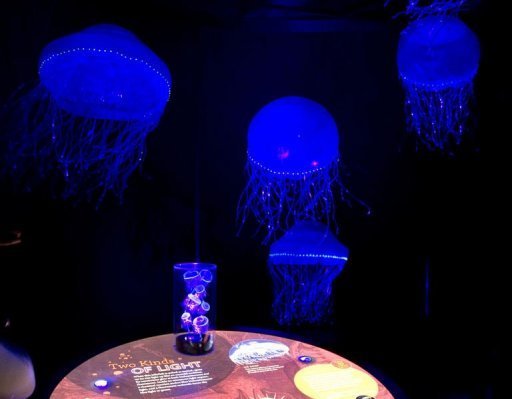
Jellyfish are on display as part of the "Creatures of Light: Nature's Bioluminescence" exhibit at the American Museum of Natural History in New York. Some 80 percent of species that light up live underwater, where fish, squid and other creatures use lights for everything from attracting mates, to defense, and, intriguingly, to lure in prey.
They have their own lights, teeth, and weird names like vampire squid, stoplight loosejaws, and bristlemouth -- meet the weird denizens of the deep surfacing for an exhibition in New York starting this week.
The American Museum of Natural History's "Creatures of Light: Nature's Bioluminescence," which opens Saturday, takes a look at the phenomenon of wildlife that produces light, especially inhabitants of the furthest reaches of the oceans.
The descent this week by Hollywood director James Cameron into the Pacific's Mariana Trench, the deepest point in the world, was a reminder of how little explored those waters are. Cameron reported back that he saw no sign of life in his relatively brief trip.
But the exhibit uncovers a hidden world of bizarre fish who use their natural lights to survive in permanently dark waters.
"'Creatures of Light' reveals to the public some of the most magical, wondrous, and truly extraordinary creatures and phenomena to be found in the natural world," Ellen Futter, president of the American Museum of Natural History, told reporters.
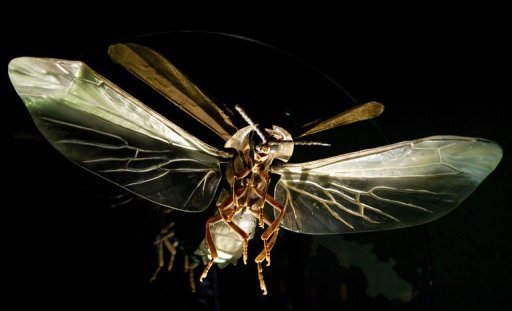
A large scale firefly is on display as part of the "Creatures of Light: Nature's Bioluminescence" exhibit at the American Museum of Natural History in New York. The exhibit takes a look at the phenomenon of wildlife that produces light, especially inhabitants of the furthest reaches of the oceans.
The most commonly known examples of bioluminescence are on land: the fireflies that dance in summer months around gardens. Glowworms are another.
But some 80 percent of species that light up live underwater, where fish, squid and other creatures use lights for everything from attracting mates, to defense, and, intriguingly, to lure in prey.
The light comes from organisms eaten by the fish or squid, or in other cases is supplied by colonies of bioluminescent bacteria carried on the creature.
"It's crazy down there, it's strange," curator John Sparks said.
The creatures' habitat typically begins at depths of about 1,300 feet (400 meters). They include the vampire squid, which has red or blue eyes, or the anglerfish, which has its own fishing rod, with a light on the end, to pull dazed prey right into its horrific looking, toothy mouth.
Sparks said the exhibition was held up until the last possible moment so as to be able to take into account the latest discoveries.
"We have been in a rush but we wanted to be extremely current," he said.
The exhibition, also organized by the Canadian Museum of Nature and Chicago's Field Museum, runs through January 6.
(c) 2012 AFP


