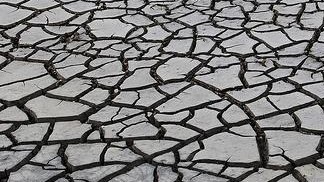
Climate and the statistics of extremes
© blackwarrior57
(PhysOrg.com) -- Swiss mathematicians have shown that the risk of extreme climate events is largely underestimated. They are developing a model for better understanding the impact of climate change.
Remember the 2003 heat wave? According to the standard weather models, it was impossible. Mathematicians from EPFLs Chair of Statistics, however, say that there was a five in ten thousand chance for the event to occur. Thats a pretty slight chance, but not completely negligible. To reach this result, they developed a model that specifically deals with extreme weather events. Thanks to this tool, which takes into account various parameters such as climate change, the researchers are already able to more precisely predict the risk of extreme phenomena for the upcoming decades.
Weather stations and probability
The problem of extremes is that there are so few events, by definition, explains EPFL mathematician Anthony Davison. Its thus necessary to create specific models that are different from those that use innumerable mean values. The researchers used MeteoSuisse data to simulate a thousand summers, using probabilities and their model of extremes. They were able to determine the risk of elevated temperatures for a given period. To arrive at conclusive results, their model groups weather stations into pairs so their measurements can be correlated.
Combining the stations into pairs for the simulation requires a huge number of calculations. The number of combinatorial operations can quickly escalate. For example, to simulate heavy rainfall, we were limited to ten weather stations, which already represented several days worth of calculations on a high-speed computer network, Davison explains. In spite of this, the research is already leading to extreme events analyses that are more realistic than those arrived at using traditional models.
Six times more likely in 2050
For several years now, the scientists have noted that the increase in extreme events associated with climate change appears to be having much more of an impact on society than the increase in mean temperatures. Natural disasters are accompanied by a significant human and economic cost. In the case of exceptional heat waves, the mathematicians found that, based on global warming predictions, the probability of an event at least as severe as the 2003 heat wave will be six times greater in 2050 than it was in 2003.
The specialists are also developing models for other extreme weather events, such as rain, snow, and ice. The challenge is to improve them in terms of precision. Eventually, we would like to be able to integrate more calculation points in order to better cover the territory. We also need to optimize our models to include dynamic phenomena, which require even more operations, Davison says.
More information: Geostatistics of extremes, Davison and Gholamrezaee, Proceedings of the Royal Society A: Mathematical, Physical and Engineering Sciences (2012) vol. 468 (2138) pp. 581-608. http://dx.doi.org/ … pa.2011.0412
Provided by Ecole Polytechnique Federale de Lausanne
-
From lemons to lemonade: Reaction uses carbon dioxide to make carbon-based semiconductor,
32 comments
-
Thioridazine kills cancer stem cells in human while avoiding toxic side-effects of conventional cancer treatments,
3 comments
-
SpaceX private rocket blasts off for space station (Update),
42 comments
-
Climate scientists say they have solved riddle of rising sea,
31 comments
-
SpaceX capsule has 'new car' smell, astronauts say (Update),
4 comments
-
Hypothetical desert earth
23 hours ago
-
More human population = greater mass?
May 25, 2012
-
Conversion from aircraft bearing to normal degrees
May 23, 2012
-
Interpretation/Analysis of the Lab results(HEPA filter)
May 22, 2012
-
Has anyone here attended the The Urbino Summer School in Paleoclimatology?
May 22, 2012
-
Earthquakes: Mag 6 N. Italy and Mag 5.6 W. Bulgaria
May 21, 2012
- More from Physics Forums - Earth
More news stories
Land and sea species differ in climate change response: study
(Phys.org) -- Marine and terrestrial species will likely differ in their responses to climate warming, new research by Simon Fraser University and Australia’s University of Tasmania has found.
6 hours ago |
3.8 / 5 (4) |
5
|
Yale study concludes public apathy over climate change unrelated to science literacy
Are members of the public divided about climate change because they don't understand the science behind it? If Americans knew more basic science and were more proficient in technical reasoning, would public consensus match ...
8 hours ago |
4.8 / 5 (5) |
20
|
10 million years needed to recover from mass extinction
It took some 10 million years for Earth to recover from the greatest mass extinction of all time, latest research has revealed.
Space & Earth / Earth Sciences
8 hours ago |
4 / 5 (4) |
1
|
Sophisticated simulations predict future warming
The chances of our planet being hit by a global warming of 3 degrees Celsius by 2050 is as likely as it being hit by an increase of 1.4 degrees, new research shows. Presented in the journal Nature Geoscience, the British study ...
Space & Earth / Earth Sciences
May 22, 2012 |
4.1 / 5 (10) |
51
Aliens don't want to eat us, says former SETI director
Alien life probably isnt interested in having us for dinner, enslaving us or laying eggs in our bellies, according to a recent statement by former SETI director Jill Tarter.
Space & Earth / Space Exploration
May 25, 2012 |
4.4 / 5 (15) |
41
Stunning image of smallest possible five-ringed structure
Scientists have created and imaged the smallest possible five-ringed structure about 100,000 times thinner than a human hair and you'll probably recognise its shape.
'Unzipped' carbon nanotubes could help energize fuel cells, batteries
Multi-walled carbon nanotubes riddled with defects and impurities on the outside could replace some of the expensive platinum catalysts used in fuel cells and metal-air batteries, according to scientists at ...
Change in developmental timing was crucial in the evolutionary shift from dinosaurs to birds: study
At first glance, it's hard to see how a common house sparrow and a Tyrannosaurus Rex might have anything in common. After all, one is a bird that weighs less than an ounce, and the other is a dinosaur that ...
Computer model used to pinpoint prime materials for efficient carbon capture
When power plants begin capturing their carbon emissions to reduce greenhouse gases and to most in the electric power industry, it's a question of when, not if it will be an expensive undertaking.
T cells 'hunt' parasites like animal predators seek prey, study shows
By pairing an intimate knowledge of immune-system function with a deep understanding of statistical physics, a cross-disciplinary team at the University of Pennsylvania has arrived at a surprising finding: T cells use a movement ...
Scientists develop ultra-sensitive test that detects diseases in their earliest stages
Scientists have developed an ultra-sensitive test that should enable them to detect signs of a disease in its earliest stages, in research published today in the journal Nature Materials.
Jan 18, 2012
Rank: 1.7 / 5 (6)
Faulty base assumptions lead to faulty conclusions. GIGO. The US NCDC has made repeated statements in regard to this. You can find them on their web page. They have an FAQ section.
http://www.ncdc.n...dex.html
Jan 18, 2012
Rank: 1.7 / 5 (6)
http://www.ncdc.n...ei/01-12
Oh, and if you see that slight increase in the linear trend, that isn't a statistically significant trend compared to the standard deviation.
Jan 18, 2012
Rank: 2.5 / 5 (2)
Jan 18, 2012
Rank: 1 / 5 (4)
Jan 18, 2012
Rank: 4.3 / 5 (15)
Jan 18, 2012
Rank: 4.5 / 5 (17)
Jan 19, 2012
Rank: 1.5 / 5 (17)
Jan 19, 2012
Rank: 1.3 / 5 (15)
Economic inflation, population and communication all contribute.
In the 30s, most people were smart enough NOT to live on a coastline prone to hurricanes.
Peak high temperatures occurred in the 30s along with extreme drought.
In today's 24/7 news cycle what was once considered normal, like -30F winter temps are now extreme. Wooses.
Jan 19, 2012
Rank: 1.3 / 5 (16)
"February brought record snow levels. After the snow came the cold. In North Dakota, the temperature never rose above zero for 18 consecutive days. The month's mean temperature was 11 below. In St. Louis, it was only 12. The Arkansas River froze at Little Rock for the first time in memory. "
"in July, came the heat, rolling up slowly from the Southwest, as if the door to the Mojave furnace had swung open. A massive high pressure system off the Pacific coast pumped the hot air into the nation's midsection. On July Fourth, as crowds frolicked on the beaches in Chicago and New York, it was already 98 degrees in North Dakota. Two days later, it would reach 121 in the town of Steele. The temperature swing of 182 degrees, from the Feb. 15 mark of 60 below, would be unprecedented in U.S. Weather Bureau annals. "
"On a muggy April 5, a band of twisters careened through Tupelo, Miss., rural Alabama and Gainesville, Ga., killing 419. No tornado system since has taken such a death toll. "
Jan 19, 2012
Rank: 1.3 / 5 (15)
"Friday was the first time in history that three consecutive 100 degree days had been recorded in Detroit. It reached 101."
"The weather mechanics that produced the intense heat and drought of the '30s are still a puzzle to climatologists. There have been other such cycles since then, but never one so widespread or so intense. Or so deadly. "
This story appeared in The Detroit News on July 6, 1986.
http://apps.detne...p?id=134
Jan 20, 2012
Rank: 3.7 / 5 (3)
Yup.
Jan 20, 2012
Rank: 4.7 / 5 (14)
OH! I wrote that tongue-in-cheek, but I can roll with that. So there was a "climate-change denier" crowd. Wow, they must be a bunch of asses and feel like fools now that climate change is well established fact.
Jan 20, 2012
Rank: 1.3 / 5 (16)
What's new?
Jan 23, 2012
Rank: 4 / 5 (1)
Us.
Jan 24, 2012
Rank: 5 / 5 (2)
Jan 25, 2012
Rank: 1 / 5 (3)
What caused the millions of years of climate change before 'us'?
You AGWites are quite full of yourselves. But that is a symptom of socialism, hubris, arrogance in BELIEVING you know what is best for everyone and quite willing to use force to impose your beliefs.
Jan 26, 2012
Rank: 4.5 / 5 (2)
Haven't you ever noticed how many times us AGW progressives (and there are a lot of us) are right all of the time. It's not fake science causing that. Its just that you are WRONG.
In fact, your kind of fringe crazy man.
Jan 26, 2012
Rank: not rated yet
What caused the millions of years of climate change before 'us'?
Heh you are such a moron!
Jan 28, 2012
Rank: 5 / 5 (1)
I don't know, where you around at that time?
I mean, what was the weather like on Titan millions of years ago, or Mars if you would like to think there were once oceans there. Its wide open isn't it?
Well not so much. At least on the blue marble we can look a fossils, rocks and sediments to get a handle on what was happening back then. That give one a powerful tool for investigation, like what cause the temperature to spike here and not there.
The problem today is we live in technologically advanced societies that can not take extreme changes. Your mother is not going to want to 105 degree summers and spend a fortune on air conditioning. You want to be able to raise a good corn crop, but you can't even get the corn to sprout because of a spring drought.
It doens't need to be "millions of year", just a decade or two before the human race cries "Uncle, Uncle, Uncle"
Jan 28, 2012
Rank: 1 / 5 (1)
It is our technological advancement that has enable societies to adapt to extreme change.
If some societies can't adapt, technology can't be blamed.
Just over 100 years ago, no one could live in Las Vegas, not Mormons or aborigines. Now, thanks to technology, over a million live in Clark County.