Explained: Directed evolution
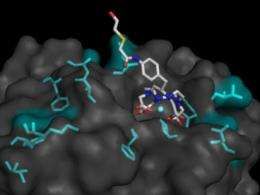
In nature, evolution takes place over eons: A slow accumulation of adaptations gradually produces new traits and species. But evolution can also happen on a small and fast scale in the laboratory.
The approach is called “directed evolution,” and scientists are using it to generate proteins that do not occur in nature — for example, cancer drugs, new microbial enzymes for converting agricultural waste to fuel, or imaging agents for magnetic resonance imaging (MRI).
Most protein structures are so complex that it’s nearly impossible to predict how altering their structure will affect their function. So the trial-and-error approach of directed evolution is usually the fastest way to come up with a new protein with desirable traits, says Dane Wittrup, an MIT professor of chemical and biological engineering who uses directed evolution to discover new antibodies that target cancer cells.
Such experiments often yield proteins that researchers never would have come up with on their own. “It’s like Christmas every morning,” says Wittrup.
For example, let’s say you want to create an antibody that will bind to a certain protein found on tumor cells. You start with a test tube full of hundreds of millions of yeast cells, engineered to express a variety of mammalian antibodies on their surfaces. Then you add probes containing the molecule you want your new protein to target, allowing you to pick out the proteins that bind to it.
Next, you take the proteins that bind the best and mutate them, in hopes of generating something even better. This can be done by irradiating the cells, or by forcing them to replicate their DNA in a way that is prone to mistakes. Those new proteins are screened the same way, and each time, the best candidates are used to create more proteins. “At the end, you have proteins that bind very tightly and specifically,” says Wittrup. “In the lab, it’s the same rules as natural evolution, but we get to set the criteria for who survives.”
Wittrup and his students recently created a new antibody that binds tightly to tumor cells and to a radioactive compound used for chemotherapy, potentially allowing for very precise targeting of the cancer treatment.
First developed about 15 years ago, directed evolution has become common in many labs, and easy enough that a first-year graduate student can produce a suitable protein in a couple of months, Wittrup says.
He and others at MIT, including Bruce Tidor, professor of biological engineering and computer science, have also tried to design proteins more precisely, using computer models to predict how changes in a protein’s sequence will affect its structure and function. In 2007, their simulation successfully produced a new version of the cancer drug cetuximab that binds to its target with 10 times greater affinity than the original. However, this approach is very expensive and only works when researchers start with a great deal of information about the protein interactions being modeled.
“In a limited way, we could do rational design,” says Wittrup. “Fifty years from now, maybe everyone will be doing that.”
Provided by Massachusetts Institute of Technology


