Clean diesel exhaust without platinum?
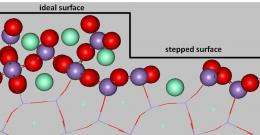
Researchers have designed a metal oxide catalyst for removing pollutants from diesel engine exhaust that could potentially replace costly platinum catalysts.
Engineers at a company co-founded by a University of Texas at Dallas professor have identified a material that can reduce the pollution produced by vehicles that run on diesel fuel.
The material, from a family of minerals called oxides, could replace platinum, a rare and expensive metal that is currently used in diesel engines to try to control the amount of pollution released into the air.
In a study published in the August 17 issue of Science, researchers found that when a manmade version of the oxide mullite replaces platinum, pollution is up to 45 percent lower than with platinum catalysts.
“Many pollution control and renewable-energy applications require precious metals that are limited – there isn’t enough platinum to supply the millions and millions of automobiles driven in the world,” said Dr. Kyeongjae “K.J.” Cho, professor of materials science and engineering and physics at UT Dallas and a senior author of study. “Mullite is not only easier to produce than platinum, but also better at reducing pollution in diesel engines.”
For the environmentally conscious, the higher fuel efficiency of diesel engines makes an attractive alternative to engines that run on gasoline. On the flip side, compared with gasoline engines, diesel vehicles produce more nitric oxide (NO) and nitrogen dioxide (NO2), which are known as NOx pollutants.
In June, the World Health Organization upgraded the classification of diesel engine exhaust as carcinogenic in humans, putting it in the same category as cigarette smoke and asbestos. Countries throughout the world have drafted guidelines to reduce diesel air pollution in the next decade.
Platinum, because of its expense to mine and limited supply, is considered a precious metal. Estimates suggest that for 10 tons of platinum ore mined, only about one ounce of usable platinum is produced.
In 2003, Cho became a co-founder and lead scientist at Nanostellar, a company created to find catalysts through a material design that would replace platinum in reducing diesel exhaust (Carbon monoxide, or CO, and NOx pollutants). His company has designed and commercialized a platinum-gold alloy catalyst that is a viable alternative to platinum alone, but until this experiment with mullite, had not found a catalyst made of materials that are less expensive to produce.
Cho, also a visiting professor at Seoul National University in South Korea, and his team suspected that the oxygen-based composition of mullite, originally found off the Isle of Mull in Scotland, might prove to be a suitable alternative. His team synthesized mullite and used advanced computer modeling techniques to analyze how different forms of the mineral interacted with oxygen and NOx. After computer modeling confirmed the efficiency of mullite to consume NOx, researchers used the oxide catalyst to replace platinum in diesel engine experiments.
“Our goal to move completely away from precious metals and replace them with oxides that can be seen commonly in the environment has been achieved,” Dr. Cho said. “We’ve found new possibilities to create renewable, clean energy technology by designing new functional materials without being limited by the supply of precious metals.”
The mullite alternative is being commercialized under the trademark name Noxicat. Dr. Cho and his team will also explore other applications for mullite, such as fuel cells.
More information: "Mixed-Phase Oxide Catalyst Based on Mn-Mullite (Sm, Gd)Mn2O5 for NO Oxidation in Diesel Exhaust," by W. Wang et al., Science, 2012.
Journal information: Science
Provided by University of Texas at Dallas


