Japan PM renews plea for nuclear restart
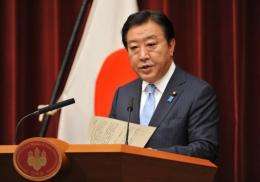
Prime Minister Yoshihiko Noda on Friday renewed his call for the re-firing of idle nuclear reactors, saying Japan could not do without atomic energy, but stopped short of ordering a restart.
Noda called on local authorities to allow operations to resume at the Oi nuclear plant in western Japan and pledged safety would remain a priority.
"Units number 3 and 4 should restart to support people's lives, that's my decision," Noda told a news conference. "Therefore I want to seek the understanding of local governments."
"Nuclear generation is an important power source (and) energy security is one of the country's most important issues."
Japan's political classes have been tip-toeing around the unpopular issue of reactor restarts for months, wary of public distrust of the technology since the meltdowns at Fukushima in the aftermath of last year's tsunami.
The government's own rules say reactors must pass internationally-approved stress tests designed to demonstrate they could withstand a natural disaster, and then get assent from their host communities.
The reactors at Oi are so far the only ones that are anywhere near gaining the necessary approval, but the process has become a kind of Mexican stand-off in which neither local politicians nor the central government in Tokyo has been willing to make the first move.
But increasingly alarmist warnings of summer power blackouts, with some estimates suggesting certain areas could see electricity supply fall as much as 20 percent short of demand, have added urgency to the issue.
Noda said nuclear power would continue to play a long term role in Japan, which has virtually no natural resources and is increasingly dependent on Middle East oil.
"The question is not only the short-term power supply in the summer. If electricity fees go up due to an increasing dependence on fossil fuel, it would affect people like retailers, small- and mid-size companies and general households which are barely making ends meet," he said.
"If that leads to a hollowing out of business, it would decrease employment opportunities. The temporary operation of the reactors in summer would not secure our way of life.
"I promise, again, to secure the safety of nuclear power and continue making uninterrupted efforts to improve it."
Noda's remarks came ahead of a decision due some time next week from the governor of Fukui prefecture, where the reactors are situated, who is expected to give the go ahead for their restart.
Until the tsunami-sparked meltdowns at Fukushima in March 2011, Japan had relied on nuclear power for around 30 percent of its electricity needs.
But in the months following the world's worst atomic disaster since Chernobyl, reactors that were shuttered for safety checks or maintenance have not been allowed to restart, chiefly because of public resistance.
The country's entire stable of 50 working units are now offline.
(c) 2012 AFP


