Electric cars are suitable for everyday use
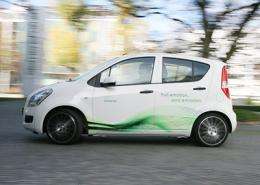
Electric cars are an excellent choice for everyday use, in particular for daily trips in the city. This conclusion is the result of user analyses in two projects in which Siemens plays a decisive role: the internal 4-Sustainelectromobility (4-S) project involving 20 moveE cars and the external "Electromobility Model RegionMunich - Drive eCharged" project involving 40 BMW MINI E cars. The latter is a joint project with BMW Group and Stadtwerke München, Munichs municipal utility.
The Siemens research organization Corporate Technology is managing both projects. The overwhelming majority of users confirmed that the BMW MINI E is suitable for everyday use. They attested to the fact that the little 200-HP electric speedster is a lot of fun to drive. Private and commercial users drove 40 MINI E cars on Munich streets over a period of ten months. During the model trial the electric vehicles were driven 300,000 kilometers, with zero emissions. Siemens developed the technology for charging.
The scientific survey revealed that the range of the MINI E was sufficient for 89 percent of the private users in day-to-day use. 88 percent of the private users found charging the cars at a charging station (at home or at work) to be more pleasant than driving to a gas station, while 79 percent of the private users said that environmental friendliness and zero-emissions driving were important advantages of the electric car. And 59 percent of the private users would like electric cars to be charged exclusively with electricity from renewable energy sources.
The test drivers of the movE cars had similar positive experiences. In the 4-S project, which is funded by the German Ministry for the Environment, Siemens employees in Munich and Erlangen have been testing 20 electric cars based on the Suzuki Splash since November 2010. On weekdays, the test drivers drove an average of only 40 kilometers, which means that the range of approximately 100 kilometers was fully adequate. The cars are charged at charging stations in specially marked parking lots at the Siemens locations where the test drivers work and at home charging stations in their garages (so-called wall boxes).
Thus, the drivers usually have sufficient opportunity to recharge the batteries during the day. The usage as second cars for driving to work or for shopping imposes almost no restrictions on mobility. In the meantime the electric cars were equipped with high-speed charging systems with 11 kilowatts, meaning that the batteries can now be charged within a period of two hours. In the near future, Siemens departments in Berlin will have the opportunity to test car sharing with a fleet of 13 electric vehicles.
Provided by Siemens AG
-
From lemons to lemonade: Reaction uses carbon dioxide to make carbon-based semiconductor,
32 comments
-
Thioridazine kills cancer stem cells in human while avoiding toxic side-effects of conventional cancer treatments,
3 comments
-
SpaceX private rocket blasts off for space station (Update),
42 comments
-
Climate scientists say they have solved riddle of rising sea,
31 comments
-
SpaceX capsule has 'new car' smell, astronauts say (Update),
2 comments
-
Need a rigid insulation material???
14 hours ago
-
magnets or EMF in car bumpers to protect from fender bender
May 26, 2012
-
length of wire in a coil of known dimensions?
May 25, 2012
-
India Engineering Powerhouse
May 25, 2012
-
electromagnet core dereference between hard and soft iron
May 25, 2012
-
Measuring water pressure in an open tank
May 24, 2012
- More from Physics Forums - General Engineering
More news stories
Browser wars flare in mobile space
The browser wars are heating up again, but this time the fight is for dominance of the mobile Internet.
7 hours ago |
5 / 5 (1) |
3
Probability of contamination from severe nuclear reactor accidents is higher than expected: study
Catastrophic nuclear accidents such as the core meltdowns in Chernobyl and Fukushima are more likely to happen than previously assumed. Based on the operating hours of all civil nuclear reactors and the number ...
Technology / Energy & Green Tech
May 22, 2012 |
3.6 / 5 (22) |
56
|
SpotterRF debuts Radar Backpack Kit (w/ Video)
(Phys.org) -- SpotterRF has announced a special radar backpack kit designed to enhance situational awareness for soldiers on the ground. The company says its special radar is designed for warfighters as part ...
HyperSolar shows dirty water no barrier to power world
(Phys.org) -- The Santa Barbara, California, company, HyperSolar, is set to transparently share the ups and downs of its research experiences toward the companys ultimate vision, successfully producing ...
Tesla to launch electric sedan in US on June 22
Tesla Motors said Tuesday it would begin deliveries of "the world's first premium electric sedan" on June 22, slightly ahead of schedule.
Technology / Energy & Green Tech
May 22, 2012 |
4.5 / 5 (12) |
18
Nvidia trumpets Tegra 3 phone design wins for 2012
(Phys.org) -- Nvidias competitive war paint has a name, Tegra 3. On the heels of Nvidia announcements about lowering costs of its Tegra 3 processors and Nvidia-enabled tablets running Android Ice Cream ...
Scientist: Evolution debate will soon be history
(AP) -- Richard Leakey predicts skepticism over evolution will soon be history. Not that the avowed atheist has any doubts himself.
Dell tablet leak: 10.1-inch display, two-battery choice
(Phys.org) -- Headline after headline talks about vendors tablets in the wings as likely number-one contenders for the iPad. Such claims have justifiably been taken with a grain of salt, considering ...
Keep food safety in mind this memorial day weekend
(HealthDay) -- Picnics, parades and cookouts are as much a part of Memorial Day weekend as tributes to the United States' war veterans.
Social welfare cuts ultimately come with heavy price, researchers say
(Phys.org) -- Slashing government funding for Medicaid, food stamps and other programs that serve the poor while politically popular with some lawmakers and many conservatives may do more harm ...
Is a classical electrodynamics law incompatible with special relativity?
(Phys.org) -- The laws of classical electromagnetism that were developed in the 19th century are the same laws that scientists use today. They include Maxwell’s four equations along with the Lorentz la ...
Aug 04, 2011
Rank: 1 / 5 (2)
Aug 04, 2011
Rank: 1 / 5 (1)
Companies need to do something to bring down the costs.
Aug 04, 2011
Rank: 1 / 5 (1)
To which 89% would probably say no. Simply because the car hasn't got enough juice to drive to the next city and back.
And that concludes the viability testing, because you really need to own two cars to do the job of one car, if the other one is electric.
Aug 04, 2011
Rank: not rated yet
They don't.
The Leaf costs £30,990 while a simple VW Golf costs around £20,000 or less depending. For ten thousand pounds you can buy a lot of gasoline or diesel.
In fact, it buys you about 7000 litres of fuel, and that's enough to get you from here to about the same 100,000 miles away where the Leaf's warranty (and battery) will end.
Aug 04, 2011
Rank: 1 / 5 (1)
Who would want to buy an electric car without a working battery, when a new battery will cost them as much as whole car?
Aug 04, 2011
Rank: 1 / 5 (1)
Aug 04, 2011
Rank: 1 / 5 (1)
We still need a lot more nuclear power to reduce the dependence on fossil fuels.
Aug 04, 2011
Rank: 3 / 5 (2)
Aug 04, 2011
Rank: 3 / 5 (2)
So far these cute cars are just toys for so called environmentally aware hippies.
Aug 05, 2011
Rank: 3.9 / 5 (8)
They didn't leave anything out. If you read the whole article you'd see that they specifically mentioned that BEV would be viable as SECOND cars, for shopping and running errands. In that context, your objection is moot.
No. Many families have two (or more) cars already. In those situations (or if you're thinking of getting another car anyway), you can get a BEV, if it suits your needs.
I can see BEV being quite popular with the elderly, who don't work or travel much, just go to the shops or the local club, or visit fiends, etc. As a bonus, they'd have lower maintenance and fuel costs.
Aug 05, 2011
Rank: not rated yet
Aug 05, 2011
Rank: 2.3 / 5 (4)
No. That's just my point.
Who can afford to have an expensive electric car as a second vehicle?
Let me give you a tip: it's much much less than 89% of people.
Aug 05, 2011
Rank: 3 / 5 (2)
The reason why most families can afford to have multiple cars is because they buy them second hand. Or, they simply give the old car to junior when mom and dad buy a new one on a loan.
There is no such thing as second hand electric cars because of the limited life of the batteries. You always pay the full price and you get nothing back, which makes it impossible for most people to own.
Aug 05, 2011
Rank: 3.5 / 5 (2)
If you take the average gasoline car, it's probably going to be owned by some student who bought it for maybe a thousand quid, fixes it, and drives it back to the family on the holidays.
If you take the electric cars of today, well, they've been in the dump for a decade by then.
Aug 05, 2011
Rank: not rated yet
The gas station equivalent could be something like a battery exchange. The exchange station would have a stock of fully charged batteries that would be swapped out and placed back into cars. The battery taken out would be put on charge at the station removing the issue of long charging times.
There would have to be a way to factor in the cost of the degrading batteries over time. Possibly included in the exchange fee for the battery. A flat fee some price for the amount of energy that will be needed to bring drained battery back to full.
The cars could still have smaller permanent batteries so the car's computer doesn't get reset when the main battery is swapped.
Probably not realistic, but fun to think.
Aug 05, 2011
Rank: 5 / 5 (1)
Well, you could expand the thought and calculate how many batteries you need when the maximum distance to a changing station from anywhere needs to be 15-20 miles at most, so people don't get stranded trying to get there on their last bits of charge.
And each station has to be prepared to handle a number of customers who may come at any time, one at a time or ten at a time, so you may not have the time to recharge the empties before the next one arrives.
The result is a staggering number of stations, and many many more batteries than there are cars on the roads.
Who's gonna pay all that?
Aug 05, 2011
Rank: 5 / 5 (1)
You can make the same argument about people who try to squeeze the most they can out of their tanks. Too bad so sad in my opinion.
The batteries would be a capital investment of the owner of the station and the costs would be factored into the price of a battery swap with some kind of expected payback value. The rest would just be the cost of power which would also be factored in to the cost of a change (this could/would be marked up as well).
There would need to be a lot of stations sure, but if a profitable business model can be drawn up for it, investors will invest and open franchises.
They would probably only be built on high traffic roadways/interstates once someone was going city to city.
Aug 05, 2011
Rank: 5 / 5 (1)
Lots of people, with jobs, that live in a metroburb and have 20-25 km commutes. Same people that have expensive first cars. That describes about 25% of the US population, including my wife.
Aug 05, 2011
Rank: not rated yet
I daresay this ownership obsession is in fact our biggest ecological problem. Think of all the stationary cars and hideous parking lots that would disappear if people just accepted that renting a car exactly when you need one and returning it when you're done is sufficient and that ownership is just a childish whim.
Aug 05, 2011
Rank: 1 / 5 (1)
That's funny! Imagine a gas station, sorry an EV Station that serves thousands of vehicles every 24 hrs like an average gas station and requires every battery to sit on a charger for a few hours. Do the math my friend!
Aug 05, 2011
Rank: 1 / 5 (1)
Right! Purely electrical cars have too many limitations to be practical. The best option available today is a Plug-in Hybrid like Prius that gets let's say 40-45kms per charge and then the gas engine kicks in to keep you moving.
Unless we can get 500kms per charge and charge it in 5 minutes at every corner we will not be able to go mainstream with this still primitive technology.
Aug 05, 2011
Rank: not rated yet
The average gas station serves thousands of cars a day? I'll give you hundreds, not thousands. I'm assuming people could still charge at their homes as well.
I can't see storage of that magnitude isn't really a big deal given that you can easily stack vertically.
The real challenge would be the high capital cost and whether it could be justified/would people be willing to pay the price. That's dependent on the cost of these mythical replaceable batteries that don't exist. There's no math to do at this point.
Aug 05, 2011
Rank: 2 / 5 (4)
I've got real work to do with a vehicle and that car won't do it.
Aug 05, 2011
Rank: 1 / 5 (1)
A passenger car brings a gas station less than 50 cents in profit on gas sale and spends less than 5 minutes at the pump. How much profit do you expect from a battery that spends a few hours on a charger? How do you solve logistic problems of moving tons of batteries in and out, disposing off used ones and so on, so on.
Impossible to make profit! It will never happen.
The battery has to stay in the car for at least 100k miles and be replaced after that for a few hundred dollars max. It's like a timing belt replacement. Other requirements as mentioned before.
Aug 07, 2011
Rank: not rated yet
Aug 07, 2011
Rank: not rated yet
Top Gear is a joke. Any knucklehead that believes those scumbags needs to get their head checked.
@Everyone
Electric vehicles are worth it. A majority of people's commutes are actually less than 40 miles a day. Sadly, the IDEA that they need to go 350 miles is a joke. Buying an electric car for daily commuting is worth the investment. As soon as knuckleheads stop believing propaganda and ASTRO-turfers, the sooner we can enter the future.
Aug 07, 2011
Rank: 1 / 5 (1)
If California is any guide then 4,400 gallons a day divided by whatever you reckon is the average daily fill.
http://www.energy...ary.html
Electric Boats? Electric Motor Cycles? Electric Lawn Mowers? Electric Leaf Blowers? Electric Forklifts? Electric Airplanes?
Wheres all this electricity going to come from? Solar Panels? Dream on.
Aug 08, 2011
Rank: not rated yet
Gasoline powered generators, and coal plants of course!
Aug 08, 2011
Rank: not rated yet
Aug 08, 2011
Rank: not rated yet
Aug 08, 2011
Rank: not rated yet