Hippie days: How a handful of countercultural scientists changed the course of physics in the 1970s
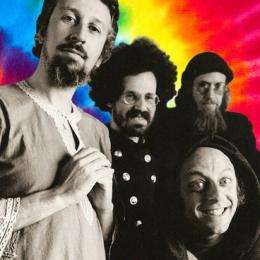
Every Friday afternoon for several years in the 1970s, a group of underemployed quantum physicists met at Lawrence Berkeley Laboratory, in Northern California, to talk about a subject so peculiar it was rarely discussed in mainstream science: entanglement. Did subatomic particles influence each other from a distance? What were the implications?
Many of these scientists, who dubbed themselves the “Fundamental Fysiks Group,” were fascinated by the paranormal and thought quantum physics might reveal “the possibility of psycho-kinetic and telepathic effects,” as one put it. Some of the physicists cultivated flamboyant countercultural personas. In lieu of solid academic jobs, a few of them received funding from the leaders of the “human potential” movement that was a staple of 1970s self-help culture.
In short, the Fundamental Fysiks Group appeared to be just a bunch of eccentric, obscure physicists whiling away the Me Decade in the Berkeley Hills. But as MIT historian of science David Kaiser asserts in his new book, How the Hippies Saved Physics, published this month by W.W. Norton, the group’s members actually helped to steer physics in a new direction: They revived scientific interest in the puzzling foundations of quantum mechanics, provided new insights about entanglement, and laid the intellectual groundwork for the field of quantum information science, which today produces cutting-edge computing and encryption research.
“That’s a pretty good track record for a few years of zany, fun-loving, free-spirited and yet devoted research,” says Kaiser, head of MIT’s Program in Science, Technology, and Society, and a senior lecturer in the Department of Physics.
For whom Bell toiled
The intellectual beacon guiding the Fundamental Fysiks Group was a 1964 insight by Irish physicist John Bell, which strongly suggested that entanglement was real: Measuring the properties of one particle could influence the properties of another, distant particle. “This group was obsessed with Bell’s Theorem and wanted to wring out its implications,” Kaiser says.
In so doing, the group was returning to the physics tradition of inquiry about the structure of the universe. Famous prewar quantum theorists such as Erwin Schrödinger regularly tackled questions about subatomic strangeness, like the apparent particle-wave duality of matter. But after World War II, Kaiser notes, quantum physics became a much more pragmatic field, developing technologies such as the transistor; a popular mantra was “shut up and calculate.”
The few physicists left pondering the nature of reality were doomed in the sour academic job market of the 1970s, after Sputnik-driven education funding had dried up. “No field grew faster than physics after World War II, and no field crashed harder in the 1970s,” Kaiser says.
Still, one physicist in the Fundamental Fysiks Group, John Clauser, rigged an apparatus at Lawrence Berkeley Laboratory and conducted the first experiment testing Bell’s Theorem; it suggested entanglement was real. In 2010, this earned Clauser a share of the Wolf Prize, physics’ leading award after the Nobel Prize; back then, the experiment merely earned Clauser a little recognition.
“I think the field had gotten out of balance,” says Kaiser, who has PhDs in both physics and the history of science from Harvard.
Another mainstay of the group, Nick Herbert, concocted influential thought experiments about the uses of entanglement. One paper Herbert circulated, on something he called the FLASH scheme, described a possible way that entangled particles could influence each other faster than the speed of light — violating Einstein’s theory of special relativity. If proven true, Herbert thought, information could be transmitted instantaneously. Eventually other scientists concluded that the concept would not work, since devices cannot copy unknown properties of particles. This “no-cloning theorem” is the basis of quantum encryption: Codes based on quantum information cannot be replicated and thus cracked.
“The no-cloning theorem was discovered by three groups in response to Nick Herbert’s FLASH scheme,” Kaiser says. “It’s a new insight into the structure and meaning of quantum theory. That’s page one of our quantum information science textbooks today.”
The Tao of Physics makes waves
According to Kaiser, the Fundamental Fysiks Group also contributed to science education, by helping to renew interest in the philosophical dimension of physics. Largely ignored by academia, group members began writing for popular publication.
One physicist at large associated with the group, Frijtof Capra, wrote a quirky book in 1975 drawing links between quantum phenomena and Eastern religions. Surprisingly, The Tao of Physics became an international bestseller with millions of copies in print. Equally surprisingly, after decades spent ignoring quantum weirdness, professors began assigning Capra’s book, to draw students back into the physics classroom.
Herbert and others in the group would also write successful texts on quantum physics that were assimilated into the physics curriculum. “Today’s undergraduates at MIT learn about Bell’s Theorem in the first semester of quantum mechanics,” Kaiser says. “That simply wasn’t true for a long time. Questions about what it all means now have a place in the curriculum.”
‘These folks had to show people the goods’
Not every scientist in the Fundamental Fysiks Group could write a best-seller, of course. To gain attention, the group circulated mimeographed working papers, sent letters to prominent physicists such as John Wheeler, and sought coverage in alternative newspapers, as Kaiser documents.
“The book captures something that seems quite ephemeral, a moment in the history of physics when a lot of thinking was not recorded in traditional publications,” says Ken Alder, a professor of history and founder of the Science in Human Culture Program at Northwestern University. “David has done an amazing job of piecing together what was going on at the time.”
Though many of the physicists were attracted to entanglement because it suggested that the paranormal might be possible, Kaiser is careful to distinguish between their personal interests and the value of their technical work. “Virtually every member of the group had PhDs from very elite programs,” Kaiser says. “They weren’t just leaning back and saying, ‘Hey man, can you dig it?’” Instead, he says, “These folks had to show people the goods, pages of calculations in papers they submitted to peer-reviewed journals.”
The hippie physicists also represent a larger point about American history, Kaiser believes: The counterculture movement was not primarily an anti-scientific phenomenon, as many commentators have described it. “There was a rejection of a certain kind of militarized Cold War science, not a general rejection of science or technology,” Kaiser says.
Today, new technologies based on entanglement seem plausible; banks have demonstrated money transfers using entangled photons, and research into quantum computing is expanding. As much as the Fundamental Fysiks Group wanted to move away from applied physics and return to foundational questions, the two things are very much entangled.
This story is republished courtesy of MIT News (web.mit.edu/newsoffice/), a popular site that covers news about MIT research, innovation and teaching.
Provided by Massachusetts Institute of Technology


