Europe worried but still divided on nuclear energy
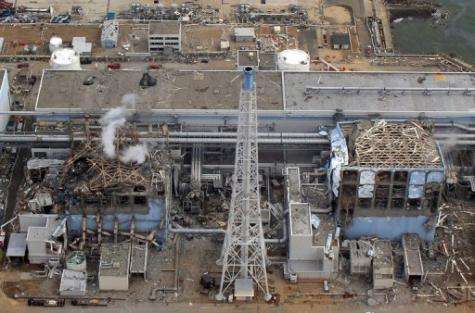
Twenty-five years after the Chernobyl disaster, Europe is still divided on the use of nuclear energy. But the Fukushima crisis stirred new fears that could slow down nuclear expansion.
"The accident at the Fukushima nuclear plant will upset the development of nuclear power in the coming years", including in Europe, French-based market research company Xerfi Global said in a study published after Japan's quake.
If the nuclear industry has revived since 2000 with a planned capacity extension across Europe, Asia and the US, the boom "seems compromised today though maybe not completely brought to a halt", Xerfi added.
Twenty-five years after the trauma caused by Chernobyl, Fukushima could have a more damaging effect on European public opinion, Aslihan Tumer, a Greenpeace International campaigner for energy, told AFP.
"After Chernobyl, the nuclear industry insisted that it was an old, Soviet technology and the country was not known for its safety culture. But when it happened in Japan, which is known for its safety culture, it became clear that this can happen anywhere," she said.
In Germany, Chancellor Angela Merkel acknowledged the price of the "Fukushima effect" in what she called a "painful defeat" in a crucial state poll.
Merkel last year decided to extend the the life of 17 German nuclear reactors.
In a country where nuclear power has been unpopular for years, the accident in Japan reinforced the public's rejection.
More than 60 percent of the Germans want their country to give up nuclear energy without delay, a poll showed.
Public support for nuclear energy also decreased in other European countries.
In Britain, 35 percent either strongly or slightly support a programme to replace the UK's existing reactors, according to a GfK NOP survey commissioned by Friends of the Earth. In November 2010, the figure was 47 percent.
In Bulgaria, public support for nuclear power also dropped after Fukushima though a majority of the population favoured the construction of a second nuclear plant alongside the Soviet-era Kozlodui one.
Even in France, which produces 75 percent of its electricity in nuclear plants, recent polls show that more than 80 percent of the French want to replace atomic energy by renewables. About two thirds of those polled said they "fear" nuclear power plants.
Despite the growing concerns among the public, European states still diverge on the future of nuclear power.
For nuclear-free countries like Denmark, Austria and Portugal, the future is without atomic energy.
Germany last week said it was trying to move faster towards nuclear-free energy production by boosting wind power among others.
On the contrary, France and most of the Eastern European countries still argue in favour of extra capacity.
Even if they were closer to Chernobyl than their Western counterparts, most Eastern Europeans at the time lacked information on the scale of the catastrophe because of the black-out imposed under communism.
If French president Nicolas Sarkozy officially supports nuclear expansion because of the "need to reduce carbon gas emissions", Eastern European states are more preoccupied with securing energy independence after living for years under Soviet influence.
"In Eastern Europe, the desire not to depend on a single energy provider, i.e. Russia, is stronger than in Western Europe for historical reasons," Mihaela Stiopol, a Romanian director of the European Nuclear Society, told AFP.
Hence the unfaltering support for atomic power in the countries behind the former Iron Curtain.
"I can't imagine us halting nuclear plants. In our country, this would result in economic problems on the verge of an economic disaster. In other words, we definitely won't do it," Czech Prime Minister Petr Necas said after Japan's disaster.
Prague wants to build two more units at its Temelin nuclear power station.
The situation is similar in neighbouring Slovakia where two new reactors are being built at Mochovce.
However, the EU member-states resolved to revisit safety at their 143 nuclear reactors. The so-called "stress-tests" should lead to the closure of plants that fail them.
Experts believe the radiation leakage at Fukushima will likely lead to a slow-down in the plans to build 24 new reactors in Europe.
Italy said it could extend to two years a moratorium on its nuclear building plans.
"We think that in general existing nuclear power plants will continue to function but decisions on new projects will be more difficult," Stiopol said.
(c) 2011 AFP


