Supercharged proteins enter biology's forbidden zone
Jul 14, 2010
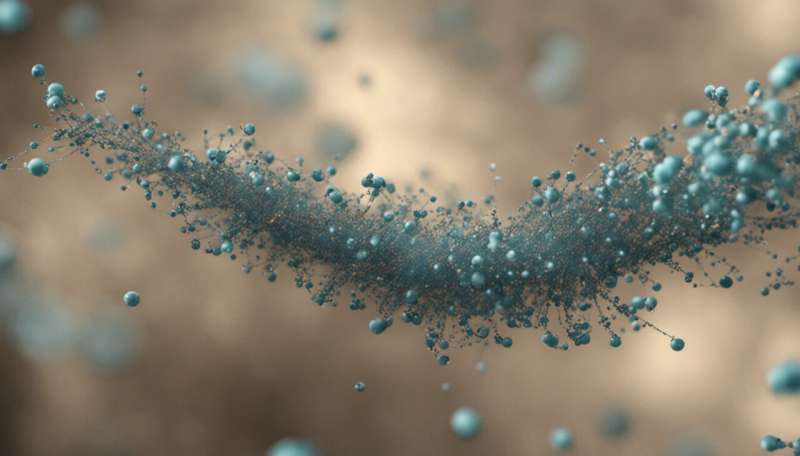
A new discovery may move the new generation of protein-based medications -- sometimes heralded as potential “miracle cures” -- closer to wide use in cells, like the structures shown here viewed under a microscope. Credit: iStock

Scientists are reporting discovery of a way to help proteins such as the new generation of protein-based drugs -- sometimes heralded as tomorrow's potential "miracle cures" -- get past the biochemical "Entrance Forbidden" barrier that keeps them from entering cells and doing their work.

The new technique, described in the monthly journal, ACS Chemical Biology, represents a new use for an engineered form of green fluorescent protein, the topic of the 2008 Nobel Prize in Chemistry that is one of the most important research tools in biosciences.

In the report, David Liu and his colleagues describe the difficulty of delivering proteins from the outside of mammalian into their interiors.

For that reason, nearly all of the blockbuster drugs that are proteins must do their work on the exterior of cells, activating that send signals to the interior. This constraint greatly limits the scope of protein-based drugs. Liu's solution: Attaching proteins to molecules of "supercharged" , which they mutated to give it a very high positive charge. When the hybrid proteins bump into the surface of a cell, they get pulled inside by negatively charged called proteoglycans.

Liu and his team tested the hybrid proteins on five types of cells, and found that they were extremely good at carrying their protein cargo inside. In fact, the supercharged was up to 100 times better at getting proteins into cells compared to other approaches. The delivered proteins were able to go to their target locations in the cell, such as the nucleus or cytoplasm, and perform their jobs. "To our knowledge, this is the first report of functional delivery of an enzyme into retinal cells in vivo," the researchers state.

Explore further: New screening approach uncovers potential alternative drug therapies for neuroblastoma

More information: "Potent Delivery of Functional Proteins into Mammalian Cells in Vitro and in Vivo Using a Supercharged Protein", ACS Chemical Biology.

add to favorites email to friend print save as pdf

Related Stories

Researchers make cell biology quantitative

Oct 20, 2005

Yale researchers have reported a method to count the absolute number of individual protein molecules inside a living cell, and to measure accurately where they are located, two basic hurdles for studying biology ...

Chemists design new way to fluorescently label proteins

Jun 01, 2010

(PhysOrg.com) -- Since the 1990s, a green fluorescent protein known simply as GFP has revolutionized cell biology. Originally found in a Pacific Northwest jellyfish, GFP allows scientists to visualize proteins ...

Yale scientists map cell signaling network

Nov 30, 2005

Yale University scientists have mapped, for the first time, the proteins and kinase signaling network that control how cells of higher organisms operate.

MIT probe may help untangle cells' signaling pathways

Jun 27, 2008

MIT researchers have designed a new type of probe that can image thousands of interactions between proteins inside a living cell, giving them a tool to untangle the web of signaling pathways that control most of a cell's ...

Recommended for you

Unspooling DNA from nucleosomal disks

2 hours ago

The tight wrapping of genomic DNA around nucleosomes in the cell nucleus makes it unavailable for gene expression. A team of Ludwig-Maximilians-Universitaet (LMU) in Munich now describes a mechanism that allows chromosomal ...

Chemists find new compounds to curb staph infection

4 hours ago

(Phys.org) —In an age when microbial pathogens are growing increasingly resistant to the conventional antibiotics used to tamp down infection, a team of Wisconsin scientists has synthesized a potent new ...

DNA damage: The dark side of respiration

May 22, 2013

(Phys.org) —Adventitious changes in cellular DNA can endanger the whole organism, as they may lead to life-threatening illnesses like cancer. Researchers at LMU now report how byproducts of respiration cause mispairing ...

User comments : 0

More news stories

Unspooling DNA from nucleosomal disks

The tight wrapping of genomic DNA around nucleosomes in the cell nucleus makes it unavailable for gene expression. A team of Ludwig-Maximilians-Universitaet (LMU) in Munich now describes a mechanism that allows chromosomal ...

Chemists find new compounds to curb staph infection

(Phys.org) —In an age when microbial pathogens are growing increasingly resistant to the conventional antibiotics used to tamp down infection, a team of Wisconsin scientists has synthesized a potent new ...

A hidden population of exotic neutron stars

(Phys.org) —Magnetars – the dense remains of dead stars that erupt sporadically with bursts of high-energy radiation - are some of the most extreme objects known in the Universe. A major campaign using ...

White tiger mystery solved

White tigers today are only seen in zoos, but they belong in nature, say researchers reporting new evidence about what makes those tigers white. Their spectacular white coats are produced by a single change ...