New study may lead to treatments that are effective against all MRSA strains
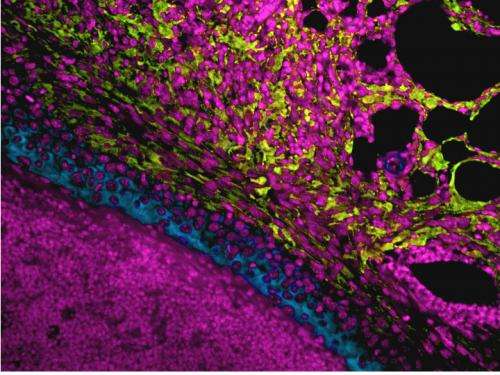
In the last decade, a new strain of MRSA has emerged that can spread beyond hospital walls, putting everyone at risk of contracting the dangerous bacterial infection. This particular strain of MRSA – known as USA300 – contains a chunk of genes not shared by any other strains, though it is unclear how this unique genetic material enables the bacteria to survive and persist in the community.
Now, research from the University of North Carolina School of Medicine has pinpointed a gene that causes the infection to linger on the skin longer than other strains, allowing it to be passed more readily from one person to the next.
The gene makes this strain of MRSA resistant to specific compounds on the skin called polyamines that are toxic to other forms of the bacteria. In uncovering this property, researchers have identified a novel target for developing new treatments against methicillin-resistant Staphylococcus aureus, particularly the USA300 strain that accounts for the vast majority of MRSA skin and soft tissue infections seen in emergency rooms.
"The problem is by the time you figure out how one strain comes into dominance, it often fades away and a new strain comes in. But because these compounds occur naturally and are so toxic, we still think they can lead to treatments that are effective against all MRSA. We will just have to put in a little extra work to block the gene and make this particular strain of MRSA susceptible to polyamines," said senior study author Anthony Richardson, PhD, assistant professor of microbiology and immunology at the UNC School of Medicine.
The UNC study, published Jan. 16, 2013, in the journal Cell Host & Microbe, follows an attribute of MRSA previously unexplored by other scientists—its sensitivity to the naturally occurring compounds called polyamines.
Polyamines are critical to wound repair because they are anti-inflammatory and promote tissue regeneration. Scientists first observed that MRSA infections were killed by polyamines in the 1950s, but no one followed up until recently, when Richardson decided to twist this scientific observation into a treatment option.
He and his colleagues tested hundreds of MRSA strains and found that all of them except one – USA300 – were sensitive to polyamines. When they looked to see what was different about this particular strain, they found that it contained a chunk of 34 genes, called the arginine catabolic mobile element (ACME), that none of the other strains possessed.
Then the researchers mutated each of these genes, one by one, until they created a strain that could be killed off by the polyamines. To confirm that they had the right gene, the researchers added a normal, non-mutated version of the gene—named SpeG – to other strains of MRSA and showed that it could make them resistant to these compounds.
Finally, Richardson wanted to know if the gene exerts the same effects in the context of a real infection. Using mouse models of MRSA infection, he and his colleagues showed that the presence of the SpeG gene helped the potent USA300 strain to stay on the skin for anywhere from a day to a week, giving the infection time to spread to the next host.
"Previously, the field tried to understand MRSA by focusing on attributes that we already knew were important, such as the amount of toxins or virulence factors a given strain makes. Those elements may explain why the disease is so bad when you get it, but they don't explain how a particular strain takes over. Our work uncovers the molecular explanation for one strain's rapid and efficient spread to people outside of a crowded hospital setting," said Richardson.
Journal information: Cell Host & Microbe
Provided by University of North Carolina Health Care


