Using a mathematical model to evaluate microsatellite genotyping from low-quality DNA
Noninvasive sampling has been used in studies of endangered animals. It has the advantage of obtaining samples without affecting the target animals. However, the quality of DNA obtained by such methods is often poor and this can affect the reliability of the results. Therefore, how to obtain reliable results from samples obtained noninvasively is of widespread interest. Professor LI Baoguo and Guo Songtao at the Key Laboratory of Resource Biology and Biotechnology in Western China, Ministry of Education, College of Life Sciences, Northwest University, set out to tackle this problem. Their work, entitled "Evaluating the reliability of microsatellite genotyping from low-quality DNA templates with a polynomial distribution model", was published in the Chinese Science Bulletin.2011, Vol 56 (24).
DNA templates from noninvasive samples, museum specimens, ancient DNA and forensic samples are often degraded or contaminated. The amount of target DNA available for genetic typing can be very low, often in the picogram range. When such low quality DNA is used for microsatellite profiling, false homozygotes and false alleles can occur leading to spurious results. To reduce the chance of false results, a multiple-tube approach was developed in which the DNA was distributed among several tubes. Compared to a single tube approach, this multi-tube approach offers more reliable genotyping from diluted DNA samples. However, the use of multiple PCR replicates can result in the sample being completely used up, especially if many loci are analyzed. In general, the smaller the amount of template in the PCR, the more prone it is to genotyping errors and the more PCR replicates are required.
Evaluating the reliability of microsatellite genotyping using low quality DNA templates can help optimize the experimental protocol. In this study, we aim to address the following questions for a given batch of samples: (i) how many amplifications are required to reach a given confidence level? and (ii) how should the confidence level of a protocol be calculated? To answer these questions, a mathematical model that treats homozygote and heterozygote discriminately was developed to measure sample quality. In this model, two parameters are used to measure the quality of the samples (the correct rate of heterozygous R1 and homozygous R2 individuals in positive PCRs). The results are then used to calculate the confidence levels of the multiple-tube approach. To test the model, we used plucked hair samples collected from 26 individuals of the Sichuan snub-nosed monkey (Rhinopithecus roxellana). We found that a confidence level of 99% could be achieved by 3 positive PCRs.
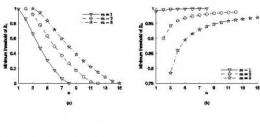
A set of minimum thresholds of sample quality for the multiple-tube genotyping approach at the 99% confidence level was calculated. The results indicate that the minimum threshold of R1 decreased and the minimum threshold of R2 increased as the number of amplification repeats increased. Note that after 8 positive PCRs with m = 1, the minimum threshold of R1 was zero, indicating that if the template concentration is extremely low, each positive PCR can only detect one allele of the heterozygote. Eight positive PCRs ensure each allele appears at least once at a probability of 99%. Similarly, 12 and 15 positive PCRs ensure each allele appears at least twice and three times respectively.
For microsatellite genotyping using low quality DNA with a large sample size, we recommend that, before performing the experiments, researchers evaluate the sample quality by taking 5 positive PCRs at each locus of several randomly selected individuals and genotyping them with m = 3 to obtain the parameters and (the observations of R1 and R2). For good quality DNA samples, we suggest 3 positive PCRs and genotyping with m = 2. If the first two positive PCRs generate the same genotypes, then a third one will not be necessary because it will not affect the consensus genotype. For poor samples, usually those with a low false allele rate but a high allelic drop-out rate, the approach described above requires too many replicates. These are the alternative multiple-step method which is able to minimize the number of replicates could be used. By simulation, the method can eliminate about one third of the required replicates.
The mathematical model described here enables researchers to optimize experimental protocols through pilot studies and to obtain reliable genetic information using non-invasive sampling methods. Compared to other methods that are used for the same purpose, this model evaluates the sample quality, considers the effects of false alleles and is easier to use.
More information: He G, Huang K, Guo S T, et al., Evaluating the reliability of microsatellite genotyping from low-quality DNA templates with a polynomial distribution model. CHINESE SCI BULL, 2011, 56 (24): 2523.
Provided by Science in China Press


.jpg)


