Australia's city birds carry highest toxic load
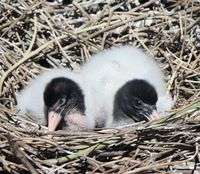
Toxic industrial pollutants contaminate bird eggs in Australia's major eastern cities at levels seven to nine times higher than those in inland areas, a new study has found.
The findings raise questions about potential impacts on bird breeding success and about the accumulation of such toxins in their predators higher up the food chain.
Researchers at the Australian Wetlands and Rivers Centre at UNSW tested for pollution levels in eggs of Australian white ibis sampled in and around Sydney, Newcastle, Brisbane and Melbourne and compared them with eggs from the same species at four rural wetlands in NSW, Victoria and South Australia.
The tests revealed widespread contamination from a range of environmentally hazardous man-made pollutants – including DDT, dioxins and PCBs - released as a result of the use of pesticides, flame retardants and cooling agents and by industrial incineration.
"The good news is that pollutant levels found in Australian ibis eggs are not as bad as in other parts of the world," says researcher Camila Ridoutt, an Honors student in environmental science and author of the study. On average, they were lower than levels from major urban cities such as United States and China, although the difference varied from only 1% lower for dioxins to more than 100% lower for PCBs.
"The bad news is that the levels were much higher in urban centres compared with those detected at inland wetlands," says Ridoutt. "We also found that the urban eggs were substantially smaller in size, weight and volume compared to inland eggs. The pollutants may be contributing to this.”
This could pose fertility problems for ibis and may have ramifications for predators of ibis, says co-author Professor Richard Kingsford, who heads the Center.
“Small eggs can lead to lower reproductive success, which may be a problem faced by our city ibis," says Professor Kingsford. "Given that pollutants like these tend to bio-accumulate in the tissues of animals, predators that eat the eggs or hunt ibis are also at risk." White-bellied sea eagles that live in the Sydney area may be particularly affected, says Ridoutt.
The study is one of the most comprehensive analyses attempted in Australia on pollutants and their build up in bird eggs, says Professor Kingsford. The researchers tested 219 eggs at 11 sites across eastern Australia for organohalogenated pollutants, which can be highly toxic and persistent in the environment and so have been prohibited since the 1980s. They include polychlorinated dibenzofurans, polychlorinated biphenyls (PCBs), polybrominated diphenyl ethers (PBDEs) and organochlorine pesticides, such as DDT. The sites surveyed were four inland wetlands (Watchels Lagoon, in South Australia; Mathoura, Lowbidgee and Macquarie Marshes in NSW) and urban or near-urban areas in NSW - Sydney (the CBD, Bankstown and Camden) and Newcastle; in Queensland (Brisbane); and in Victoria (Mud Islands, near Melbourne, and Shepparton).
The most contaminated individual egg – with high levels of a particularly toxic furan pollutant, 2,3,4,7,8-PeCDF - was found at Macquarie Marshes, where there was a die-off in 1995 of chicks poisoned by the pesticide chlorpyrifos. Professor Kingsford said such a finding in a wetland of international significance warranted further investigation.
The researchers suggest the high pollutant levels found in urban eggs reflect the birds' feeding habits and foraging places. In natural areas, white ibis mainly eat small live prey - such as yabbies, frogs, crickets and earthworms – but in cities they frequent landfills, waste dumps and recreation areas and are known to ingest everything from picnic scraps to paper and plastics.
Chemical analysis of eggs was conducted at the Dioxin Analysis Unit of the National Measurement Institute.
More information: Details of the study can be found here
Provided by University of New South Wales


.jpg)


