Not all clones the same
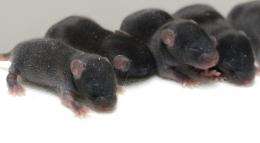
Despite their name, not all clones are created equal. This is especially true for the products of somatic cell nuclear transfer (SCNT), which entails the transplantation of the nucleus from a mature somatic cell, or non-reproductive cell, into an oocyte, or immature female ovum, whose nucleus has been removed. The result is a genomically reprogrammed cell that has been ‘tricked’ into acting like a fertilized egg, and subsequently develops into a clone of the nucleus-donor organism; however, the success rate for this procedure is remarkably low and many of the resulting clones exhibit a spectrum of developmental problems
“We wanted to know if there were any clone-specific gene expression patterns in these embryos that might be related to their phenotypic abnormalities,” says Atsuo Ogura of the RIKEN BioResource Center in Tsukuba. To solve this mystery, Ogura and colleagues performed an extensive analysis of gene expression activity, comparing the profiles of SCNT-derived mouse embryos versus healthy embryos obtained from in vitro fertilization (IVF).
They observed a striking pattern of clone-specific reduced expression of genes situated on the X sex chromosome. This suggested that there may be a malfunction in the activity of the Xist locus, which ensures that gene expression levels in female cells mirror those of their single X chromosome-bearing male counterparts. “In female somatic cells, one of the X chromosomes is inactivated by RNA transcripts from the Xist gene on the same X chromosome,” explains Ogura. “In pre-implantation embryos, the choice of which X gets inactivated is derived from the ‘memory’ of oocytes and sperm.”
This memory appeared to be lost or disrupted in SCNT embryos, with many embryos showing evidence of widespread gene inactivation on both X chromosomes as early as the four-cell stage. However, the researchers found that this effect could be mitigated considerably by deriving SCNT embryos from donor nuclei in which the active X chromosome contains a defective copy of Xist. Strikingly, this also helped to normalize the expression of many non-X-linked genes that were abnormally regulated in SCNT but not IVF embryos, indicating that the effects of this X chromosome inactivation were more far-reaching than expected.
This strategy yielded eight- to nine-fold improvement in their SCNT success rate in mice. Ogura and colleagues now hope to confirm that the same mechanism is specifically impeding cloning in other animal species as a prelude to the development of methods that might broadly bolster the efficacy of SCNT for both research and therapeutic applications.
More information: Inoue, K. et al. Impeding Xist expression from the active X chromosome improves mouse somatic cell nuclear transfer. Science 330, 496–499 (2010). Article
Provided by RIKEN


