Scientists unlock 'ancestral code' of banana family
Scientists have recently reconstructed the ancestral karyotype of the banana family, revealing how chromosome numbers decreased stepwise from 17 to 9–11 over evolutionary time.

Scientists have recently reconstructed the ancestral karyotype of the banana family, revealing how chromosome numbers decreased stepwise from 17 to 9–11 over evolutionary time.
Evolution
Aug 25, 2026
0
51
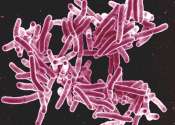
Tuberculosis bacteria released into the air from infected individuals dry out to form infectious particles that are second only to measles in contagiousness. Weill Cornell Medicine investigators have discovered specific mechanisms ...
Cell & Microbiology
Aug 29, 2026
0
51

Two tiny ant fossils recovered in southern Saskatchewan are helping scientists better understand the evolutionary history of modern ants. Ant fossils dating from 72–56 million years ago are rare. What happened to insects ...
Evolution
Sep 3, 2026
0
50

New research shows how artificial intelligence, combined with advanced experimental science, can help find "hidden" and unexplored proteins in the human body and reveal what they actually do, according to a new study published ...
Biotechnology
Sep 11, 2026
0
48

A mule has helped researchers build the most complete reference genomes to date for horses and donkeys, giving scientists access to complex regions of DNA that earlier versions could not fully capture.
Evolution
Aug 24, 2026
0
47

Scientists map the hidden protein network that helps red blood cells adapt to oxygen
Molecular & Computational biology
Sep 19, 2026
0
47

Researchers have developed fluorescent molecules that permit imaging of how DNA is packaged inside living cells at unprecedented resolution and, in preserved cells, at a resolution close to the width of the double helix itself.
Biotechnology
Aug 28, 2026
0
47

Many animal species, ranging from peacocks and birds of paradise to some lizards, fish and beetles, display physical features or ornaments that can attract potential mates. These ornaments can include colorful plumage, elaborate ...

Woolly rhinoceroses (Coelodonta antiquitatis) were fascinating creatures: giant, lumbering Ice Age beasts with thick fur and massive horns that died out about 11,000 years ago. Previous genetic studies had left open the question ...

Cysteine is one of the main building blocks that cells use to make proteins. But this amino acid is a double-edged sword—too much cysteine is toxic to the cell. Cells therefore keep free cysteine levels to a minimum, converting ...
Evolution
Sep 18, 2026
0
45
