'Professor Risk' versus the psychic octopus
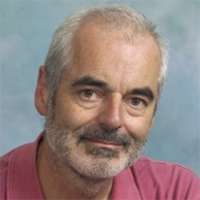
(PhysOrg.com) -- Having devoted his career to using statistical analysis to make accurate predictions, Professor David Spiegelhalter will this week attempt to explain how Paul the 'psychic' octopus appears to be beating him at his own game.
Professor Spiegelhalter, who is Winton Professor for the Public Understanding of Risk at the University of Cambridge, will be giving a free talk about his work organised by the discussion group, "Sceptics in the Pub".
His presentation on Tuesday (July 27th), called "How risky is it?" will focus on his day-to-day work, which is concerned with improving people's "risk literacy" - how they measure uncertainty and make judgements about risky situations.
The event is free, open to all, and will be held at the Maypole Pub on Portugal Place, Cambridge, starting at 7pm.
We may have difficulty making predictions because of pure chance, or because we don't understand what is going on. This inhibits our efforts to gauge all sorts of issues, from the safety of air travel, through to our attempts to predict the score in a football match.
Scientists try to deal with this by using probability theory, which, as Professor Spiegelhalter revealed in his recent YouTube film, "Professor Risk", can lead to interesting findings about whether it is safer to drive or cycle to work, or the likely effects of eating a bacon sandwich every morning.
When it comes to predicting sports results, however, his work is being eclipsed by a new star on the scene - Paul the "Psychic" Octopus from Germany, who made headlines after he correctly predicted the results of all seven of Germany's 2010 World Cup matches.
In keeping with the spirit of the Sceptics in the Pub series, which asks people with extraordinary or unusual claims to explain their ideas in a relaxed and informal atmosphere, Professor Spiegelhalter will devote part of his talk to explaining whether his eight-legged rival is simply better at the art of prediction, or if aspects of the story are going unreported?
Reflecting on the issue on his website (understandinguncertainty.org) before the World Cup Final, Professor Spiegelhalter argued that: "Even if Paul's final predictions are correct, it does not change my total belief that he is not psychic and the results are just chance."
"Essentially when a hypothesis has zero initial probability, no amount of surprising evidence will shift that belief." Paul went on to correctly predict that Spain would win.
As Tuesday's talk will reveal, however, all may not necessarily be as it seems in the case of the soothsaying octopus. One key issue may be the problem of checking its predictions.
When apparently remarkable "coincidences" are looked at in hard statistical terms, they often appear less remarkable than they may initially seem. For instance, in a class of 35 children, there is an 81% chance that two will have the same birthday. Similarly, if a coin is flipped 20 times, there is a 75% chance that it will produce a run of at least four heads or tails in a row.
A more obvious problem is that the whole truth about Paul may not always have been told. When the TV personality Derren Brown flipped 10 heads in a row in a widely-publicised broadcast, for instance, he had in fact been flipping coins for some hours. The film was then cut to show the section where he finally succeeded.
While Paul the Octopus' World Cup Final prediction was broadcast ahead of the event, was similarly selective reporting in fact taking place behind his earlier clairvoyance, with other sea-creatures were making dubious judgements and predicting a surprise World Cup win for North Korea?
All of this - and plenty more about the mathematics behind risk and uncertainty - will be revealed in Tuesday's talk.
More information about the "Sceptics In The Pub" network and its Cambridge branch can be found at: cambridge.skepticsinthepub.org/
Further details about Professor Spiegelhalter's work are available at: understandinguncertainty.org/
Provided by University of Cambridge
