How the wrong genes are repressed
Jun 11, 2010
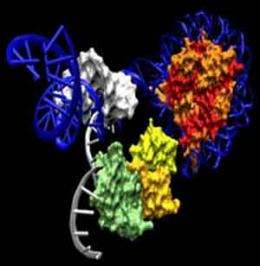
PRC2 is brought to its target genes though binding to short RNA transcribed by RNA polymerase II. It blocks full transcription of developmental regulator genes that would otherwise act to alter the identity of the cell.

The mechanism by which 'polycomb' proteins critical for embyronic stem cell function and fate are targeted to DNA has been identified by UCL scientists.

The discovery, which has implications for the fields of stem cell and , is detailed in research published today in the journal Molecular Cell.

A key feature of is the suppression of that when later switched on lead to the differentiation of the cells into specific mature cell types, such as neurons or immune cells. Polycomb proteins, first discovered in , are known to play a critical role in the suppression of these developmental genes. PRC2 (polycomb repressive complex-2) is present in all multicellular organisms and has been shown to be important in stem cell differentiation and early embryonic development.

The study authors found that PRC2 is brought to its target genes though binding to a new class of short RNAs transcribed by RNA polymerase II. PRC2 can then methylate chromatin, preventing the activation of developmental regulator genes that would otherwise act to alter the identity of the cell.

Senior author Dr Richard Jenner, UCL Infection & Immunity, said: "We knew that different sets of genes are turned on in different cells and that polycomb proteins prevent the wrong genes from being turned on, for example polycomb prevents the activation of neuronal genes in immune cells. However, although polycomb proteins repress genes, they are actually in a poised state - some sort of gene activity seemed to be occurring.

"We wanted to find out what this activity was and our identification of these short RNAs explains this unusual gene state. Discovering that polycomb also binds to these RNAs shows how polycomb might be recruited to genes, which are then repressed to maintain the identities of different cell types. This has been a key question in the field for some time and has important implications for how we might be able to control cell fate in tissue engineering".

Explore further: Researcher admits mistakes in stem cell study

More information: 'Short RNAs Are Transcribed from Repressed Polycomb Target Genes and Interact with Polycomb Repressive Complex-2' is published today in Molecular Cell.

Related Stories

Cancer is a stem cell issue

Feb 19, 2007

There is an urgent reason to study stem cells: stem cells are at the heart of some, if not all, cancers. Mounting evidence implicates a clutch of rogue stem cells brandishing ‘epigenetic’ marks as the main culprits in ...

Sugarcoating fruit fly development

May 29, 2009

Proteins are the executive agents that carry out all processes in a cell. Their activity is controlled and modified with the help of small chemical tags that can be dynamically added to and removed from the protein. 25 years ...

Recommended for you

Researcher admits mistakes in stem cell study

May 23, 2013

A blockbuster study in which US researchers reported that they had turned human skin cells into embryonic stem cells contained errors, its lead author has acknowledged. ...

Scientists discover how rapamycin slows cell growth

May 23, 2013

University of Montreal researchers have discovered a novel molecular mechanism that can potentially slow the progression of some cancers and other diseases of abnormal growth. In the May 23 edition of the prestigious journal ...

Unlocking secrets of cell reproduction

May 23, 2013

Research published in Open Biology today identifies, for the first time, nearly all the genes required for reproduction of a cell in a living organism.

What the smallest infectious agents reveal about evolution

May 22, 2013

Radically different viruses share genes and are likely to share ancestry, according to research published in BioMed Central's open access journal Virology Journal this week. The comprehensive phylogenomic analysis compar ...

User comments : 0

More news stories

EU bans three pesticides harmful to bees

The European Commission said Friday that it will ban for two years beginning in December pesticides blamed for killing the bees that pollinate food and fruit crops.

Galaxies fed by funnels of fuel

(Phys.org) —Computer simulations of galaxies growing over billions of years have revealed a likely scenario for how they feed: a cosmic version of swirly straws.