Scientists reveal cracks in egg theory
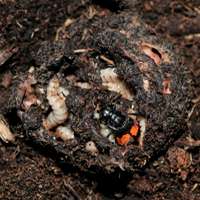
(PhysOrg.com) -- Scientists in Cambridge have found cracks in the long-standing theory that the number of eggs animals have -- and the size of those eggs -- is related to how much parental care they invest in their offspring.
Humans, like other mammals, have relatively few offspring into which they invest an immense amount of effort. In cold-blooded animals such as fish and amphibians, however, eggs vary greatly in size and number. Evidence suggests that parental care and producing larger eggs go hand-in-hand.
But a new analysis of reproductive strategies in insects by Dr James Gilbert and Dr Andrea Manica of the University of Cambridge shows that this relationship does not hold in the insect world.
According to Dr Gilbert: "Our results are wholly unexpected. We found that, regardless of how much effort insect species invest in parental care, the relative size of their eggs did not change. This means we may have to reassess our ideas about how caring for offspring affects their size."
When they looked at relationships between egg numbers and parental care in insects, they found even more surprising results.
"In insects that do not care for their eggs, we found that the larger the insect, the more eggs they have. What is really surprising is that in insects that feed their offspring, this relationship is reversed: the bigger the insect, the fewer eggs they have."
Dung beetles are a case in point. Even though they are among the largest beetles in the world, some lay only three or four eggs during their lives - fewer eggs than any other insect - putting an immense amount of effort into each offspring.
"These insects' reproductive strategy is more like mammals and birds," says Dr Gilbert.
Burying beetles (pictured) also feed offspring - but despite being smaller, they have many more offspring than dung beetles.
Why this should be the case could, Dr Gilbert believes, simply be due to how much food large offspring need.
He explains: "If you feed your offspring, you are personally responsible for meeting the energy requirements of the whole brood. If you belong to a bigger species, both you and all your offspring are bigger, so although your size lets you bring more food to your offspring, the energy requirements of each and every offspring have also increased."
"That means that the requirements of the whole brood are going to go through the roof, because you have to multiply that increase in demand by a factor of however many young you have. The bigger the species you belong to, the fewer offspring you can physically feed."
The results are published online this week in The American Naturalist.
Provided by University of Cambridge


