April 26, 2010 weblog
How Useful Are Adult Stem Cells, Really?
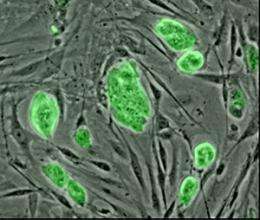
(PhysOrg.com) -- With the debate (especially in the U.S.) raging over ethics of using embryonic stem cells in research to cure diseases like ALS, Parkinsons, Type 1 diabetes and even spinal cord injuries, the breakthrough discovery that adult stem cells could be used instead made news. Induced pluripotent stem (iPS) cells are thought to be able to grow a number of different organs and tissues in an effort to provide therapy. The idea is that these induced stem cells, many of which could be generated from a patient's own cells, could be used to grow different types of tissue needed.
Research and Markets
reports that these cells could be quite useful indeed, advancing medical science without the issue that surrounding using
iPS cell technology although still in its infancy offers a clear path around many of the ethical issues associated with embryonic stem cells and introduces the potential for substantial strides in this area of research.
While this seems promising on the surface, there are other concerns about adult stem cells, and how useful they are. A group of scientists at the Massachusetts General Hospital for Regenerative Medicine believes that gene silencing might be one reason that there are limitations attached to iPS cells. One India reports on the issue:
"We found that a segment of chromosome 12 containing genes important for fetal development was abnormally shut off in most iPSCs. These findings indicate we need to keep improving the way we produce iPSCs and suggest the need for new reprogramming strategies," Nature quoted Dr. Konrad Hochedlinger, of the Massachusetts General Hospital Center for Regenerative Medicine (MGH-CRM) and the Harvard Stem Cell Institute (HSCI), who led the study.
It appears, then, that adult stem cells, while useful, may still not be able to compete with the full range of versatility offered by embryonic stem cells -- at least not yet. The ability to produce live animals, while possible with some types of iPS cells, is much less effective in the induced adult stem cells than it is with embryonic stem cells. However, if the goal is more aimed at reproducing tissue, rather than creating entire live animals, that limitation may lose some of its potency. After all, the Massachusetts study (which used mouse tissue) still showed that many different types of tissue could be developed, even with the gene silencing limitation.
It will be interesting to see where this leads, and whether scientists truly can use adult stem cells to replace embryonic stem cells as they work to cure diseases.
More information: Decision Resources, Inc., "Stem Cell Technology Update: The Rise of Induced Pluripotent Stem Cells" (April 26, 2010). Available online: www.researchandmarkets.com/res … 7/stem_cell_technolo.
One India, "Gene silencing could be behind induced pluripotent stem cells' limitations" (April 26, 2010). Available online: news.oneindia.in/2010/04/26/ge … ripotent-stemce.html.
© 2010 PhysOrg.com


