Mars Technology Helps Create Inauguration Mega-picture
When a new president is inaugurated, it's a big event, and it calls for a big picture. To be precise, 1,474 megapixels.
Using the same NASA technology that Mars rovers routinely use to image the Red Planet, photographer David Bergman created an unprecedented 1,474 megapixel panoramic photo of President Obama's inauguration. (For comparison, an ordinary digital photo contains less than 10 megapixels.) Click on the image below to pan around the rotunda and zoom in on some of the two million people. The detail is amazing. You can see Hilary Clinton's white earrings, Barbara Bush's fuzzy black earmuffs, the word "Obama" stitched on spectators' winter hats, Yo-Yo Ma taking a picture with his iPhone, and much more.
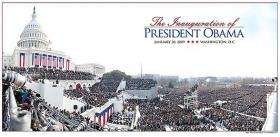
Click to view the interactive panorama
"Covering the inauguration of President Obama was one of the biggest thrills of my life," says Bergman. "Little did I know that it would be topped by the reaction to a photo I made that day. …With the ability to zoom in and move around the photo, it turned into an international game of 'Where's Waldo?' In the first 5 days, the image was viewed by millions of people in 186 countries."
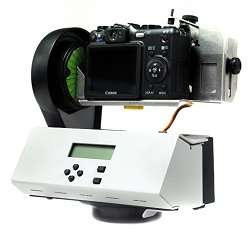
He created the image using Gigapan™, a camera system developed based on NASA technology. Here's how it happened:
A few years ago, NASA's Jet Propulsion Laboratory and Cornell University designed a special high-resolution camera called "Pancam" for the Mars rovers Spirit and Opportunity. Each of the twin rovers is equipped with a Pancam able to tilt 180 degrees and rotate 360 degrees, so the robotic geologists can snap photos in all directions. Special software stitches individual 1-megapixel digital images together into a high-resolution panorama and smooths out any anomalies.
Because the Pancams are mounted at eye level, viewing the final product helps scientists "look around" Mars as though actually hiking the desert-like terrain in their boots instead of via computer screens. The resolution of the images lets the scientists zoom in and scrutinize Martian rocks and other objects close up, just as they would if they themselves were kicking around in the dirt up there.
The masterminds behind Gigapan were Randy Sargent at NASA's Ames Research Center and Illah Nourbakhsh at Carnegie Mellon University. The panoramic photographs of Mars sparked an idea in their minds. It went something like this: "Let's learn to produce even bigger and better photos -- digital pictures composed of a billion or more pixels - and bring that technology back to Earth." Sargent worked with Rich LeGrand of Charmed Labs LLC to design and produce the Gigapan products.
A Gigapan panorama is composed of many individual images taken one at a time and stitched together to form a whole. The inauguration photo contains 220 individual shots that required a total of 15 minutes to take.
"I'm really a traditional, still photographer," says Bergman. "I had seen the Gigapan system but never used it. Up until the day of the inauguration, I had no idea how to set it up. I fiddled around with it for a while in the hotel room to figure it out. That's a testament to how easy it is to use."
The biggest challenge, says Bergman, was getting through security: "I had to be there at 6 in the morning and had to pass through three capitol police security checkpoints. I didn't have to face any Martian dust storms like the rovers do, but it was bitterly cold, and the ceremony didn't start until 11:30 a.m. I had no room for a tripod, so I had to clamp the Gigapan assembly to a rail and hope it worked."
It worked like a charm.
Although it is relatively new, Gigapan has already helped a lot of people in a number of ways. For example, it was used to create photographic overlays for Google Earth of areas affected by natural disasters, enabling relief workers to pinpoint areas in need of assistance in the aftermath of Hurricane Katrina, Hurricane Rita, and the 2005 earthquake in Kashmir. Botanists, geologists, archeologists, and other scientists around the world are using the technology to document diverse elements of the Earth's cultures and ecosystems.
From Earth to Mars and beyond, NASA technology is getting the big picture. Now you can too.
Provided by Science@NASA, by Dauna Coulter


