The giant cockroach genus Pseudophoraspis expands to the north with three new species
Cockroaches (Blattodea) are an insect order remarkable in their biodiversity and distribution, with more than 4500 species known and great geographical reach. Cockroach fossils date back around 400 million years, which testifies to their great adaptability and endurance that puts them among the planet's great survivors.
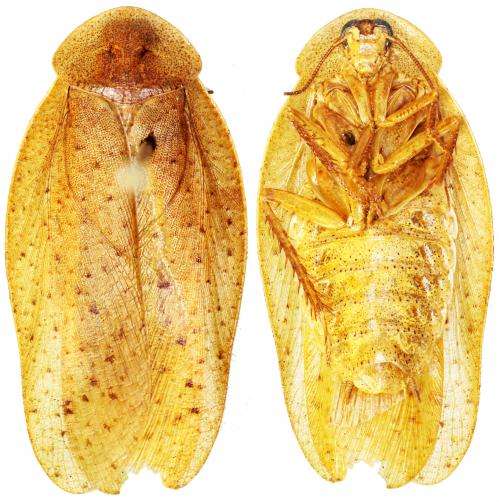
The cockroach genus Pseudophoraspism has has been reported from China for the first time thanks to the discovery of three new species: Pseudophoraspis clavellata, Pseudophoraspis recurvata and Pseudophoraspis incurvata, alongside the first regional record of three already described ones. They belong to the cockroach family Blaberidae, known also as giant cockroaches. The study was published in the open access journal ZooKeys.
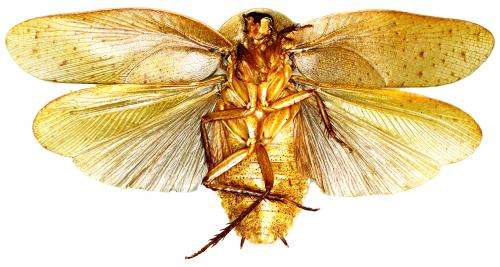
Although the adults of the newly described species can reach a size of around 3 cm in length, they are still some of the smallest representatives in the family. For comparison, the females of the largest species known, Blaberus giganteus, can reach up to 10 cm in length. The heaviest species, Macropanesthia rhinoceros, also known as the rhinoceros cockroach, reaches only around 8 cm but can weigh remarkable 35 grams.
All of the known species of the genus Pseudophoraspis, to which the three newly described ones belong, were reported from Southeast Asia and South Asia, with Vietnam considered the north boundary of their territory. This new record of three already known species, and three newly discovered ones in China's provinces Hainan, Yunnan and Guangxi, however, considerably expands the reach of the genus to the North.
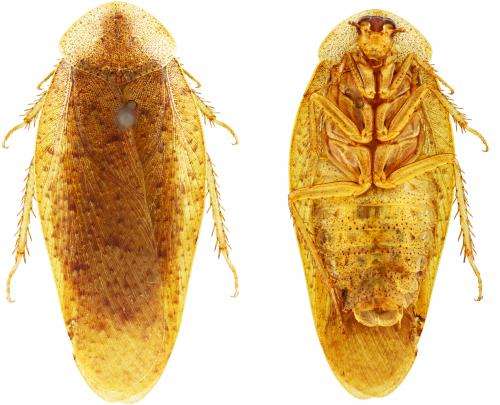
One of the authors, Dr. Zongqing Wang from the Institute of Entomology, Southwest University, China comments: "All of the known species were reported from Southeast Asia and South Asia, and the previously known boundary of this genus would be Vietnam. We found three new species from China, located in Hainan, Yunnan and Guangxi Provinces respectively, which extends the range of the genus Pseudophoraspis northward."
More information: Wang Z, Wu K, Che Y (2013) New record of the cockroach genus Pseudophoraspis (Blaberidae, Epilamprinae) from China with descriptions of three new species. ZooKeys 273: 1. doi: 10.3897/zookeys.273.4122
Journal information: ZooKeys
Provided by Pensoft Publishers


