Residents near Chinese e-waste site face greater cancer risk
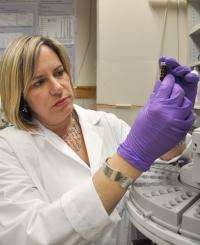
Residents living near an e-waste recycling site in China face elevated risks of lung cancer, according to a recent study co-authored by Oregon State University researchers.
Electronic trash, such as cell phones, computers and TVs, is often collected in dumps in developing countries and crudely incinerated to recover precious metals, including silver, gold, palladium and copper. The process is often primitive, releasing fumes with a range of toxic substances, including polycyclic aromatic hydrocarbons, or PAHs, a group of more than 100 chemicals.
PAHs, many of which are recognized as carcinogenic and linked to lung cancer when inhaled, were the focus of the study. Over the course of a year, researchers collected air samples from two rooftops in two areas in China.
One was in a rural village in the southern province of Guangdong less than a mile from an active e-waste burning site and not surrounded by any industry. The other was Guangzhou, a city heavily polluted by industry, vehicles and power plants but not e-waste.
The scientists concluded that those living in the e-waste village are 1.6 times more likely to develop cancer from inhalation than their urban-dwelling peers.
"In the village, people were recycling waste in their yards and homes, using utensils and pots to melt down circuit boards and reclaim metals," said Staci Simonich, a co-author of the study and a professor of environmental and molecular toxicology at OSU. "There was likely exposure through breathing, skin and food – including an intimate connection between e-waste and the growing of vegetables, raising of chickens and catching of fish."
The researchers estimated that of each million people in the e-waste area, 15 to 1,200 would develop lung cancer on account of PAHs over their lifetimes, while the likelihood in the city is slightly lower at 9 to 737 per million. These approximations do not include lung cancer caused by smoking.
The study also found that the level of airborne carcinogenic PAHs exceeded China's air quality standards 98 percent of the time in the e-waste area and 93 percent of the time in the city.
The study was published in the journal Environmental Science and Technology. The OSU Superfund Research Program provided assistance for the study. The National Institute of Environmental Health Sciences (NIEHS) and the National Institutes of Health (NIH) provided funding for the study. Eight researchers collaborated on the project, including OSU graduate student Leah Gonzales and scientists from China.
Journal information: Environmental Science and Technology
Provided by Oregon State University


