Ceria nanoparticles could lessen the damage from ischemic strokes
(Phys.org)—The most common form of strokes are caused by a sudden reduction in blood flow to the brain (ischemia) that leads to an inadequate supply of oxygen and nutrients. These so-called ischemic strokes are one of the leading causes of death and disability in industrialized nations. If they are not immediately remedied by medical intervention, areas of the brain may die off. In the journal Angewandte Chemie, Korean researchers have now proposed a new approach for supplemental treatment: Ceria nanoparticles could trap the reactive oxygen compounds that result from ischemia and cause cells to die.
When blood flow to areas of the brain is restricted, reactive oxygen compounds like superoxide radical anions (O2• –), hydrogen peroxide (H2O2), and hydroxyl radicals (HO• –) form and accumulate. These species cause oxidative damage and are responsible for tissue damage and cell death during a stroke. Nerve connections and neurovascular units are destroyed and the function of the brain in these areas stops. Despite various treatments that primarily combat the causes of reduced blood flow, such as thrombosis, there has been no way to protect nerves from oxidative damage after an acute ischemic stroke. Seung-Hoon Lee, Taeghwan Hyeon, and their team at Seoul National University hope that nanoparticles made of ceria may represent a new approach for treatment.
Cells contain enzymes that can break down reactive oxygen species: superoxide dismutases, which convert superoxide anions to hydrogen peroxide; and catalase, which splits hydrogen peroxide. Ceria nanoparticles can do both. How does this work? The cerium in ceria crystals is present in the form of Ce4+. However, if the particle size is reduced to a few nanometers in diameter, some spots on the surface are missing oxygen atoms. These places have Ce3+ instead, which can easily be reduced back to Ce4+ and can reversibly bind oxygen.
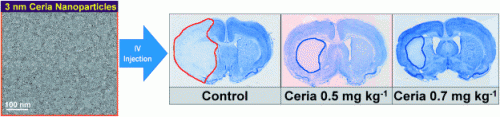
The researchers treated cell cultures with a substance that increases the concentrations of reactive oxygen species, which leads to increased cell death. Treatment with cerium oxide nanoparticles drastically improved the cell survival rate. In animal trials, the researchers induced ischemic strokes in rats. Intravenously administered ceria nanoparticles considerably reduced the stroke volume and nerve damage. An optimized, carefully balanced dose is necessary, however.
Interestingly, the concentrations of ceria nanoparticles in the healthy areas of the brain were very low, while those in the ischemic areas were drastically elevated. The researchers speculate that the ceria nanoparticles can barely pass through the intact blood-brain barrier. However, the barrier is damaged in the ischemic areas, allowing the diseased areas of the brain to be reached and oxidative damage to be stopped.
More information: Taeghwan Hyeon, Ceria Nanoparticles that Protect against Ischemic Stroke, Angewandte Chemie International Edition, dx.doi.org/10.1002/anie.201203780
Journal information: Angewandte Chemie International Edition
Provided by Wiley


