Ancient tooth may provide evidence of early human dentistry
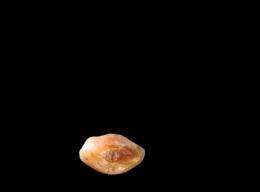
Researchers may have uncovered new evidence of ancient dentistry in the form of a 6,500-year-old human jaw bone with a tooth showing traces of beeswax filling, as reported Sep. 19 in the open access journal PLOS ONE.
The researchers, led by Federico Bernardini and Claudio Tuniz of the Abdus Salam International Centre for Theoretical Physics in Italy in cooperation with Sincrotrone Trieste and other institutions, write that the beeswax was applied around the time of the individual's death, but cannot confirm whether it was shortly before or after. If it was before death, however, they write that it was likely intended to reduce pain and sensitivity from a vertical crack in the enamel and dentin layers of the tooth.
According to Tuniz, the severe wear of the tooth "is probably also due to its use in non-alimentary activities, possibly such as weaving, generally performed by Neolithic females."
Evidence of prehistoric dentistry is sparse, so this new specimen, found in Slovenia near Trieste, may help provide insight into early dental practices.
"This finding is perhaps the most ancient evidence of pre-historic dentistry in Europe and the earliest known direct example of therapeutic-palliative dental filling so far", says Bernardini.
More information: Bernardini F, Tuniz C, Coppa A, Mancini L, Dreossi D, et al. (2012) Beeswax as Dental Filling on a Neolithic Human Tooth. PLoS ONE 7(9): e44904. doi:10.1371/journal.pone.0044904
Journal information: PLoS ONE
Provided by Public Library of Science


