For young birds, getting stressed out can be a good thing
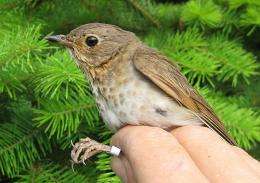
Many studies have found that high levels of hormones that are associated with stress are a sign of poor fitness and reduced chance of survival – but recent research on young songbirds found that some elevated hormones can be a good thing, often the difference between life and death.
The new research concluded that elevated levels of glucocorticoid hormones, which are part of the natural response to stress, were related to the movement, feeding, and anti-predator behaviors of juvenile birds.
The findings were made by researchers at Oregon State University with the Swainson's thrush as an animal model.
There's only about a one-in-three chance that juveniles of this bird species will survive, the study found, and it appeared to have more to do with their stress hormones than other factors such as vegetative cover or nesting site.
"In these birds, a little stress and elevated stress hormones were associated with greater survival," said James Rivers, a researcher with the OSU Department of Forest Ecosystems and Society. "The conventional wisdom is that elevated levels of glucocorticoid hormones are bad for survival, but we found just the opposite."
"Stress is more complex than we think," he said.
The hormones associated with stress, which include cortisol in humans, can change the behavior and physiology of animals. If stress is too persistent and the hormone levels remain consistently too high, it appears to impede growth. But especially at vulnerable stages where the task is to keep up with the parents, get enough food to grow, or flee a predator, higher levels of stress hormones appear to improve survival chances.
This was one of the first studies of its type done in small songbirds, researchers said. Some previous research had suggested that increased hormone levels can allocate resources away from normal activities and have long-term health impacts.
The research was published in Functional Ecology, a professional journal. It was supported by the U.S. Department of Agriculture, the National Science Foundation and other agencies.
Journal information: Functional Ecology
Provided by Oregon State University


