DNA scan sheds new light on mankind's mysterious cousins (Update)
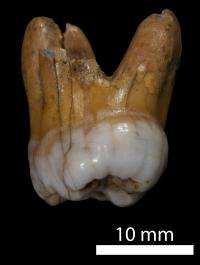
Max Planck researchers describe Denisovan genome, illuminating the relationships between Denisovans and present-day humans.
The analyses of an international team of researchers led by Svante Pääbo of the Max Planck Institute for Evolutionary Anthropology in Leipzig, Germany, show that the genetic variation of Denisovans was extremely low, suggesting that although they were present in large parts of Asia, their population was never large for long periods of time. In addition, a comprehensive list documents the genetic changes that set apart modern humans from their archaic relatives. Some of these changes concern genes that are associated with brain function or nervous system development.
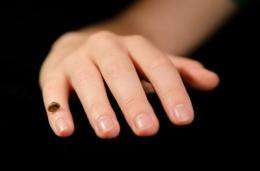
In 2010 Svante Pääbo and his colleagues sequenced DNA that they isolated from a finger bone fragment discovered in the Denisova Cave in southern Siberia. They found that it belonged to a young girl of a previously unknown group of archaic humans that they called "Denisovans". Thanks to a novel technique which splits the DNA double helix so that each of its two strands can be used for sequencing, the team was able to sequence every position in the Denisovan genome about 30 times over. The thus generated genome sequence shows a quality similar to genomes that have been determined from present-day humans.
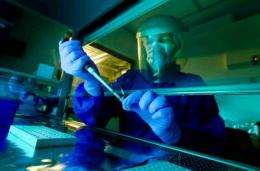
In a new study, which is published in this week's issue of the journal Science, Svante Pääbo and his colleagues compare the Denisovan genome with those of the Neandertals and eleven modern humans from around the world. Their findings confirm a previous study according to which modern populations from the islands of southeastern Asia share genes with the Denisovans. In addition, the genomes of people from East Asia, and South America include slightly more genes from Neandertals than those of people in Europe: "The excess archaic material in East Asia is more closely related to Neandertals than to Denisovans, so we estimate that the proportion of Neandertal ancestry in Europe is lower than in eastern Asia", the Leipzig researchers report.
"This is an extinct genome sequence of unprecedented accuracy", says Matthias Meyer, the lead author of the study. "For most of the genome we can even determine the differences between the two sets of chromosomes that the Denisovan girl inherited from her mother and father". From this the researchers can tell that genetic variation of the Denisovans was lower than in present-day humans. This is likely due to that an initially small Denisovan population that grew quickly while spreading over a wide geographic range. "If future research of the Neandertal genome shows that their population size changed over time in similar ways, it may well be that a single population expanding out of Africa gave rise to both the Denisovans and the Neandertals", says Svante Pääbo, who led the study.
The researchers furthermore generated a list of about 100,000 recent changes in the human genome that occurred after the split from the Denisovans. Some of these changes affect genes that are associated with brain function and nervous system development. Others possibly affect the skin, the eye and dental morphology. "This research will help determining how it was that modern human populations came to expand dramatically in size as well as cultural complexity while archaic humans eventually dwindled in numbers and became physically extinct", says Svante Pääbo.
Earlier this year, the Leipzig researchers had already made the entire Denisovan genome sequence available to the broader public by publishing it online.
More information: Matthias Meyer, Martin Kircher, Marie-Theres Gansauge, Heng Li, Fernando Racimo, Swapan Mallick, Joshua G. Schraiber, Flora Jay, Kay Prüfer, Cesare de Filippo, Peter H. Sudmant, Can Alkan, Qiaomei Fu, Ron Do, Nadin Rohland, Arti Tandon, Michael Siebauer, Richard E. Green, Katarzyna Bryc, Adrian W. Briggs, Udo Stenzel, JesseDabney, Jay Shendure, Jacob Kitzman, Michael F. Hammer, Michael V. Shunkov, Anatoli P. Derevianko, Nick Patterson, Aida M. Andrés, Evan E. Eichler, Montgomery Slatkin, David Reich, Janet Kelso, Svante Pääbo A high coverage genome sequence from an archaic Denisovan individual Science, August 30, 2012
Journal information: Science
Provided by Max Planck Society


