Microalgae 'bulging with biofuel potential'
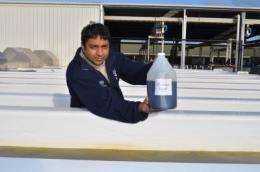
MISA researchers from SARDI have isolated and evaluated a ‘super strain’ of a native microalgae species that could form the basis of a local biofuels industry.
This breakthrough in biodiscovery comes after six years of ‘bioprospecting’ across thousands of kilometres of the State and into the waters of the Great Australian Bight by SARDI researchers followed by laboratory and small-scale outdoor raceway trials.
The success in finding this particular strain of microalgae among the hundreds of microalgal species and strains evaluated has given South Australia a head start as research into third generation biofuels advances to the next level.
Dr Nayar and SARDI researchers Kriston Bott and Michelle Brayley will present some of the research findings at the 8th Asia-Pacific Conference on Algal Biotechnology Conference ‘Algae for the Future’ hosted by Flinders University in Adelaide at the Adelaide Convention Centre on Wednesday July 11.
SARDI’s production trials are part of a $4.2m microalgae biorefinery project funded by the Department of Further Education, Employment, Science and Technology through the State Government’s Premier’s Science and Research Fund (PSRF), and project partners SARDI, Flinders University, United Water, Flinders Partners and Plentex Ltd. The project is called Developing a proof-of-concept facility for microalgal biodiesel feedstock and value-added products to pioneer a sustainable South Australian biofuels industry. SARDI’s bioprospecting research was funded by the Centre for Natural Resource Management.
Dr Sasi Nayar who leads the SARDI Algal Production Group says the research isolated 14 native strains with potential.
“The flagship strain stands head and shoulders above the rest – it is a specific strain of Nannochloropsis (green algae), with an unusually high lipid and protein content.”
“These attributes mean that the microalgae has tremendous commercial potential with application across the full range of oil uses from biofuels to high value co-products such as animal and human food supplements, nutraceuticals and cosmeceuticals such as skin cream and anti-ageing creams” he said.
“We are at a stage where we now know a lot about this species and its optimal growing conditions and we are ready to scale up to commercial level to refine the production systems to be used.”
The research partners are now looking for investors to help take the research to commercial pilot scale and then full commercial scale.
Microalgae is a non-food feedstock which does not compete with traditional agriculture for land and resources. It is a clean, renewable fuel that opens the door to significantly reducing greenhouse gas emissions.
It is carbon neutral because it absorbs or recycles carbon as it grows, rather than emitting new carbon into the atmosphere.
The mining industry is one of the largest users of diesel in Australia, and biofuel derived from microalgae provides one of the best alternatives to petroleum-derived fuel for the aviation and vehicle industries.
More than 300 delegates from 27 countries are attending the three-day Algae for the Future conference from July 9 to July 11 which is presenting ideas and advancements in the various fields of algal research including new fuel sources, medicines, aquaculture and nutritional products, environmental management and remediation of polluted sites.
More information: Further conference details are at: sapmea.asn.au/conventions/apcab2012/prog.html
Provided by SARDI


