Ion selectivity in neuronal signaling channels evolved twice in animals
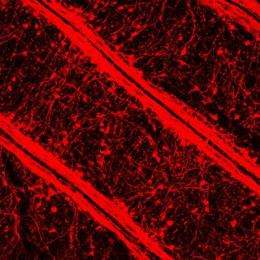
Excitation of neurons depends on the selected influx of certain ions, namely sodium, calcium and potassium through specific channels. Obviously, these channels were crucial for the evolution of nervous systems in animals. How such channels could have evolved their selectivity has been a puzzle until now. Yehu Moran and Ulrich Technau from the University of Vienna together with Scientists from Tel Aviv University and the Woods Hole Oceanographic Institution (USA) have now revealed that voltage-gated sodium channels, which are responsible for neuronal signaling in the nerves of animals, evolved twice in higher and lower animals. These results were published in Cell Reports.
The opening and closing of ion channels enable flow of ions that constitute the electrical signaling in all nervous systems. Every thought we have or every move we make is the result of the highly accurate opening and closing of numerous ion channels. Whereas the channels of most lower animals and their unicellular relatives cannot discern between sodium and calcium ions, those of higher animals are highly specific for sodium, a characteristic that is important for fast and accurate signaling in complex nervous system.
Surprising results in sea anemones and jellyfish
However, the researchers found that a group of basal animals with simple nerve nets including sea anemones and jellyfish also possess voltage-gated sodium channels, which differ from those found in higher animals, yet show the same selectivity for sodium. Since cnidarians separated from the rest of the animals more than 600 million years ago, these findings suggest that the channels of both cnidarians and higher animals originated independently twice, from ancient non-selective channels which also transmit calcium.
Since many other processes of internal cell signaling are highly dependent on calcium ions, the use of non-selective ion channels in neurons would accidently trigger various signaling systems inside the cells and will cause damage. The evolution of selectivity for sodium ions is therefore considered as an important step in the evolution of nervous systems with fast transmission. This study shows that different parts of the channel changed in a convergent manner during the evolution of cnidarians and higher animals in order to perform the same task, namely to select for sodium ions.
This demonstrates that important components for the functional nervous systems evolved twice in basal and higher animals, which suggests that more complex nervous systems that rely on such ion-selective channels could have also evolved twice independently.
More information: Cell Reports: Convergent evolution of sodium ion selectivity in metazoan neuronal signaling: Maya Gur Barzilai, Adam M. Reitzel, Johanna E.M. Kraus, Dalia Gordon, Ulrich Technau, Michael Gurevitz and Yehu Moran. CELL-REPORTS-D-12-00108R2
Journal information: Cell Reports
Provided by University of Vienna


