Low-temperature method 'grows' transparent zinc oxide films for use in displays, solar cells
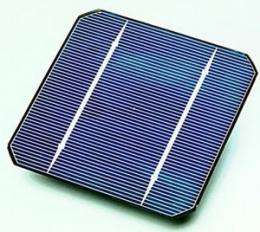
The displays on flat-screen TVs and smartphones, as well as the panels on solar cells, all require materials that not only conduct electricity but are also highly transparent to visible light. One transparent electrical conductor that is typically used in the industry is indium tin oxide (ITO). Unfortunately, ITO is not only expensive but also toxic to the environment.
In a significant step forward in the field, researchers from the A*STAR Institute of Materials Research and Engineering and the A*STAR Data Storage Institute have now pioneered a low-cost methodology for the fabrication of zinc oxide thin films. “These zinc oxide thin films are highly regarded as a promising material for replacing ITO,” says Nancy Wong, a principal investigator in the research team.
Zinc oxide is a cheap and abundant material that is widely used in cosmetics such as sun screens or baby powders. Its transparency to visible light is similar to that of ITO, but the fabrication of zinc oxide thin films on an industrial scale is considerably more challenging. In particular, to achieve the necessary electrical conductivity, small amounts of gallium need to be incorporated during growth of the films. Gallium has an additional outer electron in comparison to zinc, which is essential to achieve the necessary electrical conductivity. To date, such gallium-doped zinc oxide (GZO) films have only been realized by high-temperature processing methods.
The method developed by the A*STAR researchers involves the use of pulsed laser deposition. In this room-temperature process, an intense laser beam is used to evaporate zinc and gallium atoms. The atoms move towards a substrate that is also placed within the stainless steel chamber. They then react with oxygen gas also supplied to the growth chamber to form a zinc oxide film on the substrate. Ideal growth compositions were then found by a systematic variation of parameters such as oxygen gas pressure and substrate temperature. The best films grown achieve an optical transparency as well as electrical conductivity that match that of ITO.
Given such advantages, these GZO films could have significant commercial potential. The films may be particularly well-suited for solar panel development, as cost-reduction is a crucial factor for the solar panel industry. “The deposition can be carried out at room temperatures, which reduces the tendency to damage layers underneath, for example, in the plastic substrates applied in organic solar cells and other flexible electronic devices,” says Wang. “Entirely new applications beyond ITO could emerge this way.”
The A*STAR-affiliated researchers contributing to this research are from the Institute of Materials Research and Engineering and the Data Storage Institute.
More information: Wong, L. M. et al. Examining the transparency of gallium-doped zinc oxide for photovoltaic applications. Solar Energy Materials and Solar Cells 95, 2400–2406 (2011). www.sciencedirect.com/science/ … ii/S0927024811002145
Journal information: Solar Energy Materials and Solar Cells
Provided by Agency for Science, Technology and Research (A*STAR)


