Unraveling the Chinese cabbage genome
January 20, 2012

Unraveling the Chinese cabbage genome

Enlarge

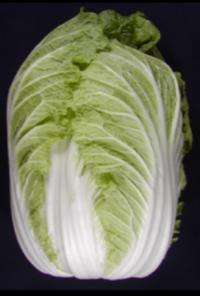
Figure 1: The Chinese cabbage, Brassica rapa subspecies pekinensis. Credit: 2011 Hiroshi Abe

Clues into the evolutionary diversification of brassicas have emerged from the draft Chinese cabbage genome sequence. Brassica crops include many agriculturally important vegetables, such as Chinese cabbage, pak choi, turnip, broccoli, cabbage and cauliflower, as well as various oilseed crops.

The sequencing focused on Chinese cabbage, Brassica rapa pekinensis (Fig. 1), and was undertaken by the international Brassica rapa Genome Sequencing Project Consortium. The work was underpinned by the previously published of the premier model of , Arabidopsis thaliana. This species is related to B. rapa, with which it shared a .

“Brassicas come in many shapes and sizes, and even individual species show considerable morphological variation. Genome information helps us understand the genetic basis of this diversity,” explains consortium member Hiroshi Abe of Japan’s RIKEN BioResource Center, one of the three biggest Arabidopsis stock centers in the world. “We developed genomic resources for Brassica rapa and contributed to the gene annotation in this project.”

New plant species generally arise through hybridization, involving whole genome duplications, followed by rapid DNA sequence divergence under natural selection, chromosomal rearrangements and extensive gene loss. Indeed, plant biologists have observed whole-genome duplication in all plant genomes sequenced to date, including that of A. thaliana. In addition, previous physical mapping studies revealed a whole genome triplication event in the Brassica lineage, after its divergence from the Arabidopsis lineage at least 13–17 million years ago.

The genome sequence assembled by the Consortium covers more than 98% of the DNA encoding genes. By analyzing the sequence in detail, the researchers were able to investigate the evolutionary and functional consequences of the whole genome triplication event. 

The researchers identified 41,174 protein-encoding genes belonging to 16,917 separate gene families. By comparing the sequences of Brassica genes to those of A. thaliana, they were able to relate gene structures in these two plants. They found that the extent of gene loss among triplicated genome segments varies, with one of the three copies consistently retaining a disproportionately large fraction of ancestral genes. Based on their finding, the researchers believe that variation in the number of members of gene families present in the genome probably contributes to the remarkable morphological plasticity of Brassica species.

“We hope that our findings will contribute to the breeding of improved Brassica oil and vegetable crops,” says Abe. “The genomic resources for developed at the RIKEN BioResource Center will soon be made available to the wider research community.”

More information: Brassica rapa Genome Sequencing Project Consortium. The genome of the mesopolyploid crop species Brassica rapa. Nature Genetics 43, 1035–1039 (2011).

Provided by RIKEN search and more info website


Rank not rated yet
Relevant PhysicsForums posts

More news stories

Manufacturing genes to attack flu virus

An international research team has manufactured a new protein that can combat deadly flu epidemics.

Biology / Biotechnology

created 6 hours ago | popularity not rated yet | comments 0 | with audio podcast

Scientist: Evolution debate will soon be history

(AP) -- Richard Leakey predicts skepticism over evolution will soon be history. Not that the avowed atheist has any doubts himself.

Biology / Evolution

created May 26, 2012 | popularity 3.5 / 5 (20) | comments 89

More plant species responding to global warming than previously thought

(Phys.org) -- Far more wild plant species may be responding to global warming than previous large-scale estimates have suggested.

Biology / Ecology

created May 22, 2012 | popularity 4.6 / 5 (14) | comments 18 | with audio podcast

For monogamous sparrows, it doesn't pay to stray (but they do it anyway)

It's quite common for a female song sparrow to stray from her breeding partner and mate with the male next door, but a new study shows that sleeping around can be costly.

Biology / Plants & Animals

created May 22, 2012 | popularity 5 / 5 (2) | comments 8 | with audio podcast

Thousands of shellfish found dead in Peru

Thousands of crustaceans were found dead off the coast of Lima following the mystery mass death of dolphins and pelicans, the Peruvian Navy said Friday.

Biology / Ecology

created May 26, 2012 | popularity 4.7 / 5 (7) | comments 7


Stunning image of smallest possible five-ringed structure

Scientists have created and imaged the smallest possible five-ringed structure – about 100,000 times thinner than a human hair – and you'll probably recognise its shape.

'Unzipped' carbon nanotubes could help energize fuel cells, batteries

Multi-walled carbon nanotubes riddled with defects and impurities on the outside could replace some of the expensive platinum catalysts used in fuel cells and metal-air batteries, according to scientists at ...

Change in developmental timing was crucial in the evolutionary shift from dinosaurs to birds: study

At first glance, it's hard to see how a common house sparrow and a Tyrannosaurus Rex might have anything in common. After all, one is a bird that weighs less than an ounce, and the other is a dinosaur that ...

Computer model used to pinpoint prime materials for efficient carbon capture

When power plants begin capturing their carbon emissions to reduce greenhouse gases – and to most in the electric power industry, it's a question of when, not if – it will be an expensive undertaking.

T cells 'hunt' parasites like animal predators seek prey, study shows

By pairing an intimate knowledge of immune-system function with a deep understanding of statistical physics, a cross-disciplinary team at the University of Pennsylvania has arrived at a surprising finding: T cells use a movement ...

Land and sea species differ in climate change response: study

(Phys.org) -- Marine and terrestrial species will likely differ in their responses to climate warming, new research by Simon Fraser University and Australia’s University of Tasmania has found.