Senior-driving study eyes safer roadways
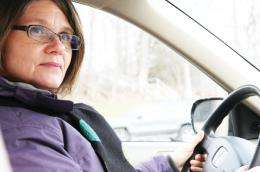
For some, a GPS is an invaluable part of a lengthy commute, helping drivers navigate unfamiliar cities. For others – and seniors, in particular – a GPS, along with a number of other automotive gadgets, often proves a distraction, doing more harm than good.
So, how do we reconcile advancements in automotive technology with an aging driver population? What needs to be done to make driving safer and more accessible to seniors?
These are just some of the questions at the heart of the Enhancing Vehicular Mobility in Older Adults project, co-led by Jan Polgar, a professor at The University of Western Ontario’s School of Occupational Therapy and part of AUTO21, a Canadian Network of Centres of Excellence.
Polgar, together with Western colleague Lynn Shaw, contributed to two recent studies she says show a need to improve on senior driver evaluation, training and access to public transportation in order to make the roads safer for everyone.
“With the project, we have really two prongs – one of them is driver evaluation and driver retraining,” Polgar says. “The other is using technology as part of a re-training program and developing a support or checklist for seniors to help them if they are looking to purchase a car that has new technology in it and to determine if (that car) is right for them.”
In one study, researchers surveyed seniors across Canada, asking about their comfort with technologies developed to make driving easier, and generally safer, for the average driver.
“The group was looking at whether technology is, in fact, a benefit to older drivers or if it is a distraction,” Polgar explains.
The survey looked at a number of devices – among them a GPS – to determine if they are easy to use, if their directions are clear and what features tend to give senior drivers trouble when operating them while driving a car.
“A GPS, for an example, is getting easier to use. But some of them assume you’ve got experience using a computer. If someone isn’t used to computers, they won’t know how to use that technology, so it might be a challenge,” Polgar says.
Features such as ‘lane assist’ with lights on side mirrors that light up if another car is in a driver’s blind spot and flash if the driver signals a lane change, require less input from a driver and are easier to use. Even so, advancements such as these can be distracting to senior drivers, Polgar explains.
The results of the study will benefit occupational therapists working with mobile seniors and can also be used toward the future development of more intuitive, senior-friendly automotive technologies.
“Age isn’t a determining factor for safe driving. But we start to see a split after 75, with problems that can affect driving – vision, hearing and musculoskeletal disorders,” Polgar says.
This is why a better evaluation of senior drivers is needed.
“We need to have really good evaluations, and it’s a two-step process – a screening process to determine who is fine to drive and who needs to come off the road. The work is being done by OTs (occupational therapists) but it’s not readily available,” Polgar says.
Once a proper evaluation process is in place, occupational therapists who work with seniors can help develop evidence-based driver re-training programs that are readily accessible and don’t cost $350, the current tab for a senior driver training program.
A second study carried out by Polgar’s team looked at a number of London seniors unable to drive, dependent on public transportation for their livelihood.
The study found seniors were reluctant to give up licenses because they weren’t comfortable using public transportation. Participants didn’t know how to use a bus, navigate routes and schedules and found some transportation inaccessible due to long walking distances to bus stops as well as poor hours and a lack of kneeling busses on certain routes.
Researchers are looking to partner with the city, senior transpiration groups or the Kiwanis Senior Community Centre to develop a ‘bus buddies’ program, available in some Canadian cities, to help seniors access public transportation.
Whether they remain on the road as drivers or take public transportation, an improvement to senior driver evaluations, training and public transportation is needed, not just for safety, Polgar notes.
“It would make mobility easier and there’s been lots of work showing that if people can get out and continue doing what they do, there are a lot of health and emotional benefits.”
Provided by University of Western Ontario


