Colorful eco-textiles thanks to nano-sized enzymes
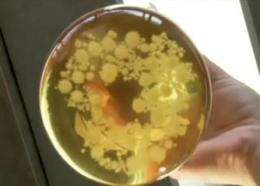
To address the problems encountered by the traditional European dyes industry, scientists have developed a new and environmentally friendly way to produce dyes.
The problems encountered by the traditional European colour industry go from lack of innovation and weak market competitiveness to toxicity, environmental hazards and health risks for those working in it. Dye-making industry is based on chemistry and processes designed more than a century ago, some of which are very energy consuming and potentially dangerous for the workers. In order to prevent explosive reactions when mixing the chemicals, the process has to be cooled down to ice cold temperatures, which consumes a lot of energy. Besides, some dyes can be toxic and there is a risk that they may pass the skin through perspiration. Moreover, 10-15% of all the dyes used in the industry are released into the environment during manufacture or usage, constituting a certain risk to living organisms. In light of this the EU banned many of these toxic dyes but alternatives were not available for them all.
To overcome this bias scientists of the EU-funded research project SOPHIED led by the Catholic University of Louvain, in Belgium, have extracted special proteins, called enzymes, from fungi. Even if the specimens chosen don’t look very colorful, they can produce the enzymes needed to create the eco-dyes. These substances were used to synthesize colorants for dyeing textiles and leather.
“We already knew there is a whole spectrum of colours in the fungis and that the enzymes can form new color compounds during the bioremediation part, that is the process through which the metabolisms of microorganism removes pollutants. What we didn’t know was if it was possible to make textile dyes because these have special properties and chemical functions that you cannot find in nature”, says Estelle Enaud of the Earth and Life Institute - Applied Microbiology at the Université Catholique de Louvain. Enaud was a post-doc researcher in Sophie Vanhulle's team. Sophie Vanhulle, the project co-ordinator, died two years ago. “The challenge was if it was possible to use the enzyme on a substance that is not natural, and it turned out it was!”.
To extract the enzymes the fungi are put into a liquid that contains nutrients, which allows them to grow and release the desired proteins. After taking out the fungi, silica particles are added to the fluid. “The combination of enzymes and silica particles brings to a stabilization of the enzyme and eliminates proteins at the end in our dye product, since they might provoke allergies”, Estelle Enaud points out. “The particle we used the most had a mean size of 100 µm, much bigger than nano. The nano size and the nano part of the project concern the enzymes that are nanocatalysts and can also be called biological nano tools”, she explains. “I must admit I do not really like to use the word nano because although everything I work with as a biochemist is nano, biochemistry is not a new science area”.
The new colorants possess chemical features that allow them to adhere directly to the fibers of polyamide, wool or silk, making it unnecessary to add extra chemicals that can pollute water and provoke allergies. “Before putting this product on the market, it would be important to check its toxicity”, Victor Puntes, responsible of the ‘Inorganic nanoparticles group' at the ICN (Institut Català de Nanotecnologia) points out. “In principle, large silica particles are more toxic than their nano counterpart: on the one hand, being larger they have a hard time to enter into the cell, on the other, once a few of them have entered, they can produce chronic inflammation that can result, maybe 20 years later, in some kind of cancer”, Puntes explains. Enaud ensures that the silica particles that they use are not toxic. She adds that the particles are customarily used in tooth paste, as ingredient in horticulture, and in concrete are not classified as dangerous substances.
One of the main advantages of traditional dyes is that they resist washing, mechanical abrasion and bleaching by sunlight. First tests on the new eco-dyes show that the colours only start fading in sunlight. While working on a method to make them light resistant, researchers suggest that they may be used for dyeing clothes that have a limited exposure to sunlight, such as underwear and socks. “We still need to optimize the process, because for the moment it is really water consuming”, Enaud admits.
The enzymatic technology of the project could have broad applications not only in the textile but also in the leather and the cosmetic industry. According to Enaud, it could be used also for the bioremediation of toxic compound in the dye industry, applied to certain processing that enhance or modify the color appearance of food or beverage, beyond being used as a disinfectant for medical and personal care applications and even, as a potential new application, as biofuel cells.
These hi-tech alternatives to traditional textiles are only available in the EU which gives European industry, until now suffering displacement to the developing world, a significant advantage over the Asian dyes markets.
Provided by Youris.com


