Palm largely dead as HP shuts phone, tablet unit
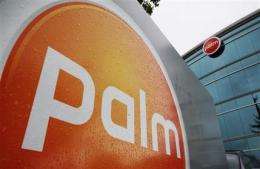
(AP) -- When Hewlett-Packard Co. snapped up Palm Inc. last year for $1.8 billion, it looked like the smartphone pioneer's last chance.
Palm was a year into a major turnaround effort but gaining little traction despite a hip, new CEO known for making the iPod a household name. It had high hopes for its latest handset, the Pre, which ran on the company's new, intuitive operating software, known as webOS. It needed a savior, and HP, which itself needed a boost in the mobile technology market, seemed like its best bet for survival.
It didn't work. With fierce competition from Apple Inc.'s iPhone and smartphones running Google Inc.'s Android software, HP's handsets running the webOS software developed by Palm have been just a blip on most consumers' radar screens. A tablet called the TouchPad, released in July and also running webOS, has also sold poorly.
The market seemed too tough for HP to forge ahead: The technology conglomerate said Thursday that it is shuttering its mobile device business, which includes the webOS-running smartphones and TouchPad.
The announcement came as HP said it also plans to sell or spin off its PC division. Together, the moves would take HP out of the consumer market, though it will continue to sell servers and other equipment to business customers.
Technology developed by Palm (a brand name HP has phased out) may still exist in some form. In an interview, HP CEO Leo Apotheker said the company was disappointed more with the hardware sales than the performance of the webOS software, which it will try to keep alive in some way. HP is studying its options, which could include licensing the software to handset makers or allowing them to use it for free as open-source software, as Google does with Android.
Still, for Palm, the decision sounds largely like a death knell that comes after nearly 20 years of mobile technology innovation, ownership changes and failed efforts to become a leader in the handheld market.
Palm, founded by Donna Dubinsky and Jeff Hawkins in 1992, helped create the handheld computing market with its Palm Pilot "personal digital assistants" in the 1990s. But after Palm reshuffled itself repeatedly - it was bought by U.S. Robotics, a modem maker that itself was bought by 3Com Corp. in 1997, and then spun off again as its own company in 2000 - other companies took control of the market. In 2003, Palm acquired Handspring - a rival startup Dubinsky and Hawkins created- and spun off PalmSource, which made the PalmOS handheld computing software, as an independently traded company. Japan's Access Co. bought PalmSource in 2005.
Speaking to The Associated Press several months before HP announced it was buying Palm, Dubinsky said all the shuffling took "critical resources and attention from product development." And even though it happened years ago, she called the decision to spin off PalmOS a "huge strategic error."
"As RIM, Apple and Palm all have demonstrated, these devices need to be highly integrated hardware and software developments in order to optimize the user experience," Dubinsky wrote in an e-mail to the AP. "When Palm no longer could advance the OS, and had to create a new one, it lost several years."
By early 2009, Palm readied itself for a big comeback. At the International Consumer Electronics Show in Las Vegas, the company unveiled the stylish touch-screen Pre and webOS software, which at the time could do something the iPhone couldn't: run multiple applications simultaneously.
One more ingredient it hoped would revitalize the company was the addition of a leader who helped make Apple what it is today.
Just before the Pre's launch, Palm replaced then-CEO Ed Colligan with Jon Rubinstein, who spent a decade at Apple during that company's comeback run. Rubinstein, who started at Apple in 1997, was a pivotal figure behind the brightly colored iMacs and the iPod.
He came to Palm in 2007 as executive chairman under a deal in which Palm sold nearly a third of the company to private equity firm Elevation Partners (when HP acquired Palm, it bought out Elevation's stake).
But Palm's efforts turned out to be too little, too late. While many analysts and critics felt webOS and the Pre were good, consumers weren't biting. Subsequent smartphones released under Palm and, more recently, through HP, have also failed to impress shoppers.
Speaking at a tech conference late last year, Rubinstein said competitors simply innovated too fast for Palm to catch up.
"The world moved faster than we expected and we ran out of runway," he said.
Indeed, since Palm's comeback attempt, the popularity of the iPhone has only grown while phones running Android, which first hit the market in 2008, abound. According to research firm IDC, Apple took the top spot in the second quarter, while Samsung Electronics Co. - a big maker of Android phones- took second place in unit sales. Nokia Corp. came in third, while BlackBerry maker Research In Motion Ltd. took fourth.
Rubinstein, currently a senior vice president of HP's personal systems group, said Palm studied a number of alternatives to being bought by HP. He said HP was a good choice because, as the largest computer company in the world by revenue, it could help Palm bring its products to more people.
As it turns out, the mobile pioneer will largely cease to exist.
©2011 The Associated Press. All rights reserved. This material may not be published, broadcast, rewritten or redistributed.


