Why plant 'clones' aren't identical
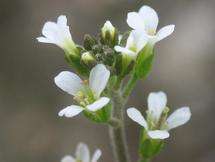
Clones of the plant 'thalecress' were analysed. Credit: Alberto Salguero
A new study of plants that are reproduced by cloning has shown why cloned plants are not identical.
Scientists have known for some time that clonal (regenerant) organisms are not always identical: their observable characteristics and traits can vary, and this variation can be passed on to the next generation. This is despite the fact that they are derived from genetically identical founder cells.
Now, a team from Oxford University, UK, and King Abdullah University of Science and Technology, Saudi Arabia, believe they have found out why this is the case in plants: the genomes of regenerant plants carry relatively high frequencies of new DNA sequence mutations that were not present in the genome of the donor plant.
The team report their findings in this weeks Current Biology.
"Anyone who has ever taken a cutting from a parent plant and then grown a new plant from this tiny piece is actually harnessing the ability such organisms have to regenerate themselves, said Professor Nicholas Harberd of Oxford Universitys Department of Plant Sciences, lead author of the paper. "But sometimes regenerated plants are not identical, even if they come from the same parent. Our work reveals a cause of that visible variation."
Using DNA sequencing techniques that can decode the complete genome of an organism in one go (so-called whole genome sequencing) the researchers analyzed clones of the small flowering plant thalecress (Arabidopsis). They found that observable variations in regenerant plants are substantially due to high frequencies of mutations in the DNA sequence of these regenerants, mutations which are not contained in the genome of the parent plant.
"Where these new mutations actually come from is still a mystery," said Professor Harberd. "They may arise during the regeneration process itself or during the cell divisions in the donor plant that gave rise to the root cells from which the regenerant plants are created. We are planning further research to find out which of these two processes is responsible for these mutations. What we can say is that Nature has safely been employing what you might call a cloning process in plants for millions of years, and that there must be good evolutionary reasons why these mutations are introduced."
The new results suggest that variation in clones of plants may have different underlying causes from that of variation in clones of animals where it is believed that the effect of environmental factors on how animal genes are expressed is more important and no similar high frequencies of mutations have been observed.
Professor Harberd said: "Whilst our results highlight that cloned plants and animals are very different they may give us insights into how both bacterial and cancer cells replicate themselves, and how mutations arise during these processes which, ultimately, have an impact on human health."
A report of the research, 'Regenerant Arabidopsis Lineages Display a Distinct Genome-Wide Spectrum of Mutations Conferring Variant Phenotypes, is published this week online in Current Biology.
More information: http://www.cell.co … ent-biology/
Provided by
Oxford University
-
From lemons to lemonade: Reaction uses carbon dioxide to make carbon-based semiconductor,
32 comments
-
Thioridazine kills cancer stem cells in human while avoiding toxic side-effects of conventional cancer treatments,
3 comments
-
SpaceX private rocket blasts off for space station (Update),
42 comments
-
Climate scientists say they have solved riddle of rising sea,
31 comments
-
SpaceX capsule has 'new car' smell, astronauts say (Update),
2 comments
-
What would stain as translucent on light-coloured fabric?
15 hours ago
-
How do I identify different bacteria on culture plates?
May 26, 2012
-
Why Do Dogs do Strange things...
May 25, 2012
-
What does exophillic and endophillic mean in terms of mosquito and their control?
May 24, 2012
-
Semen stains glows under black lights (uv light)?
May 23, 2012
-
Question on Human Chromosome 2
May 23, 2012
- More from Physics Forums - Biology
More news stories
Scientist: Evolution debate will soon be history
(AP) -- Richard Leakey predicts skepticism over evolution will soon be history. Not that the avowed atheist has any doubts himself.
14 hours ago |
3.5 / 5 (14) |
33
More plant species responding to global warming than previously thought
(Phys.org) -- Far more wild plant species may be responding to global warming than previous large-scale estimates have suggested.
May 22, 2012 |
4.6 / 5 (14) |
18
|
Thousands of shellfish found dead in Peru
Thousands of crustaceans were found dead off the coast of Lima following the mystery mass death of dolphins and pelicans, the Peruvian Navy said Friday.
May 26, 2012 |
4.8 / 5 (4) |
7
For monogamous sparrows, it doesn't pay to stray (but they do it anyway)
It's quite common for a female song sparrow to stray from her breeding partner and mate with the male next door, but a new study shows that sleeping around can be costly.
May 22, 2012 |
5 / 5 (1) |
7
|
Study uncovers secret to speedy burrowing by razor clams
(Phys.org) -- If you look at a razor burrowing clam sitting in a bucket, youd never guess that it could burrow itself down into the soil, much less do it with any speed. Razor clams look like fat straws, ...
Nvidia trumpets Tegra 3 phone design wins for 2012
(Phys.org) -- Nvidias competitive war paint has a name, Tegra 3. On the heels of Nvidia announcements about lowering costs of its Tegra 3 processors and Nvidia-enabled tablets running Android Ice Cream ...
Browser wars flare in mobile space
The browser wars are heating up again, but this time the fight is for dominance of the mobile Internet.
Dell tablet leak: 10.1-inch display, two-battery choice
(Phys.org) -- Headline after headline talks about vendors tablets in the wings as likely number-one contenders for the iPad. Such claims have justifiably been taken with a grain of salt, considering ...
Keep food safety in mind this memorial day weekend
(HealthDay) -- Picnics, parades and cookouts are as much a part of Memorial Day weekend as tributes to the United States' war veterans.
Family history of Alzheimer's affects functional connectivity
(HealthDay) -- Cognitively normal individuals with a family history of late-onset Alzheimer's disease (AD) may display lower resting state functional connectivity in the default mode network (DMN) of the brain, ...
Social welfare cuts ultimately come with heavy price, researchers say
(Phys.org) -- Slashing government funding for Medicaid, food stamps and other programs that serve the poor while politically popular with some lawmakers and many conservatives may do more harm ...
Jul 29, 2011
Rank: not rated yet
I can't say I've played with tissue culture, but as far as taking clones from a plant, it really depends on where you take the cutting from.