New resource developed to encourage undergraduate research experiences
College educators around the nation who are discovering the unique value of research experiences for undergraduate students now have a new tool available to them – a "program in a box" detailing exactly how such experiences can be created, used and implemented.
This resource, which is free, will be introduced tomorrow in New York City by the National Center for Women and Information Technology, as part of their annual summit conference. It will soon be available online at http://ncwit.org/resources.res.box.html, and was supported in part by the National Science Foundation.
"Hands-on research experiences for undergraduates help students to see the bigger picture and aspire to greater things," said Margaret Burnett, a professor of computer science at Oregon State University and co-leader of the team that created this new educational resource.
"This will help faculty members better understand how research experiences for undergraduates can help everyone, both the student's education and the faculty member's own research efforts," Burnett said.
"Some faculty may not have offered these because they had not thought of the research experiences from both sides," she said. "Others would like to do this but don't know how to start. This can help faculty with any of these perspectives see why to offer them and how to succeed at them."
The "REU in a Box" tool is the latest resource from this national group. It draws examples and illustrations from computer science and information technology, Burnett said, but conceptually could be applied to research in any scientific field.
Original scientific research and scholarship has long been a part of most master's degree and doctoral programs, but many universities are increasingly getting younger students involved as well, Burnett said. Experts say that students get more involved and interested, learn how to work in teams, are encouraged to continue their education at a graduate level, and can increase their chances for career success and employment.
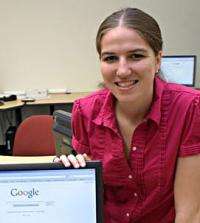
For Kyle Rector, now a doctoral student at the University of Washington and a former OSU student who collaborated on research with Burnett, it was all of those things. Before earning her bachelor's degree she has already co-authored several studies, won a Google Scholarship, a graduate fellowship from the National Science Foundation, and earned national recognition in her field.
"My undergraduate research experience is the reason why I am in computer science today," Rector said.
"You can pursue your genuine interests and investigate questions without a prescribed answer," she said. "I've been able to use my love of computer science and apply it to areas of life that I really care about. And you also learn time management, a work ethic and team-working skills."
OSU has many initiatives to help undergraduate students get involved in research projects, Burnett said.
"At some institutions, faculty are discouraged from doing this, especially before they have tenure," Burnett said. "Some feel, I believe wrongly, that it's more trouble than it's worth. But these activities can help both the student and faculty member. And they are especially useful to retain and inspire minority and under-represented students, help them succeed in their education."
The new resource was developed by a team of volunteers, co-led by Burnett and her collaborator Patricia Morreale of Kean University. It addresses such topics as costs and benefits, student assessment, providing guidance and feedback, doing literature reviews, analyzing data, presenting the research and moving on to graduate education.
All of the "programs in a box" provided by this organization include instructions, letters, templates, slide presentations, and other resources for practical, immediate use, officials say.
Provided by Oregon State University


