Growing seal population threatens small-scale fishing
May 10, 2011
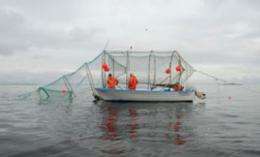
Some alternative seal-safe fishing gear is commercially available, developed in collaboration between scientists and the fishing industry. Credit: Maria Boström

Seals and the fishing industry compete for fish of all types – no matter whether it is salmon, whitefish, herring or cod. Seal-safe fishing gear is the most sustainable solution, and we need knowledge about the behaviour of fish and seals in order to develop such gear. This is the conclusion reached by scientists at the University of Gothenburg, Sweden.

Coastal and small-scale fishing in Sweden has fallen in recent decades as a result of several factors; mainly an increase in the seal population, threats to species, and logistical problems. As the number of seals increases, the damage they cause to fish and to becomes more serious. The use of seal-safe fishing gear has, therefore, major economic significance.

"Some alternative seal-safe fishing gear is commercially available, developed in collaboration between scientists and the fishing industry. But if we are to develop this further, we need to learn more about how seals behave and how they treat the equipment. We have filmed seal-safe traps and seen how certain seals become specialists in attacking them", says Sara Königson, of the Department of Marine Ecology at the University of Gothenburg. She has studied seals and the at the Institute of Coastal Research of the Swedish Board of Fisheries.

Seal hooligans hunt at seal-safe fishing gear

Some seals have learned to hunt at the push-up trap that has been developed for the small-scale fishing of salmon and whitefish in the Baltic. The trap has a seal-safe chamber in which the caught fish are collected, supposedly safe from the seals. Despite this, damage caused by seals has not been fully eliminated. Some seals, quite simply, have managed to figure out the equipment, and overcome it. By filming seals who hunt close to the trap, the scientists could identify ten individuals who had become specialists in hunting in the trap. These seals returned to the site over a long period.

"Since we now know that it is only certain seals who are responsible for the damage, we have the chance of limiting the damage in a certain region, simply by removing these individuals."

Successful use of cod pots

Small-scale fishing with pots is another example of a sensitive fishing technique that can be protected from attack by . One of the intermediate goals of the project has been to study whether pot fishing can be an alternative to net fishing: whether it is possible to fish for cod on a commercial basis using cod pots. The pots that have been developed attract the fish using bait, just as hook-and-line fishing.
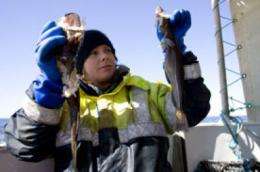
Sara Königson shows seal damage in cod fishing, which has increased dramatically in the past five years. Credit: Sven-Gunnar Lunneryd

"Catches in the pots are just as large as those taken using nets, in a region that suffers from seal damage, and the mesh size of the pots means that they are selective. Furthermore, their impact on the environment is small. The fish are caught alive, and this means that the quality is good and the price is high. The yields of baited fishing gear, however, are influenced by many factors. Currents, temperature, bottom topography, etc., all probably play important roles, as do the availability of food and the maturity of the fish. We still don't know which factors affect the yield most strongly", says Sara Königson.

Explore further: Dubai seizes 259 smuggled African ivory tusks

add to favorites email to friend print save as pdf

Related Stories

Hawaiian Islands named habitat for endangered seal

Jun 12, 2009

(AP) -- The federal government on Friday will significantly expand the critical habitat for endangered Hawaiian monk seals to include beaches and waters of the main Hawaiian Islands, officials said.

Fishing boat crew acquitted

Nov 06, 2005

The crew of a fishing vessel have been acquitted in Australia of illegal fishing for the Patagonian tooth fish, known on restaurant menus as Chilean seabass.

Endangered Finnish seal stock makes small recovery

Nov 11, 2010

The Saimaa ringed seal population in Finland, which has been on the brink of extinction for decades, increased slightly last year thanks to aggressive conservation efforts, experts said Thursday.

DNA reveals hooded seals have wanderlust

May 09, 2007

Researchers have discovered that hooded seals, a mysterious mammal that spends all but a few days each year in the ocean, are all closely related.

Anchovy fishing may harm penguins

Jan 06, 2007

Over-fishing by humans could cause a famine among penguins on the Patagonian coast of Argentina, U.S. researchers said.

Recommended for you

Drought makes Borneo's trees flower at the same time

3 hours ago

Tropical plants flower at supra-annual irregular intervals. In addition, mass flowering is typical for the tropical forests in Borneo and elsewhere, where hundreds of different plant timber species from the ...

Coccoliths thrive despite ocean acidification

5 hours ago

Ocean acidification is damaging some marine species while others thrive, say scientists. An international team studied the effect of ocean acidification on plankton in the North Sea over the past forty years, ...

Australia set to cull 10,000 wild horses

7 hours ago

A controversial cull of up to 10,000 wild horses in Australia's harsh Outback reportedly began Wednesday in a bid to control the feral animals which officials say are destroying the land.

Encouraging signs for bee biodiversity

13 hours ago

Declines in the biodiversity of pollinating insects and wild plants have slowed in recent years, according to a new study. Researchers led by the University of Leeds and the Naturalis Biodiversity Centre in the Netherlands ...

User comments : 1

Adjust slider to filter visible comments by rank

Display comments: newest first

jscroft
3 / 5 (2) May 10, 2011
Time to go harvest some baby seals!

More news stories

Do songbirds hold key to stuttering?

A tiny Australian songbird may hold the answer to discovering the biological source of stuttering, which affects 3 million Americans and is notoriously difficult to treat.

Coral reefs 'ruled by earthquakes and volcanoes'

(Phys.org) —Titanic forces in the Earth's crust explain why the abundance and richness of corals varies dramatically across the vast expanse of the Indian and Pacific Oceans, a world-first study from the ...

Coccoliths thrive despite ocean acidification

Ocean acidification is damaging some marine species while others thrive, say scientists. An international team studied the effect of ocean acidification on plankton in the North Sea over the past forty years, ...

Costs to treat stroke in America may double by 2030

Costs to treat stroke are projected to more than double and the number of people having strokes may increase 20 percent by 2030, according to the American Heart Association/American Stroke Association.