Digital imaging software to create a 'Google Earth' view of the bladder
Bladder cancer is the fourth-most-common cancer in men and one of the most expensive cancers to treat from diagnosis to death. After initial diagnosis and surgery, patients must return to the urologist at least yearly for a costly, time-consuming and uncomfortable bladder scan. Tumors recur in more than half of patients.
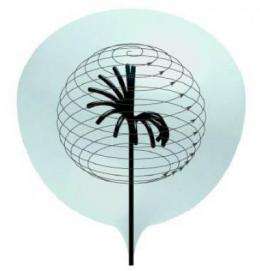
Researchers at the University of Washington are proposing a more automated approach that could be cheaper, more comfortable and more convenient for both doctors and patients. Their system would use the UW's ultrathin laser endoscope, which is like a thin piece of cooked spaghetti, in combination with software that stitches together images from the scope's path to create a full, 3-D panorama of the bladder interior.
The semi-automated scan could be done by a nurse or technician. Resulting images could be reviewed by a urologist at a later time, potentially in another city or country.
"This is trying to bring endoscopy to a more digital, modern age," said co-author Eric Seibel, a UW research associate professor of mechanical engineering. "In the current model a very highly trained person has to do all the manual controls. There's no electronic record, no longitudinal studies, no remote diagnosis and you can't send records anywhere."
The research is being presented today in Washington, D.C., at the annual meeting of the American Urological Association.
Currently, urologists conduct bladder exams using an endoscope that's manipulated around the bladder during the roughly 5 minute scan. Because a specialist is required, some patients have to travel long distances for appointments.
Unlike ultrasounds, X-rays and CT scans, endoscopies are only performed by medical doctors. Often no records exist beyond the doctor's notes.
The UW software checks that no part of the organ was missed, so a nurse or technician could administer the procedure – especially using a small scope that doesn't require anesthesia.
"There's a potential with this technology to semi-automate or fully automate the examination," said Dr. Michael Porter, a UW assistant professor of urology. "It's a few years down the road, at least, but the potential is there."
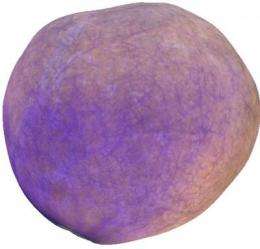
The current user interface projects the reconstructed organ onto a spherical ball or onto a flat map. The resulting mosaic matches the images to a single pixel of accuracy. Ultimately, the digital display would incorporate all the original frames, so a doctor could zoom in on an area of interest and observe from all angles at the highest resolution.
"Essentially, I want to give urologists a Google Earth view of the bladder," said co-author Timothy Soper, a UW research scientist in mechanical engineering. "As you move the mouse over the 3-D surface it would show the individual frame showing exactly where that image came from. So you could have the forest and the trees."
Reviewing the resulting panoramic image would likely require less of the urologist's time than performing a manual inspection.
At the meeting, Porter will present the software and the user interface, as well as preliminary results of 3-D panoramas from a commercially available endoscope inserted into a painted glass bulb, a stained pig bladder and a normal human bladder.
The UW software could be used with any endoscope, though the team sees particular benefit in combining it with its flexible endoscope. The UW scope is just 1.5 mm wide, about half the size of its smallest competitor (most bladder scopes are as thick as a pencil, while the UW's is like a strand of angel hair pasta with a tip the size of a grain of rice). It captures finer-grained images than existing flexible endoscopes. The tiny size is possible because of a novel design that swings a single optical fiber back and forth to scan a color image pixel by pixel.
The tip of the UW device will contain a steering mechanism that directs the movement of the scope during the internal exam.
Another advantage of using the UW scope in urology is that it can detect newly approved diagnostic cancer-cell markers that are best seen using low-power lasers, which are already used in the UW device.
Until recently a Japanese company held exclusive rights to develop medical applications for the UW scope. That license expired last month, and UW researchers are now exploring their tool's use for urology. They are waiting for U.S. Food and Drug Administration safety clearance to test the scope for human bladder scans and pursuing funding options. The next step will ask urologists to compare their experience of performing a diagnosis from a live video scan of a human bladder with the 3-D digital recreation.
Provided by University of Washington


