Ayurveda, 'far east' of the current health culture boom
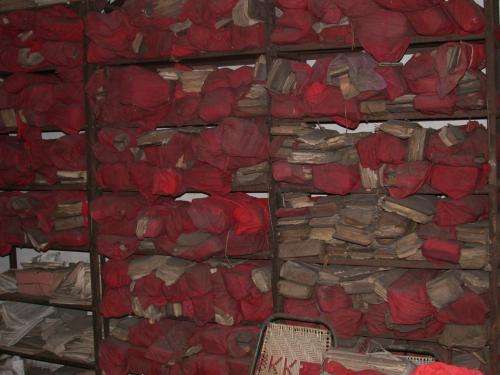
For the first time, a seminal scripture of Ayurveda – the most ancient and important system of medicine in India – is being textually analysed and historically explored piece by piece through the existing manuscripts. A project funded by the Austrian Science Fund FWF aims to reconstruct a more authentic version of this treatise and its content. Methods from evolutionary biology are also being used in order to assess the originality of the different versions of the text, which was written in Sanskrit. Such innovative approaches can only further enhance Vienna’s status as a leading centre for critical editions and translations of ancient Indian writings.
Preserving health and curing diseases, and thereby fulfilling the meaning of our lives – these are the ambitions of the modern-day "cult" of health and wellness – which, however, have already been nurtured for thousands of years. The ancient Indian system of medicine, Ayurveda, which enjoys a 2000-year-old tradition, sought to live up to these goals. Given the enduring importance of these objectives, Ayurveda was continuously updated in the course of time. Not only were the old original works copied in the process, they were also rewritten and amended. Intentionally and unintentionally, this transmission gradually changed the original message. A project funded by the Austrian Science Fund FWF is now going about reconstructing the original wording of text passages from a specific Ayurvedic work as accurately as possible.
The chosen document is the so-called Carakasamhita: the most ancient and important of Ayurvedic treatises. It is arranged in eight volumes which address different areas and subjects of medicine. The complexity and size of this written work require an incremental analysis of the individual sections: A Vienna-based team of scientists is therefore looking at the individual chapters of the third volume of the Carakasamhita, the Vimanasthana, and the fourth volume, the Sarirasthana. The project leader, Professor Karin Preisendanz (Director of the Institute for South Asian, Tibetan and Buddhist Studies at the University of Vienna), explained the role of the chapters being studied: "These sections in particular actually deal with fundamental topics in Ayurvedic thinking. Knowledge about human anatomy, embryology, pathology and the natural healthy state was written down in them, as well as thoughts about and ways of realizing a full lifespan."
Initially passed down through oral tradition, the subsequently written records of the Carakasamhita were repeatedly copied in the course of nearly two thousand years of history. This inevitably led to changes in the wording, which means that today, diverging manuscripts abound. To date, it is not certain which parts of these "mutated texts" reflect the original way of thinking most accurately. And this is exactly what Professor Preisendanz and her team want to find out through their analysis. To do this, the scientists are using methods that are completely innovative in the field of text analysis − namely those from evolutionary biology, which analyses the evolutionary relationships of different species with the same origins using so-called cladograms. Put simply, these are branching diagrams with only two bifurcations in each branch, which allow scientists to trace the common origins of different organisms based on a comparison of characteristics.
This method has now been adapted for the purpose of studying the Carakasamhita. Computer-aided analyses help determine the common source of the different versions of the text. Based on the analyses and using methods of textual criticism, the project goal can be realised: the reconstruction of a version of the Carakasamhita that is closer to its original form. However, Prof. Preisendanz believes it is also important to amend this "archetypical version" or "critical edition" in a further step with detailed information: above all, insight into the analytical methods used and the transmission history of the work will be provided. This “critical edition” will then allow for content-related studies with regard to the history of Indian medicine, philosophy, religion and culture, as reflected in the Carakasamhita. The findings will be presented in scientific reports.
The project follows in the footsteps of Vienna’s more than 100-year long tradition of philological-historical research focusing on South Asia. Three earlier projects from 2001 onwards, also headed by Professor Preisendanz and completed under the auspices of the Austrian Science Fund, produced new resources, such as the largest digital archive of manuscripts of Sanskrit medical works in the world, which the current project will continue to build on and supplement. It is a reaffirmation of Vienna’s global renown as a leading centre of critical editions and translations of ancient Indian Sanskrit writings − a position that was attained and is being upheld with the support of the Austrian Science Fund.
Provided by Austrian Science Fund


