Tangerine tomatoes surpass reds
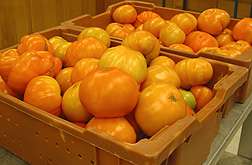
(PhysOrg.com) -- Besides their appealing orange color and sweet flavor, there's another reason to give tangerine tomatoes a try this year. A one-month study led by U.S. Department of Agriculture (USDA) scientists in California has provided new evidence to suggest that, ounce for ounce, these heirloom tomatoes might be a better source of a powerful antioxidant called lycopene than are familiar red tomatoes.
The difference lies in the forms of lycopene that the two tomato types provide. That's according to chemist Betty J. Burri, based at the Agricultural Research Service (ARS) Western Human Nutrition Research Center in Davis, Calif. ARS is USDA's principal intramural scientific research agency.
The trans-lycopene form, or isomer, makes up most of the lycopene in common red tomatoes. In contrast, most of the lycopene in tangerine tomatoes is tetra-cis-lycopene.
Results of the California investigation and one conducted by scientists in Ohio suggest that the tangerine tomato's tetra-cis-lycopene is more efficiently absorbed by the body than is the trans-lycopene of red tomatoes.
For the California study, 21 healthy men and women volunteers alternated week-long "no-lycopene" stints with a week-long tangerine tomato treatment and a week-long red tomato treatment. Volunteers were asked to not eat tomatoes or other foods rich in lycopene during the study, except for the special lunches of kidney bean chili provided to them at the nutrition center during the tomato treatment weeks. The chili, about a two-cup serving, was made with either red or tangerine tomato sauce, and was accompanied by French bread, butter and a salad of leafy greens with dressing.
Analyses of volunteers' blood samples, using high performance liquid chromatography, indicated that lycopene levels increased relative to levels measured just before each one-week chili regimen began. However, total lycopene levels increased more following the tangerine tomato treatment week than following the red tomato treatment.
Using a procedure known as a TBARS assay, the scientists determined that oxidative damage decreased with both treatments, and that decreases were greater following the tangerine-tomato regimen.
Burri and former ARS biologist Betty K. Ishida, along with former ARS visiting scientist Jung S. Seo and others, published their findings in the International Journal of Food Sciences and Nutrition in 2009.
More information: Read more about this research in the February 2011 issue of Agricultural Research magazine.
Provided by USDA Agricultural Research Service


