Looking at cancer progression as evolutionary process
Two University of Oregon biologists have launched an ambitious, highly focused effort to identify genetic changes that occur from the formation of a single mutation to full-fledged cancer.
In much the same way that new organisms in the wild mutate and adapt, the scientists say, cancer cells likely take on genetic changes and proliferate rapidly at the expense of their neighboring cells.
The three-year project led by Hui Zong and William Cresko will center on glioma -- the most common and most deadly type of brain cancer. Their goal is to gain new information that could lead to a new generation of molecular diagnostics to detect the earliest emergence of any cancers in their earliest stages.
Their effort -- supported by a $1 million grant from the Medical Research Program of the W.M. Keck Foundation -- will integrate new biological tools developed in their separate labs.
"The medical community has known for many years that cancer is the consequence of many genetic and mechanistic alterations, rather than a sudden outburst of cell proliferation. However, studies on early events in tumor formation have been lacking due to the difficulties in detecting the earliest lesions that do not yet show pathology," Zong said. "I am very excited and grateful for the generous support from the Keck Foundation. It allows me to collaborate with Bill on this bold project to analyze cancer as an evolutionary process."
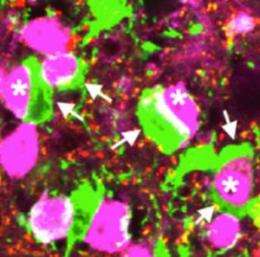
The UO team will combine cell labeling, newly developed genome-sequencing and computational analysis technologies used in Cresko's lab with a mouse glioma model created in Zong's lab to generate sporadic tumor cells that will be labeled with green fluorescent protein. Ideally, through genetic analysis of emerging pre-cancerous cells, the researchers will be able to identify the earliest genetic changes that give rise to the disease. If successful, this will be the first time that these key, causative genetic changes in early tumor formation will be isolated, opening a wide range of possible diagnostic markers and treatments.
"Therapeutic methods that merely try to kill dividing cells have many limitations and devastating side effects," Zong said. "The best way to fight our enemies is to fully understand and then counteract their logics. Therefore, our studies on the cancer-forming process should help design novel therapies to thwart cancers from multiple angles by striking at their Achilles' heels."
The collaborative effort, involving labs that normally conduct research with completely different organisms and for very different purposes, Cresko said, ties into the "deep history of integrative research at the University of Oregon."
"There are few places in which a cancer biologist and an evolutionary geneticist could have come together to combine cutting edge molecular biology and genomics techniques in such a novel way," he said. "It's really a testament to the way that the integrative and collaborative research ethos of Oregon can lead the scientific world, whether it be through the formation of first Institute of Molecular Biology or the development of zebrafish as a model organism. We hope that this project will lead to break-through diagnostics and therapeutic advances in the treatment of cancer, and be another in the long list of the UO's fundamental scientific advances."
Provided by University of Oregon


