Engineered yeast could produce low-cost plastics from renewable resources
November 5, 2010 By Lisa Zyga feature

Engineered yeast could produce low-cost plastics from renewable resources

Enlarge

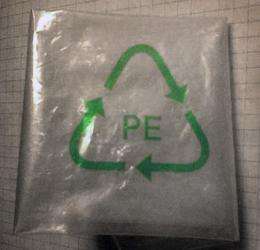
Scientists have engineered a yeast to produce a monomer acid that can be converted into bioplastics similar to polyethylene. Image credit: Kriplozoik.

(PhysOrg.com) -- With the goal to reduce our dependence on fossil fuels, scientists are looking for alternative methods to produce plastics that are based on renewable oils. In a new study, scientists have developed a method to produce a bioplastic by engineering a strain of the Candida tropicalis yeast. Their results demonstrate the possibility of producing low-cost, commercially viable yields of omega-hydroxyfatty acids, a new family of monomers that can be converted to bioplastics which could eventually be used for a variety of applications.

The researchers, Wenhua Lu, et al., from the Polytechnic Institute of New York University and DNA2.0 Incorporated in Menlo Park, California, have published their study on the biosynthesis technique in a recent issue of the .

The researchers engineered C. tropicalis to transform into omega-hydroxyfatty acids, a monomer that when polymerized provides a variety of options for developing new bio-based with attractive physical properties. Usually, these acids are difficult and expensive to prepare using traditional methods. The key to getting the to produce large amounts of omega-hydroxyfatty acids was eliminating certain enzymes that further oxidize these acids into unwanted diacids. The researchers identified and eliminated 16 genes and other oxidation pathways, which resulted in a 90% reduction in the activity that converts omega-hydroxyfatty acids to diacids.

As the scientists explained, this new engineered strain of C. tropicalis provides a foundation for the development of low-cost methods of producing omega-hydroxyfatty acids for conversion into plastics. Plastics produced by this method could have a variety of uses, as previous research has shown that plastics produced from a very similar omega-hydroxyfatty acid are strong, ductile materials. The plastics could have applications in lubricants, adhesives, cosmetics, and anti-cancer therapies, and could also be recycled through a conversion process that results in a biofuel similar to biodiesels such as Soy Gold.

In the future, the researchers plan to investigate ways to further modify the strain to allow for more direct conversion of various triglyceride feedstocks and introduce new pathways to increase the efficiency of omega-hydroxyfatty acid production.

"We are currently up-scaling the fermentation, preparing polymers from omega-hydroxyfatty acids and determining what unique properties these new biomaterials bring to currently available plastics," coauthor Richard Gross, a professor of chemical and biological science from the Polytechnic Institute of New York University told PhysOrg.com. "Furthermore, we are sampling large chemical companies that are polyester producers so that they can assess the commercial potential of the bioplastics. These activities are being conducted by SyntheZyme, a new company started in 2008, to commercialize new innovations developed in our laboratory at NYU-POLY. The company is currently seeking commercial partners to help enable future development and scale up work for microbial production of the monomer as well as the corresponding bioplastic materials."

More information: Wenhua Lu, et al. “Biosynthesis of Monomers for Plastics from Renewable Oils.” J. Am. Chem. Soc. ASAP. DOI:10.1021/ja107707v

Copyright 2010 PhysOrg.com.
All rights reserved. This material may not be published, broadcast, rewritten or redistributed in whole or part without the express written permission of PhysOrg.com.

4.2 /5 (13 votes)  

Filter


Move the slider to adjust rank threshold, so that you can hide some of the comments.


Display comments: newest first

Dug
Nov 05, 2010

Rank: 1 / 5 (1)
What is it about the necessity of discussing relative economic feasibility of any new product or process - that PR writers and author's don't get? Without some idea of costs - you wasting everyone's time - including yours.
kaasinees
Nov 06, 2010

Rank: not rated yet
What happened to chicken feathers?
Caliban
Nov 06, 2010

Rank: 1 / 5 (1)
Just as important is how are we going to safely dispose of the trillions of tons of plastic waste we're already wading through?
ricarguy
Nov 15, 2010

Rank: not rated yet
The unintended consequences of playing with genetics scares me in some ways. WHEN some of these trifled-with species get into nature we WILL be creating irreversible changes to the environment that will make transplanted species damage look trivial.

Like with transplanted natural species, many will simply die out, but some will dominate and displace the aboriginal Earth species. Who knows what the changes are? Poisoning parts of our planet like the chemical revolution in the previous century could never dream of, creating by-products that are non-biodegradable, etc.
Creating plastics in a non-replicating way in a chemical refinery is one thing, but mutating a microscopic life form is quite another. We can't keep Asian carp, Zebra mussels, Emerald Ash borers, or hundreds of nuisance plants from spreading. How could we ever control invading man-made microbes?

The "cure" is potentially an order of magnitude more devastating than the "disease".
Rank 4.2 /5 (13 votes)
Relevant PhysicsForums posts
  • High school chemistry EEI
    created5 hours ago
  • oxidation of I- by KMnO4
    created18 hours ago
  • Invesion temp
    created21 hours ago
  • Hybridization of SnCl3 -
    created21 hours ago
  • Electrons And Radiation
    createdMay 25, 2012
  • Acid Base Theories
    createdMay 24, 2012
  • More from Physics Forums - Chemistry

More news stories

High-speed method to aid search for solar energy storage catalysts

Eons ago, nature solved the problem of converting solar energy to fuels by inventing the process of photosynthesis.

Chemistry / Materials Science

created 11 hours ago | popularity 5 / 5 (2) | comments 1 | with audio podcast

Researchers demonstrate possible primitive mechanism of chemical info self-replication

(Phys.org) -- When scientists think about the replication of information in chemistry, they usually have in mind something akin to what happens in living organisms when DNA gets copied: a double-stranded molecule ...

Chemistry / Materials Science

created 19 hours ago | popularity 5 / 5 (3) | comments 2 | with audio podcast

Building a better solar panel -- one molecule at a time

(Phys.org) -- One of the fundamental building blocks in modern chemistry, an organometallic chemical compound called ferrocene, has never been structurally defined - until now.

Chemistry / Materials Science

created 19 hours ago | popularity 5 / 5 (3) | comments 0 | with audio podcast

From lemons to lemonade: Reaction uses carbon dioxide to make carbon-based semiconductor

(Phys.org) -- A materials scientist at Michigan Technological University has discovered a chemical reaction that not only eats up the greenhouse gas carbon dioxide, it also creates something useful. And, by ...

Chemistry / Materials Science

created May 21, 2012 | popularity 4.7 / 5 (88) | comments 28 | with audio podcast

New CO2-removing catalyst can take the heat

(Phys.org) -- The current method of removing the greenhouse gas carbon dioxide (CO2) from the flues of coal-fired power plants uses so much energy that no one bothers to use it. So says Roger Aines, principal ...

Chemistry / Materials Science

created May 24, 2012 | popularity 5 / 5 (7) | comments 7 | with audio podcast


Of mice and mental models: Neuroscientific implications of risk-optimized behavior in the mouse

(Medical Xpress) -- Regardless of an organism’s biological complexity, every encephalized animal continuously makes under-informed behavioral choices that can have serious consequences. Despite its ubiquity, ...

Dragon arrives at space station in historic 1st (Update 2)

The privately bankrolled Dragon capsule made a historic arrival at the International Space Station on Friday, triumphantly captured by astronauts wielding a giant robot arm.

Landmark calculation clears the way to answering how matter is formed

(Phys.org) -- An international collaboration of scientists, including Thomas Blum, associate professor of physics, is reporting in landmark detail the decay process of a subatomic particle called a kaon – ...

It's in the genes: Research pinpoints how plants know when to flower

Scientists believe they've pinpointed the last crucial piece of the 80-year-old puzzle of how plants "know" when to flower.

Researchers solve structure of human protein critical for silencing genes

In a study published in the journal Cell on May 24, Cold Spring Harbor Laboratory (CSHL) scientists describe the three-dimensional atomic structure of a human protein bound to a piece of RNA that "guides" the pr ...

MIT researchers devise new means to synchronize a group of robots (w/ Video)

(Phys.org) -- For several years, roboticists have been working out ways to get a group of robots to perform synchronized activities as demonstrated most often in dance routines. It’s not just about trying ...