News tagged with brain cancer

Nanoparticles home in on brain tumors, boost accuracy of surgical removal

Like special-forces troops laser-tagging targets for a bomber pilot, tiny particles that can be imaged three different ways at once have enabled Stanford University School of Medicine scientists to remove brain tumors from ...

Nanotechnology / Bio & Medicine

created Apr 15, 2012 | popularity 5 / 5 (5) | comments 0 | with audio podcast

Nano-technology uses virus' coats to fool cancer cells

While there have been major advances in the detection, diagnosis, and treatment of tumors within the brain, brain cancer continues to have a very low survival rate in part to high levels of resistance to treatment. New research ...

Nanotechnology / Bio & Medicine

created Feb 17, 2012 | popularity 5 / 5 (1) | comments 0

In lab, Pannexin1 restores tight binding of cells that is lost in cancer

First there is the tumor and then there's the horrible question of whether the cancerous cells will spread. Scientists increasingly believe that the structural properties of the tumor itself, such as how tightly ...

Chemistry / Biochemistry

created Jan 30, 2012 | popularity 5 / 5 (1) | comments 0 | with audio podcast

Therapeutically useful stem cell derivatives in need of stability

Human stem cells capable of giving rise to any fetal or adult cell type are known as pluripotent stem cells. It is hoped that such cells, the most well known being human embryonic stem cells (hESCs), can be used to generate ...

Biology / Cell & Microbiology

created Jan 24, 2012 | popularity not rated yet | comments 0

New method pinpoints important gene-regulation proteins

A novel technique has been developed and demonstrated at Penn State University to map the proteins that read and regulate chromosomes -- the string-like structures inside cells that carry genes. The specific ...

Biology / Cell & Microbiology

created Jan 18, 2012 | popularity 5 / 5 (3) | comments 0 | with audio podcast

Attacking cancer cells with nanoparticles

(PhysOrg.com) -- About every three days, Colleen Alexander, a chemistry graduate student, feeds cells that cause a deadly type of brain cancer. It’s a ritual that involves assessing the health of the ...

Nanotechnology / Bio & Medicine

created Oct 25, 2011 | popularity 5 / 5 (1) | comments 0

Tagging tumors with gold: Scientists use gold nanorods to flag brain tumors

"It's not brain surgery" is a phrase often uttered to dismiss a job's difficulty, but when the task actually is removing a brain tumor, even the slightest mistake could have serious health consequences. To ...

Nanotechnology / Bio & Medicine

created Oct 12, 2011 | popularity not rated yet | comments 0

Water channels in the body help cells remain in balance

microscopical water channels are also present in the cells of the body, where they ensure that water can be transported through the protective surface of the cell. Scientists at the University of Gothenburg, Sweden, have ...

Chemistry / Biochemistry

created Oct 11, 2011 | popularity not rated yet | comments 0

Scientists combine tumor-targeting peptides and nanoparticles to destroy glioblastoma

Glioblastoma is one of the most aggressive forms of brain cancer. Rather than presenting as a well-defined tumor, glioblastoma will often infiltrate the surrounding brain tissue, making it extremely difficult to treat surgically ...

Nanotechnology / Bio & Medicine

created Oct 03, 2011 | popularity 5 / 5 (6) | comments 4 | with audio podcast

Just add water and treat brain cancer

Researchers at the Johns Hopkins University School of Medicine have developed a technique that delivers gene therapy into human brain cancer cells using nanoparticles that can be freeze-dried and stored for up to three months ...

Nanotechnology / Bio & Medicine

created Jul 06, 2011 | popularity 5 / 5 (10) | comments 1 | with audio podcast

Mobile phones 'don't cause cancer': yet another study

Scientific evidence goes increasingly against the theory that mobile phones cause cancer, a new study has concluded.

Medicine & Health / Cancer

created Jul 02, 2011 | popularity 3.7 / 5 (6) | comments 2

Weighing cancer risks, from cellphones to coffee

You're sitting in a freshly drywalled house, drinking coffee from a Styrofoam cup and talking on a cellphone. Which of these is most likely to be a cancer risk? It might be the sitting, especially if you do ...

Medicine & Health / Health

created Jun 15, 2011 | popularity 3 / 5 (2) | comments 10

Cellphone cancer warning falls lightly on US ears

(AP) -- News last week that an arm of the World Health Organization said cellphones might raise the risk of brain cancer has been greeted by Americans mostly with a shrug of the shoulder - one that's pinning ...

Medicine & Health / Health

created Jun 06, 2011 | popularity not rated yet | comments 1

Industry disputes report on cell phone cancer link

A global wireless industry group Thursday disputed the significance of a report released by a UN health organization citing a potential cancer link from use of mobile phones. ...

Medicine & Health / Health

created May 31, 2011 | popularity not rated yet | comments 0

Experts say cellphones are 'possibly carcinogenic'

(AP) -- A respected international panel of scientists says cellphones are possible cancer-causing agents, putting them in the same category as the pesticide DDT, gasoline engine exhaust and coffee.

Medicine & Health / Health

created May 31, 2011 | popularity 3 / 5 (9) | comments 21

Brain tumor

A brain tumor is an abnormal growth of cells within the brain or inside the skull, which can be cancerous or non-cancerous (benign).

It is defined as any intracranial tumor created by abnormal and uncontrolled cell division, normally either in the brain itself (neurons, glial cells (astrocytes, oligodendrocytes, ependymal cells), lymphatic tissue, blood vessels), in the cranial nerves (myelin-producing Schwann cells), in the brain envelopes (meninges), skull, pituitary and pineal gland, or spread from cancers primarily located in other organs (metastatic tumors).

Primary (true) brain tumors are commonly located in the posterior cranial fossa in children and in the anterior two-thirds of the cerebral hemispheres in adults, although they can affect any part of the brain.

In the United States in the year 2005, it was estimated there were 43,800 new cases of brain tumors (Central Brain Tumor Registry of the United States, Primary Brain Tumors in the United States, Statistical Report, 2005–2006), which accounted for 1.4 percent of all cancers, 2.4 percent of all cancer deaths, and 20–25 percent of pediatric cancers. Ultimately, it is estimated there are 13,000 deaths per year in the United States alone as a result of brain tumors.
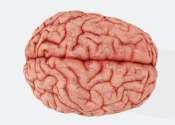
For more information about Brain tumor, read the full article at Wikipedia.
This text uses material from Wikipedia and is available under the GNU Free Documentation License.