News tagged with amino acids

Meteorite hunt goes on, needs public's help

(Phys.org) -- A University of California, Davis, geologist is appealing for public help in tracking down pieces of the meteorite that blew up over El Dorado County on April 22.

Space & Earth / Space Exploration

created 15 hours ago | popularity 5 / 5 (2) | comments 0

New details about gene regulation explained

(Phys.org) -- When genetic information is read from the genetic blueprint DNA, RNA polymerase II translates it into RNA molecules. The C-terminal domain, abbreviated as CTD, is an important area of the polymerase ...

Biology / Biotechnology

created May 21, 2012 | popularity not rated yet | comments 0 | with audio podcast

New screening technique yields elusive compounds to block immune-regulating enzyme

Scientists at The Scripps Research Institute have found the first chemical compounds that act to block an enzyme that has been linked to inflammatory conditions such as asthma and arthritis, as well as some ...

Chemistry / Biochemistry

created May 11, 2012 | popularity not rated yet | comments 0 | with audio podcast

Meteorites found in Calif. along path of fireball

Robert Ward has been hunting and collecting meteorites for more than 20 years so he knew he'd found something special in the Sierra foothills along the path of a flaming fireball that shook parts of Northern ...

Space & Earth / Space Exploration

created Apr 26, 2012 | popularity 5 / 5 (2) | comments 0

Researchers create first custom designed protein crystal

Protein design is technique that is increasingly valuable to a variety of fields, from biochemistry to therapeutics to materials engineering. University of Pennsylvania chemists have taken this kind of design ...

Chemistry / Materials Science

created Apr 25, 2012 | popularity 5 / 5 (3) | comments 1 | with audio podcast

In protein folding, internal friction may play a more significant role than previously thought

An international team of researchers has reported a new understanding of a little-known process that happens in virtually every cell of our bodies.

Chemistry / Biochemistry

created Apr 24, 2012 | popularity 4.8 / 5 (8) | comments 5 | with audio podcast

Neutrons used to study a key protein in milk

Martha, a cow placidly grazing in a field in The Netherlands, became an important collaborator with researchers who successfully analyzed and characterized the internal protein structure and the composite ...

Chemistry / Analytical Chemistry

created Apr 24, 2012 | popularity not rated yet | comments 0

First proof of ferroelectricity in simplest amino acid

The boundary between electronics and biology is blurring with the first detection by researchers at Department of Energy's Oak Ridge National Laboratory of ferroelectric properties in an amino acid called ...

Nanotechnology / Nanomaterials

created Apr 19, 2012 | popularity 4.6 / 5 (9) | comments 4 | with audio podcast

Unique adaptations to a symbiotic lifestyle reveal novel targets for aphid insecticides

Aphids are pests that cause millions of pounds of damage to crops in the UK, but new research led by biologists at the University of York reveals potential new targets for aphid-specific insecticides.

Biology / Biotechnology

created Apr 18, 2012 | popularity not rated yet | comments 0

Better treatment for tuberculosis possible with biochemist's findings

Recent discoveries by a Virginia Tech biochemist could lead to a more effective drug design to combat the bacteria responsible for tuberculosis infection. Spread through the air from one person to another, tuberculosis is ...

Chemistry / Biochemistry

created Apr 16, 2012 | popularity not rated yet | comments 0

Could 'advanced' dinosaurs rule other planets?

New scientific research raises the possibility that advanced versions of T. rex and other dinosaurs — monstrous creatures with the intelligence and cunning of humans — may be the life forms that e ...

Chemistry / Biochemistry

created Apr 11, 2012 | popularity 2.7 / 5 (27) | comments 35 | with audio podcast

Form and function in enzyme activity

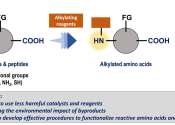
Many industrial chemistry applications, such as drug or biofuel synthesis, require large energy inputs and often produce toxic pollutants. But chemistry and chemical biology professor Mary Jo Ondrechen said ...

Chemistry / Biochemistry

created Apr 06, 2012 | popularity not rated yet | comments 0

Organic compounds found in proto-planetary disks

(PhysOrg.com) -- A new study from scientists in the US has reported that organic compounds could be formed in proto-planetary disks, and could have seeded the development of life in our own and other planetary ...

Space & Earth / Astronomy

created Mar 30, 2012 | popularity 5 / 5 (7) | comments 0 | with audio podcast report

Oceanographers develop method for measuring the pace of life

(PhysOrg.com) -- Life deep in the seabed proceeds very slowly. But the slow-growing bacteria living many meters beneath the seafloor play an important role in the global storage of organic carbon and have a long-term effect ...

Space & Earth / Earth Sciences

created Mar 28, 2012 | popularity 5 / 5 (2) | comments 0 | with audio podcast

Smaller genome, greater applications

Bacteria are often the ideal machines in industry. The inputs they require are cheap substances such as amino acids and sugar, and their outputs are valuable products such as bioplastics.

Biology / Cell & Microbiology

created Mar 26, 2012 | popularity not rated yet | comments 0

Amino acid

In chemistry, an amino acid is a molecule containing both amine and carboxyl functional groups. These molecules are particularly important in biochemistry, where this term refers to alpha-amino acids with the general formula H2NCHRCOOH, where R is an organic substituent. In the alpha amino acids, the amino and carboxylate groups are attached to the same carbon atom, which is called the α–carbon. The various alpha amino acids differ in which side chain (R group) is attached to their alpha carbon. They can vary in size from just a hydrogen atom in glycine through a methyl group in alanine to a large heterocyclic group in tryptophan.

Amino acids are critical to life, and have a variety of roles in metabolism. One particularly important function is as the building blocks of proteins, which are linear chains of amino acids. Amino acids are also important in many other biological molecules, such as forming parts of coenzymes, as in S-adenosylmethionine, or as precursors for the biosynthesis of molecules such as heme. Due to this central role in biochemistry, amino acids are very important in nutrition.

Amino acids are commonly used in food technology and industry. For example, monosodium glutamate is a common flavor enhancer that gives foods the taste called umami. Beyond the amino acids that are found in all forms of life, amino acids are also used in industry. Applications include the production of biodegradable plastics, drugs and chiral catalysts.

For more information about Amino acid, read the full article at Wikipedia.
This text uses material from Wikipedia and is available under the GNU Free Documentation License.