New e-paper display offers low energy/high refresh rate
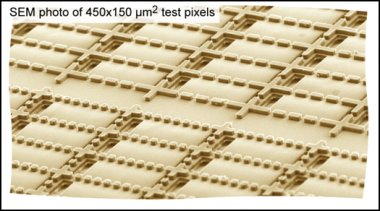
October 11, 2010 by Lin Edwards
(PhysOrg.com) -- A new type of display for portable electronic gadgets combines the energy efficiency of low power devices such as e-readers with the high performance of high power use devices such as laptops and smartphones. The new display is called a "zero-power" electrofluidic system and could soon be used in e-readers and other devices.
Internal backlights, like those in smartphones and laptops, are greedy consumers of battery power, while ambient light devices like e-readers use very little power but have slow refresh rates. The new system needs no internal light source and uses reflective light to enable users to see clear, high-speed images with rapid refresh rates, even in bright sunlight.
The new display, or e-paper screen, is made from a sandwich of glass, with a film of extremely reflective electrodes in the center, and oil on one side and a pigment dispersion fluid on the other. Light passes through the glass and pigment layer and hits the electrodes, and then is reflected back, displaying the color of the fluid covering each electrode.
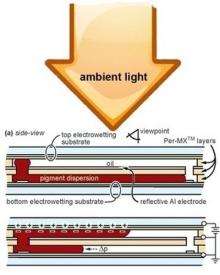
The "zero-power" display diagram. Image credit: Gamma Dynamics
When a small voltage is applied this causes the pigment to flow up through pores in the electrode film, exchanging places with the oil and producing a colored area. When the voltage is removed the pigment flows beneath the electrode layer leaving an unpigmented area of oil. Blank areas with no pigment reflect up to 75 percent of ambient light, which is considerably better than e-ink devices, which reflect around 40 percent, and the image refresh rate is much faster, at about 20 milliseconds, or 50 Hz.Gamma Dynamics developed the device with the help of Associate Professor Jason Heikenfeld of the University of Cincinnati and companies Sun Chemical and Dupont. Heikenfeld says the e-paper will produce a good image even in low light conditions such as in a car at night. At the moment the display only works with gray scale, but they are working on a color display.
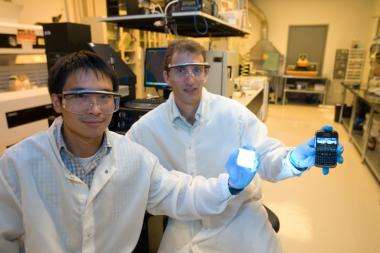
The first application for the e-paper display is likely to be for supermarket aisle labels and advertising, but it could also soon be used in e-readers and smartphones. Parts for the technology are already available, and manufacture would be low-cost. Limited production of the displays is expected to begin in 2012.
The paper describing the new display was published in Applied Physics Letters.
More information:
-- Original paper: S. Yang et al., High reflectivity electrofluidic pixels with zero-power grayscale operation, Appl. Phys. Lett. 97, 143501 (2010); doi:10.1063/1.3494552
-- Breakthrough e-display means electronics with high speed, high readability and low power usage
© 2010 PhysOrg.com
-
From lemons to lemonade: Reaction uses carbon dioxide to make carbon-based semiconductor,
33 comments
-
Thioridazine kills cancer stem cells in human while avoiding toxic side-effects of conventional cancer treatments,
3 comments
-
SpaceX private rocket blasts off for space station (Update),
42 comments
-
Landmark calculation clears the way to answering how matter is formed,
55 comments
-
Research team claims to have found evidence Lake Cheko is impact crater for Tunguska Event,
18 comments
Breakthrough e-display means electronics with high speed, high readability and low power usage
-
Need a rigid insulation material???
May 26, 2012
-
magnets or EMF in car bumpers to protect from fender bender
May 26, 2012
-
length of wire in a coil of known dimensions?
May 25, 2012
-
India Engineering Powerhouse
May 25, 2012
-
electromagnet core dereference between hard and soft iron
May 25, 2012
-
Measuring water pressure in an open tank
May 24, 2012
- More from Physics Forums - General Engineering
More news stories
Browser wars flare in mobile space
The browser wars are heating up again, but this time the fight is for dominance of the mobile Internet.
19 hours ago |
4 / 5 (4) |
3
Probability of contamination from severe nuclear reactor accidents is higher than expected: study
Catastrophic nuclear accidents such as the core meltdowns in Chernobyl and Fukushima are more likely to happen than previously assumed. Based on the operating hours of all civil nuclear reactors and the number ...
Technology / Energy & Green Tech
May 22, 2012 |
3.6 / 5 (25) |
56
|
HyperSolar shows dirty water no barrier to power world
(Phys.org) -- The Santa Barbara, California, company, HyperSolar, is set to transparently share the ups and downs of its research experiences toward the companys ultimate vision, successfully producing ...
Tesla to launch electric sedan in US on June 22
Tesla Motors said Tuesday it would begin deliveries of "the world's first premium electric sedan" on June 22, slightly ahead of schedule.
Technology / Energy & Green Tech
May 22, 2012 |
4.5 / 5 (12) |
18
SpotterRF debuts Radar Backpack Kit (w/ Video)
(Phys.org) -- SpotterRF has announced a special radar backpack kit designed to enhance situational awareness for soldiers on the ground. The company says its special radar is designed for warfighters as part ...
Stunning image of smallest possible five-ringed structure
Scientists have created and imaged the smallest possible five-ringed structure about 100,000 times thinner than a human hair and you'll probably recognise its shape.
'Unzipped' carbon nanotubes could help energize fuel cells, batteries
Multi-walled carbon nanotubes riddled with defects and impurities on the outside could replace some of the expensive platinum catalysts used in fuel cells and metal-air batteries, according to scientists at ...
Change in developmental timing was crucial in the evolutionary shift from dinosaurs to birds: study
At first glance, it's hard to see how a common house sparrow and a Tyrannosaurus Rex might have anything in common. After all, one is a bird that weighs less than an ounce, and the other is a dinosaur that ...
Computer model used to pinpoint prime materials for efficient carbon capture
When power plants begin capturing their carbon emissions to reduce greenhouse gases and to most in the electric power industry, it's a question of when, not if it will be an expensive undertaking.
T cells 'hunt' parasites like animal predators seek prey, study shows
By pairing an intimate knowledge of immune-system function with a deep understanding of statistical physics, a cross-disciplinary team at the University of Pennsylvania has arrived at a surprising finding: T cells use a movement ...
Yale study concludes public apathy over climate change unrelated to science literacy
Are members of the public divided about climate change because they don't understand the science behind it? If Americans knew more basic science and were more proficient in technical reasoning, would public consensus match ...

