Scientists identify proteins that ensure iron balance

Aug 03, 2010

(PhysOrg.com) -- Most organisms need iron to survive, but too much iron is toxic, and can cause fatal organ failure. The same is true inside cells, where iron balance must also be maintained. In a study published today in Cell Metabolism, scientists at the European Molecular Biology Laboratory (EMBL) in Heidelberg, Germany, have discovered that a group of proteins named IRPs ensure that this iron balance is kept and as such are essential for cell survival. More specifically, they found that IRPs are required for the functioning of mitochondria, the cell’s energy factories.

Mitochondria need iron in order to function, but they also convert iron into other chemical forms used throughout the cell: iron sulphur clusters and haem - one of the building blocks of haemoglobin. Thanks to new mouse models they engineered, the EMBL scientists have been able to selectively shut down IRP function in specific cell types such as hepatocytes, that carry out multiple vital metabolic functions.

“Mice whose liver cells can’t produce IRPs die of a few days after birth,” says Bruno Galy, Staff Scientist in Matthias Hentze’s group at EMBL, who spearheaded the work: “The mitochondria in those cells have structural defects and don’t function properly, because they don’t have enough iron.”

Galy and colleagues found that in cells that cannot produce IRPs, the mechanisms for iron export and storage go into over-drive, while iron import is drastically reduced. This combination of factors leads to an iron shortage in the cell. As a consequence, the mitochondria don’t receive enough iron, so they can't function properly, and can’t make enough haem and iron sulphur clusters available to the cell machinery that depends on them. In short, the role of IRPs is to ensure that there is enough iron available in the cell to sustain mitochondrial iron needs.

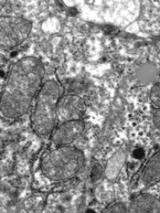
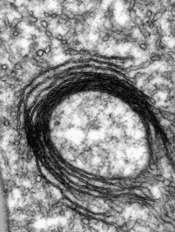
These electron microscopy images show mitochondria in a normal cell (top) and a close-up of a mitochondrion with structural defects, in a cell that cannot produce IRPs (bottom). Image credits: Bruno Galy/ EMBL.

Scientists identify proteins that ensure iron balance

“We have indications that this is probably a general process by which most cells control their iron content and secure mitochondrial iron sufficiency” Hentze concludes.

This mechanism for regulating iron balance could be particularly important in cells with very high mitochondrial iron needs, such as red blood cell precursors that manufacture copious amounts of haem for oxygen transport. However, this may well be a double-edged sword. Indeed, there are situations in which mitochondria get iron but are not able to make use of it. The cell interprets this as a sign of mitochondrial iron insufficiency and responds by activating IRPs, which ultimately results in detrimental iron overloading of mitochondria. This may underlie the pathology of several diseases including inherited sideroblastic anaemias - in which cells are unable to incorporate iron into haemoglobin - or the neurodegenerative disorder Friedreich’s ataxia, which the EMBL scientists are currently investigating.

Explore further: Protein study suggests drug side effects are inevitable

More information: Galy, B., Ferring-Appel, D., Sauer, S. W., Kaden, S., Lyoumi, S., Puy, H., Kolker, S., Gröne, H. J., & Hentze, M. W., Iron Regulatory Proteins Secure Mitochondrial Iron Sufficiency and Function, Cell Metabolism, 4 August 2010.

add to favorites email to friend print save as pdf

Related Stories

Life savers in the gut

Jan 09, 2008

Researchers from the European Molecular Biology Laboratory (EMBL) have discovered that proteins that regulate the body's iron household play a vital role in making sure enough nutrients and water are absorbed in the intestine. ...

Europe's most common genetic disease is a liver disorder

Feb 06, 2008

Much less widely known than the dangerous consequences of iron deficiencies is the fact that too much iron can also cause problems. The exact origin of the genetic iron overload disorder hereditary hemochromatosis (HH) has ...

Scientists show why cells starved of iron burn more glucose

Jun 09, 2008

Duke University Medical Center scientists have found a mechanism that allows cells starved of iron to shut down energy-making processes that depend on iron and use a less efficient pathway involving glucose. This metabolic ...

Iron and copper relationship is studied

Jul 24, 2007

U.S. scientists studying the relationship of iron and copper in the body have found when iron absorption by cells decreases, copper absorption increases.

Genetic form of anemia defined molecularly

Apr 01, 2010

Sideroblastic anemia is a form of anemia caused by an inability to incorporate iron into hemoglobin, something that is essential if the molecule is to perform its vital function of carrying oxygen from the lungs to the tissues. ...

Iron induces death in tumor cells

Mar 11, 2009

Rapid growth of cancer cells and their frequent divisions have their price: Cancer cells need considerably more energy than healthy cells. Their metabolism runs at full speed and requires large amounts of micronutrients, ...

Recommended for you

Protein study suggests drug side effects are inevitable

11 hours ago

A new study of both computer-created and natural proteins suggests that the number of unique pockets – sites where small molecule pharmaceutical compounds can bind to proteins – is surprisingly small, meaning drug side ...

Attacking MRSA with metals from antibacterial clays

May 17, 2013

In the race to protect society from infectious microbes, the bugs are outrunning us. The need for new therapeutic agents is acute, given the emergence of novel pathogens as well as old foes bearing heightened antibiotic resistance.

Keeping fruit, vegetables and cut flowers fresh longer

May 15, 2013

New technology offers the promise of reducing billions of dollars of losses that occur each year from the silent, invisible killer of fruits, vegetables and cut flowers—a gas whose effects are familiar to everyone who has ...

Why don't beetles freeze in the winter?

May 14, 2013

For 37 years, Queen's University Biochemistry professor Peter Davies has been unraveling the mystery of why some organisms including insects and fish don't freeze in the winter. His research into insect antifreeze protein ...

User comments : 0

More news stories

Protein study suggests drug side effects are inevitable

A new study of both computer-created and natural proteins suggests that the number of unique pockets – sites where small molecule pharmaceutical compounds can bind to proteins – is surprisingly small, meaning drug side ...

Non-wetting fabric drains sweat

(Phys.org) —Waterproof fabrics that whisk away sweat could be the latest application of microfluidic technology developed by bioengineers at the University of California, Davis.

Beautiful 'flowers' self-assemble in a beaker

By simply manipulating chemical gradients in a beaker of fluid, materials scientists at Harvard have found that they can control the growth behavior of crystals to create precisely tailored structures—such ...

Attacking MRSA with metals from antibacterial clays

In the race to protect society from infectious microbes, the bugs are outrunning us. The need for new therapeutic agents is acute, given the emergence of novel pathogens as well as old foes bearing heightened antibiotic resistance.

New immune system discovered

(Medical Xpress)—A research team, led by Jeremy Barr, a biology post-doctoral fellow, unveils a new immune system that protects humans and animals from infection.

Lab sets a new record for creating heralded photons

(Phys.org) —Entanglement, by general consensus of physicists, is the weirdest part of quantum science. To say that two particles, A and B, are entangled means that they are actually two parts of an inseparable ...