First paper 'dipstick' test for determining blood type
Jun 02, 2010
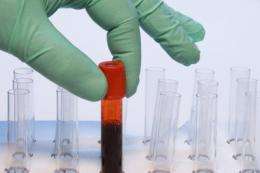
Medical workers who conduct a test to determine a patient’s blood type could find the procedure faster and easier in the future using an inexpensive paper-based "dipstick" test.

Scientists are reporting development of the first "dipstick" test for instantly determining a person's blood type at a cost of just a few pennies. Their study on the test, which involves placing a drop of blood on a specially treated paper strip, appears in ACS' journal Analytical Chemistry, where the authors say it could be a boon to health care in developing countries. The test also could be useful in veterinary medicine, for typing animals' blood in the field, they note.

Gil Garnier and colleagues explain that determining a patient's type is critical for successful blood transfusions, which save millions of lives each year worldwide. There are four main blood types: A, B, AB, and O. Use of the wrong blood type in a patient can be fatal. Current methods for determining blood type require the use of sophisticated instruments that are not available in many poor parts of the world. An inexpensive portable test could solve that problem.

The scientists describe development of prototype paper test strips impregnated with antibodies to the antigens on that determine blood type. In lab tests using blood samples from human volunteers, the scientists showed that a drop of blood placed on the strip caused a color change that indicated . The results were as accurate as conventional blood typing. "The paper diagnostics manufacturing cost is a few pennies per test and can promote health in developing countries," the report notes.

Explore further: Cradle turns smartphone into handheld biosensor

More information: "Paper Diagnostic for Instantaneous Blood Typing", Analytical Chemistry.

add to favorites email to friend print save as pdf

Related Stories

FDA approves automated hepatitis B test

Jul 19, 2006

The U.S. Food and Drug Administration has approved the first automated product combining screening and confirmatory tests for hepatitis B surface antigen.

Recommended for you

Cradle turns smartphone into handheld biosensor

55 minutes ago

(Phys.org) —Researchers and physicians in the field could soon run on-the-spot tests for environmental toxins, medical diagnostics, food safety and more with their smartphones.

Reading the unreadable

May 16, 2013

Pioneering X-ray technology is making it possible to read fragile rolled-up historical documents for the first time in centuries.

User comments : 1

Adjust slider to filter visible comments by rank

Display comments: newest first

CarolinaScotsman
5 / 5 (1) Jun 02, 2010
Long overdue.

More news stories

Chemists find new compounds to curb staph infection

(Phys.org) —In an age when microbial pathogens are growing increasingly resistant to the conventional antibiotics used to tamp down infection, a team of Wisconsin scientists has synthesized a potent new ...

Ferrets, pigs susceptible to H7N9 avian influenza virus

Chinese and U.S. scientists have used virus isolated from a person who died from H7N9 avian influenza infection to determine whether the virus could infect and be transmitted between ferrets. Ferrets are often used as a mammalian ...

Scientists develop cheaper, more efficient fuel cells

(Phys.org) —Using the Canadian Light Source (CLS) synchrotron, researchers have discovered a way to create cheaper fuel cells by dividing normally expensive platinum metal into nanoparticles (or even single ...