Little-known mouth fluid may lead to test for gum disease
May 26, 2010
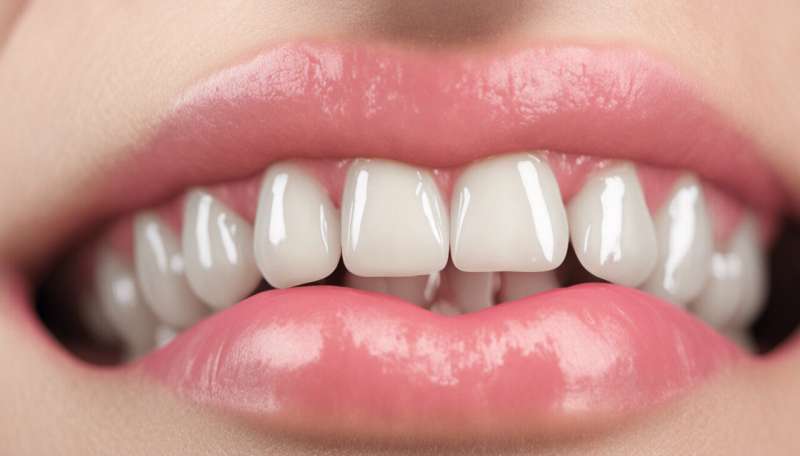
The gums produce a little-known fluid that could provide the basis of an early, noninvasive test for gum disease. Credit: iStock

A little-known fluid produced in tiny amounts in the gums, those tough pink tissues that hold the teeth in place, has become a hot topic for scientists trying to develop an early, non-invasive test for gum disease, the No. 1 cause of tooth loss in adults. It's not saliva, a quart of which people produce each day, but gingival crevicular fluid (GCF), produced at the rate of millionths of a quart per tooth. The study, the most comprehensive analysis of GCF to date, appears in ACS' Journal of Proteome Research.

Eric Reynolds and colleagues note that GCF accumulates at sites of in the crevice between teeth and gums. Since dental workers can easily collect the fluid from patients, GCF has become a prime candidate for a simple inexpensive test to distinguish mild gum disease from the serious form that leads to tooth loss. But researchers have little information about the of GCF.

The scientists collected GCF samples from 12 patients with a history of gum disease. Using high-tech instruments, they identified 66 proteins, 43 of which they found in the fluid for the first time. The fluid contained proteins from several sources, including bacteria and the breakdown products of gum tissue and bone, they note. They also identified antibacterial substances involved in fighting infection. The findings advance efforts to develop an early test for , they suggest.

Explore further: Protein study suggests drug side effects are inevitable

More information: "Mass Spectrometric Analyses of Peptides and Proteins in Human Gingival Crevicular Fluid", Journal of Proteome Research.

add to favorites email to friend print save as pdf

Related Stories

Smoking is a major cause of gum disease: study

Apr 30, 2008

Almost a third of the more than two million cases of gum disease among Australians are caused by smoking, according to research by University of Adelaide researchers in the Australian Research Centre for Population ...

New treatment for receding gums: No pain, lots of gain

Jul 01, 2009

Tufts dental researchers conducted a three-year follow-up study that examined the stability of a treatment option for receding gums and found that complete root coverage — the goal of the surgery — had been maintained. ...

A healthy color: Testing for gum disease

Apr 10, 2009

Researchers at Temple University Maurice H. Kornberg School of Dentistry found that a color-changing oral strip is as effective in detecting periodontal disease as traditional methods, and is easier and less costly to administer.

Recommended for you

New method for producing clean hydrogen

12 hours ago

Duke University engineers have developed a novel method for producing clean hydrogen, which could prove essential to weaning society off of fossil fuels and their environmental implications.

Making ice-cream more nutritious with meat left-overs

19 hours ago

Food industries are now turning meat left-over into high-protein content ingredients for food supplements, or to be added to processed food. But a EU-wide regulation covering them is still lacking.

Non-wetting fabric drains sweat

May 20, 2013

(Phys.org) —Waterproof fabrics that whisk away sweat could be the latest application of microfluidic technology developed by bioengineers at the University of California, Davis.

Protein study suggests drug side effects are inevitable

May 20, 2013

A new study of both computer-created and natural proteins suggests that the number of unique pockets – sites where small molecule pharmaceutical compounds can bind to proteins – is surprisingly small, meaning drug side ...

Attacking MRSA with metals from antibacterial clays

May 17, 2013

In the race to protect society from infectious microbes, the bugs are outrunning us. The need for new therapeutic agents is acute, given the emergence of novel pathogens as well as old foes bearing heightened antibiotic resistance.

User comments : 1

Adjust slider to filter visible comments by rank

Display comments: newest first

Question
not rated yet May 26, 2010
Fluoride can also cause gum disease and tooth lost in some people. It does this by slowly killing your gum tissue which then is attacked by bacteria. The waste from these bacteria are also harmful to your gums and tongue. This in turn causes bad breath and a nasty coating on the tongue which cannot be easily brushed off. If you have unexplained bad breath or coffee like stains on your teeth, fluoride could be the cause.

More news stories

New method for producing clean hydrogen

Duke University engineers have developed a novel method for producing clean hydrogen, which could prove essential to weaning society off of fossil fuels and their environmental implications.

Protein study suggests drug side effects are inevitable

A new study of both computer-created and natural proteins suggests that the number of unique pockets – sites where small molecule pharmaceutical compounds can bind to proteins – is surprisingly small, meaning drug side ...

Beautiful 'flowers' self-assemble in a beaker

By simply manipulating chemical gradients in a beaker of fluid, materials scientists at Harvard have found that they can control the growth behavior of crystals to create precisely tailored structures—such ...

Attacking MRSA with metals from antibacterial clays

In the race to protect society from infectious microbes, the bugs are outrunning us. The need for new therapeutic agents is acute, given the emergence of novel pathogens as well as old foes bearing heightened antibiotic resistance.

If you can remember it, you can remember it wrong

(Medical Xpress)—Native peoples in regions where cameras are uncommon sometimes react with caution when their picture is taken. The fear that something must have been stolen from them to create the photo ...

B vitamins could delay dementia

(Medical Xpress)—Despite spending billions of dollars on research and development, drug companies have been unable to come up with effective treatments for dementia and Alzheimer's Disease (AD). Now, A. ...

Encouraging signs for bee biodiversity

Declines in the biodiversity of pollinating insects and wild plants have slowed in recent years, according to a new study. Researchers led by the University of Leeds and the Naturalis Biodiversity Centre in the Netherlands ...