Oviposition behaviour of pest insects keeps Bt-cotton durably resistant
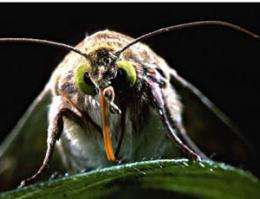
The oviposition behaviour of insect pests results in an improved durability of insect resistance in so-called Bt-crops, while promoting the survival of pest insects elsewhere in nature. This is the result of research carried out by the Plant Sciences Group of Wageningen University (The Netherlands) in collaboration with the University of North Carolina (USA).
Bt-cotton has been cultivated on a large scale in countries such as China, India and the US for over thirteen years now. During this period the crops’ resistance has hardly ever been broken. According to the scientists, this can likely be attributed to the fact that some insect pest individuals have a preference for laying eggs on other plants. The larvae from those eggs will develop normally, giving them a selective advantage. The results were recently published in the scientific journal Evolutionary Ecology.
The scientists made their discovery using computer models. “These models show that the cultivation of, for instance, moth-resistant cotton is evolutionarily beneficial for female moths that prefer laying their eggs on other plant species,” says Marcel Dicke, Professor of Entomology at the Plant Sciences Group. “As a result, the majority of the moth population will acquire a genetic composition that makes them avoid laying their eggs on cotton and prefer to do so on other host plants. This implies that the cotton plants will remain durably resistant and free from pest insects, while the moths can survive elsewhere in nature.”
This is the first time that research has been performed into the effect of insect behaviour on the durability of plant resistance against insects in GM crops. “It is actually quite remarkable that this issue has never been investigated in this way,” says Maarten Jongsma, scientist at Plant Research International of the Plant Sciences Group. “Based on other modelling studies, it was generally believed that the resistance to insects was not durable and could only be made to last longer by planting both resistant and non-resistant plants together in order to reduce the selection pressure. This is why US professor Fred Gould, who has also been involved in the research, developed the refuge strategy, which was adopted as official policy. But our research shows that the chance of breaking the resistance may be much smaller than the chance of changing insect behavioural preferences.”
Increase in GM crops
Bt-cotton and Bt-maize genetically engineered for resistance to the larvae of specific moths have successfully been introduced worldwide. The introduced genes code for toxins that are naturally present in Bacillus thuringiensis bacteria, hence the names Bt-maize and Bt-cotton. In the US, China and India the method is used to protect nearly all cotton against the main pest insects, resulting in increased yields and lower costs for combating insects.
There has always been a concern, however, that pest insects would eventually become insensitive to the plants’ resistance and undo the progress made. This is why computer models were used fifteen years ago to predict the likely effect of the presence of insensitivity genes in insect populations which would allow them to survive on the Bt crop. Those models predicted that such genes would surface in insect populations within ten generations in case of ‘dominant’ genes. Should these insensitivity genes be inherited recessively, the majority of the population would be insensitive to the plants’ within only 30 generations.

Refuge approach
By planting resistant plants mixed with non-resistant plants, the development of insensitive insects was expected to slow down due to the reduced selection pressures. This concept was the rationale behind the refuge strategy, which has been applied over the past thirteen years forcing farmers to sow 20 percent of their acreage with susceptible plants. As a result a susceptible insect pest population is maintained, in order to maintain an effective plant resistance.
Meanwhile some 50 generations of moths have now been exposed to Bt-cotton without the insect becoming notably insensitive to the resistance. Although this success was until recently attributed to the refuge strategy, it transpires that this was not the most important factor. The egg-laying behaviour of female moths may have had a much larger impact.
Behaviour
Insects are usually capable of reproducing on more than one type of plant. The behaviour of the female determines on which plant they lay their eggs and every female has her own preference. Some female moths prefer to lay their eggs on other plants than cotton, even if the cotton is not resistant to its larvae. The preference is determined genetically.
If the cotton is moth resistant, the females that prefer other plants have a selective advantage. Their offspring will be able to develop and thus reproduce. As a result the proportion of moths that prefer other plants increases rapidly, without necessarily increasing the total number of moths. These moths will maintain themselves elsewhere in nature without harming the cotton plants. This means that the change in insect pest behaviour ensures the durability of the plant resistance.
The scientists from Wageningen UR’s Plant Sciences Group are now looking for ways to study the egg-laying behaviour of the moth populations in the US, China and India in order to substantiate their conclusions.
More information: Article: www.springerlink.com/content/f … 3f9d21b9b07a760&pi=1
Provided by Wageningen University


