Plant derivative could help refine cancer treatment
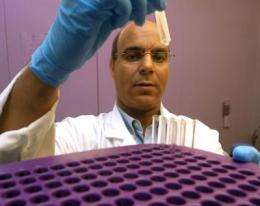
Medical College of Georgia researchers are seeking to refine cancer treatment with an anti-inflammatory plant derivative long used in Chinese medicine.
Celastrol, derived from trees and shrubs called celastracaea, has been used for centuries in China to treat symptoms such as fever, chills, joint pain and inflammation. The MCG researchers think it may also play a role in cancer treatment by inactivating a protein required for cancer growth.
That protein, P23, is one of many proteins helping the heat shock protein 90. Scientists are just beginning to realize the potential of controlling inflammation-related diseases, including cancer, by inhibiting HSP90.
"Cancer cells need HSP90 more than normal cells because cancer cells have thousands of mutations," said Dr. Ahmed Chadli, biochemist in the MCG Center for Molecular Chaperones/Radiobiology and Cancer Virology. "They need chaperones all the time to keep their mutated proteins active. By taking heat shock proteins away from cells, the stabilization is taken away and cell death occurs."
But most HSP90 inhibitors lack selectivity, disabling the functions of all proteins activated by HSP90 rather than only the ones implicated in a specific tumor. Those proteins vary from one tumor to another.
Dr. Chadli and colleagues at the Mayo Clinic believe celastrol holds the key to specificity, targeting the HSP90-activated protein required for folding steroid receptors.
"The celastrol induces the protein to form fibrils and clusters it together, which inactivates it," said Dr. Chadli, whose research was published in the January edition of The Journal of Biological Chemistry. "When they are clustered, they're not available for other functions that help cancer grow."
The research was funded by a seed grant from the MCG Cardiovascular Discovery Institute and a Scientist Development Grant from The American Heart Association.
Dr. Chadli envisions future studies on cancer patients using even more potent derivatives of celastrol.
"They can hopefully be used in combination with other therapeutic agents to reduce the probability of cancer resistance," he said.
Provided by Medical College of Georgia


