'Green Clean:' Researchers Determining Natural Ways To Clean Contaminated Soil
(PhysOrg.com) -- Researchers at North Carolina State University are working to demonstrate that trees can be used to degrade or capture fuels that leak into soil and ground water. Through a process called phytoremediation - literally a “green” technology - plants and trees remove pollutants from the environment or render them harmless.
Through a partnership with state and federal government agencies, the military and industry, Dr. Elizabeth Nichols, environmental technology professor in NC State’s Department of Forestry and Environmental Resources, and her team are using phytoremediation to clean up a contaminated site in Elizabeth City, N.C.
Phytoremediation uses plants to absorb heavy metals from the soil into their roots. The process is an attractive alternative to the standard clean-up methods currently used, which are very expensive and energy intensive. At appropriate sites, phytoremediation can be a cost-effective and sustainable technology, Nichols says.
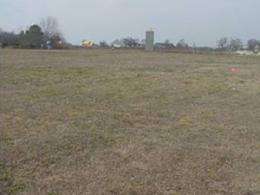
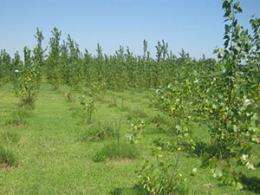
The Coast Guard site was planted with a mixture of fast-growing trees such as hybrid poplars and willows to prevent residual fuel waste from entering the Pasquotank River by ground water discharge. About 3,000 trees were planted on the five-acre site, which stored aircraft fuel for the Coast Guard base from 1942 until 1991. Fuels had been released into the soil and ground water over time. Efforts to recover easily extractable fuel using a free product recovery system - also called “oil skimmers” - had stalled so other remedial options were considered before choosing phytoremediation.
“We knew that tree growth would be difficult on portions of the site due to the levels of fuels in the soil and ground water, but, overall, we thought the trees could keep this contamination from moving toward the river by slowing ground water flow,” Nichols said. “Trees need water for photosynthesis so they absorb water from the ground; that process can slow the amount of ground water flowing toward the river.”
In the process of absorbing water from the ground, trees can take up fuel contaminants. Some contaminants will be degraded by trees during this process while others will be released into the air by tree leaves and stems. “We wanted to demonstrate that the trees would first slow the movement of fuel toward the river,” Nichols said.
Trees can also increase the abundance and diversity of soil microorganisms around their roots. Some of these soil microorganisms will degrade the fuel still remaining in the ground. “This can be a slower process, but we also want to show that trees will remove the remaining fuel footprint over time,” Nichols continued.
Initially, 500 hybrid poplar and willow trees were planted in 2006. Another 2,500 trees were planted in 2007. “Our initial results are very encouraging, and amounts of fuel in the ground have decreased much faster than anticipated,” Nichols said, “but there is still much to learn about how trees can impact residual, weathered fuels over time. There are two areas on the site where trees do not do well, but, overall, tree growth and survival are impressive.” The Coast Guard has recognized the value of phytoremediation from this study, and has established two additional phytoremediation systems at different locations on base.
The project received a $240,584 grant from the U.S. Environmental Protection Agency and the N.C. Department of Environment and Natural Resources’s (NCDENR) Division of Water Quality 319 program, and an additional $15,000 grant from British Petroleum North America to establish the demonstration site. Nichols worked with Brad Atkinson (NCDENR), Dr. James Landmeyer (U.S. Geological Survey), J.P. Messier (U.S. Coast Guard), and Rachel Cook, a graduate student at NC State, to design and implement the phyto-demonstration site. NC State was recently awarded an additional EPA/NCDENR 319 grant to continue monitoring the site for tree growth and fuel reduction, tree toxicity to fuels, changes to ground water levels and flow, and how fuel contamination is actually removed by trees.
Provided by North Carolina State University (news : web)


