Waterfall-climbing fish use same mechanism to climb waterfalls and eat algae
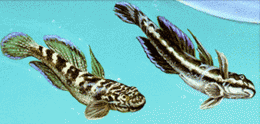
Going against the flow is always a challenge, but some waterfall-climbing fish have adapted to their extreme lifestyle by using the same set of muscles for both climbing and eating, according to research published January 4 in the open access journal PLOS ONE by Richard Blob and colleagues from Clemson University.
The Nopili rock-climbing goby is known to inch its way up waterfalls as tall as 100 meters by using a combination of two suckers; one of these is an oral sucker also used for feeding on algae. In this study, the researchers filmed jaw muscle movement in these fish while climbing and eating, and found that the overall movements were similar during both activities. The researchers note that it is difficult to determine whether feeding movements were adapted for climbing, or vice versa with the current data, but the similarities are consistent with the idea that these fish have learned to use the same muscles to meet two very different needs of their unique lifestyle.
"We found it fascinating that this extreme behavior of these fish, climbing waterfalls with their mouth, might have been coopted through evolution from a more basic behavior like feeding. The first step in testing this was to measure whether the two behaviors really were as similar as they looked" says Blob, lead author on the study.
More information: Cullen JA, Maie T, Schoenfuss HL, Blob RW (2013) Evolutionary Novelty versus Exaptation: Oral Kinematics in Feeding versus Climbing in the Waterfall-Climbing Hawaiian Goby Sicyopterus stimpsoni. PLoS ONE 8(1): e53274. doi:10.1371/journal.pone.0053274
Journal information: PLoS ONE
Provided by Public Library of Science


